


Em cada dispositivo médico pneumático, há um componente que raramente recebe atenção pública, mas influencia diretamente a segurança do produto, a estabilidade da pressão e a vida útil — a câmara de ar flexível.
Seja uma braçadeira de torniquete cirúrgico, uma meia de compressão sequencial, uma órtese inflável para reabilitação ou uma tala de emergência, o desempenho de todo o dispositivo depende de um requisito simples: a câmara deve manter a pressão exatamente conforme projetado.
Uma pequena perda de pressão pode parecer insignificante em testes laboratoriais, mas na prática clínica ela pode afetar a precisão da compressão, o conforto do paciente e a consistência do tratamento. Para os fabricantes, mesmo uma pequena porcentagem de vazamento pode levar a inspeções adicionais de qualidade, recalls de produtos, reclamações de garantia ou redimensionamentos caros.
Muitas dessas questões não são causadas pelo próprio sistema pneumático. Elas começam com o material selecionado para construir a câmara inflável.
Durante anos, os fabricantes recorreram a filmes TPU de uso geral, filmes PVC ou tecidos revestidos porque eram facilmente disponíveis e fáceis de processar. Embora esses materiais possam funcionar adequadamente em aplicações industriais leves, dispositivos médicos operam sob expectativas muito diferentes. Cada lote de produção deve permanecer consistente. Cada costura soldada deve resistir a ciclos repetidos de inflação. Todo material deve continuar desempenhando sua função após limpeza, transporte, armazenamento e uso prolongado.
É por isso que os fabricantes de dispositivos médicos têm gradualmente se voltado para filme TPU de grau médico, especialmente construções mais espessas que oferecem um melhor equilíbrio entre flexibilidade e estabilidade estrutural.
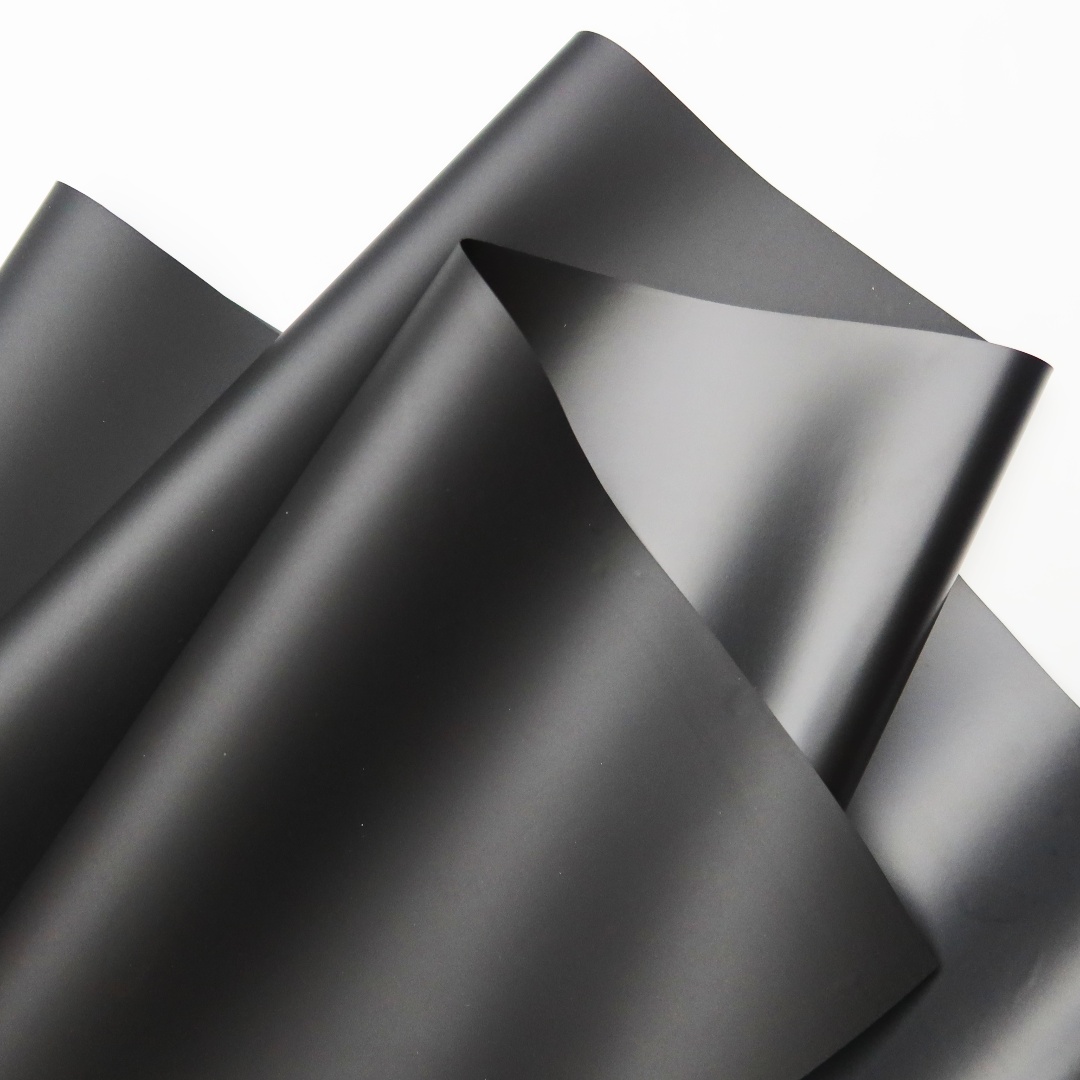
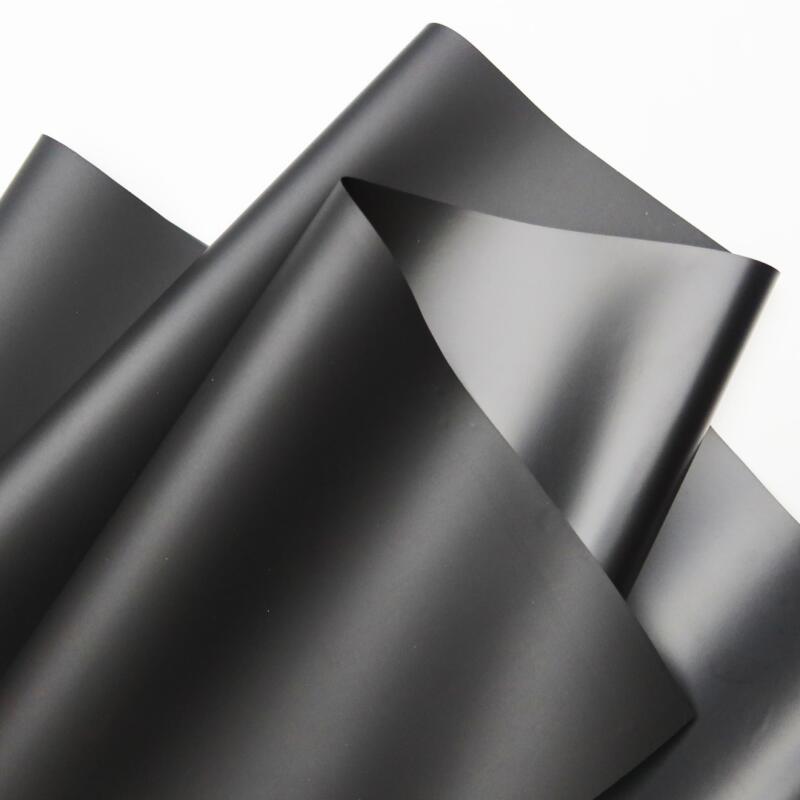
Entre as opções de espessura disponíveis, Filme TPU Preto de Grau Médico de 0,25mm tornou-se uma das escolhas mais amplamente adotadas para braçadeiras de torniquete cirúrgico e outros produtos médicos pneumáticos. Não é porque filmes mais espessos são sempre mais fortes, nem porque o preto é simplesmente uma cor preferida. A preferência vem de uma combinação de considerações de engenharia, eficiência de fabricação e confiabilidade a longo prazo.
Este artigo explica por que o filme TPU preto de grau médico de 0,25mm tornou-se o material preferido para câmaras médicas infláveis, como ele se comporta diferentemente dos filmes TPU padrão e o que os fabricantes devem avaliar antes de selecionar um fornecedor de filmes.
A Seleção de Materiais Tem um Impacto Maior do Que a Maioria dos Fabricantes Espera
O desenvolvimento de um dispositivo médico pneumático geralmente começa com discussões sobre válvulas, bombas, sensores ou sistemas de controle de pressão. Esses componentes são certamente importantes, mas só podem desempenhar bem na medida em que a câmara de ar permitir.
A câmara flexível é responsável por conter a pressão enquanto se adapta continuamente ao movimento. Ao contrário de invólucros plásticos rígidos, ela se expande e contrai milhares de vezes ao longo de sua vida útil. Cada ciclo de inflação estica o filme. Cada ciclo de desinflação permite que ele se recupere. Durante a limpeza e o transporte, ele é dobrado repetidamente. Ao longo do armazenamento, sofre variações de temperatura e umidade.
Essas condições criam um ambiente exigente para qualquer filme polimérico.
Um filme que funciona bem durante os testes iniciais pode perder gradualmente a estabilidade após centenas ou milhares de ciclos de pressão. Deformação microscópica, fadiga do material ou inconsistência na qualidade das soldas frequentemente se desenvolvem muito antes que danos visíveis apareçam.
É por isso que fabricantes experientes de dispositivos médicos raramente avaliam o filme TPU apenas com base nos valores de resistência à tração ou alongamento apresentados numa ficha técnica.
Em vez disso, fazem perguntas mais práticas.
O material manterá a pressão de ar estável após repetidas inflações?
Cada lote de produção pode alcançar a mesma consistência nas soldas?
O filme permanece flexível após esterilização ou armazenamento a longo prazo?
Ele continuará desempenhando bem após transporte em diferentes condições climáticas?
Essas perguntas focam na confiabilidade, e não nas especificações.
O filme TPU de grau médico é desenvolvido especificamente para esse tipo de aplicação. Comparado com o TPU industrial padrão, maior ênfase é dada à consistência da formulação, limpeza durante a fabricação, biocompatibilidade e estabilidade no processamento. Cada lote de produção deve ter um desempenho previsível, pois dispositivos médicos não podem tolerar variações desnecessárias.
A consistência muitas vezes se torna mais valiosa do que atingir a propriedade mecânica individual mais alta.
Por Que 0,25mm Tornou-se a Espessura Preferida
Uma das perguntas mais comuns feitas pelos engenheiros de produto é surpreendentemente simples:
Por que não usar um filme mais fino para reduzir peso e custo?
À primeira vista, escolher um filme TPU mais fino parece lógico. Menos material significa menor consumo de matéria-prima e potencialmente menores custos de produção.
No entanto, produtos médicos pneumáticos raramente são projetados apenas em torno do custo do material.
A espessura influencia muito mais do que a resistência mecânica.
Ela afeta a pressão de ruptura.
Ela afeta a consistência das soldas.
Ela afeta a resistência à perfuração.
Ela também afeta como a câmara se comporta após milhares de ciclos de inflação.
Filmes TPU muito finos, como 0,10mm ou 0,15mm, oferecem excelente flexibilidade. Eles são amplamente utilizados em produtos descartáveis leves, onde a pressão de operação é relativamente baixa e a vida útil é limitada.
As braçadeiras de torniquete cirúrgico operam em condições muito diferentes.
A bexiga sofre pressurização repetida enquanto mantém uma compressão estável ao redor do membro do paciente. Durante o uso, tensões localizadas se desenvolvem perto de áreas dobradas, juntas soldadas, interfaces de tubos e cantos. Um filme mais fino concentra a tensão numa seção transversal menor, aumentando a possibilidade de fadiga ao longo do tempo.
Aumentar a espessura para 0,25mm muda a distribuição de tensões.
Em vez de permitir que a deformação se concentre em locais isolados, o filme mais espesso distribui a carga mecânica de forma mais uniforme pela superfície da câmara. Isso reduz a tensão localizada e melhora a resistência à fadiga sem tornar a câmara excessivamente rígida.
Do ponto de vista da fabricação, a diferença é igualmente importante.
A soldagem por alta frequência requer material fundido suficiente para formar uma junta contínua. Filmes extremamente finos têm uma janela de processamento mais estreita. Pequenas variações na pressão de soldagem ou no tempo de permanência podem afetar a qualidade das costuras.
Um filme de 0,25mm oferece maior tolerância ao processo.
Os fabricantes frequentemente obtêm soldas mais consistentes com menos ajustes, reduzindo taxas de desperdício e melhorando a eficiência produtiva.
Esse benefício se torna particularmente valioso durante a fabricação em grande volume, onde a repetibilidade influencia diretamente o custo de produção. Equilibrando Flexibilidade e Estabilidade Estrutural
Uma ideia errônea comum é que o filme TPU mais espesso sempre reduz a flexibilidade.
Na realidade, a flexibilidade depende de vários fatores, incluindo a formulação do polímero, a dureza e as condições de processamento.
O TPU de grau médico mantém excelente elasticidade mesmo com 0,25mm.
Rather than feeling stiff, it bends smoothly while providing additional structural support.
This balance explains why many reusable pneumatic medical products choose the 0.25mm specification.
It is flexible enough to conform comfortably to different body shapes while remaining durable enough to withstand repeated clinical use.
The result is a material that supports both patient comfort and product longevity.
Why Black TPU Film Is Preferred in Medical Devices
The color of TPU film is often viewed as an aesthetic decision.
In medical manufacturing, it is much more than that.
Transparent TPU films remain popular for applications requiring visual inspection of internal components. However, inflatable medical chambers usually have different priorities.
Black TPU film provides complete opacity, preventing external light from reaching internal structures.
For products incorporating light-sensitive materials or components, this additional protection can contribute to greater long-term stability.
Opacity also improves appearance.
Medical devices frequently undergo repeated cleaning, transportation, and handling. Transparent films tend to reveal internal dust particles, minor scratches, adhesive residue, or assembly marks that have little effect on performance but may negatively influence perceived quality.
Black film presents a cleaner, more uniform appearance throughout the product’s service life.
Many hospitals also appreciate the practical maintenance advantages.
Surface contamination becomes easier to identify during inspection, while discoloration caused by repeated cleaning is less noticeable than on lighter-colored materials.
Although these factors do not directly improve mechanical performance, they contribute to a more professional product presentation, particularly for reusable medical devices.
Color Does Not Change Performance—The Formulation Does
An important distinction should be made here.
Black TPU film is not automatically stronger than transparent TPU film.
Performance depends on polymer formulation, processing technology, and manufacturing quality—not color alone.
Medical-grade black TPU film combines carefully controlled pigmentation with a formulation specifically designed for medical processing.
The pigments are uniformly dispersed throughout the material, maintaining consistent thickness and welding characteristics without creating weak points within the film.
This allows manufacturers to obtain the visual advantages of black film without sacrificing airtight performance or weld quality.
For pneumatic medical devices, that consistency is ultimately far more important than color itself.
Medical-Grade TPU Film vs Standard TPU Film
When sourcing TPU film, many buyers quickly discover that products with similar thicknesses often come with very different prices. On paper, they may appear almost identical. A supplier may list the same thickness, hardness, tensile strength, and elongation, making it difficult to understand why one material costs considerably more than another.
The difference usually lies in what the specification sheet does not show.
General-purpose TPU film is manufactured for a wide range of industrial products where small variations between production batches are acceptable. Inflatable toys, consumer goods, protective covers, and packaging films all have different performance expectations from medical devices. A slight variation in film thickness or welding behavior may have little impact in these industries.
Medical applications are far less forgiving.
A pneumatic tourniquet cuff is expected to deliver consistent pressure during every procedure. Compression sleeves must inflate repeatedly without developing leaks or weak seams. Rehabilitation devices often remain in service for years, requiring stable performance long after production.
For these reasons, medical-grade TPU film places greater emphasis on manufacturing consistency than on headline mechanical values.
Raw materials are selected with tighter quality control. Film extrusion is monitored to reduce thickness variation across the entire roll. Surface cleanliness receives greater attention because even microscopic contamination can influence weld quality. Batch traceability is also an essential part of production, allowing manufacturers to identify material history whenever required.
These details may not appear in a brochure, yet they directly influence production efficiency and finished product reliability.
The following comparison illustrates the practical differences.
| Standard TPU Film | Medical-Grade TPU Film |
|---|---|
| General industrial formulation | Formulated for medical device applications |
| Suitable for general manufacturing | Produced under tighter quality control |
| Thickness variation may fluctuate more | Improved thickness consistency |
| Adequate weldability | Stable and repeatable HF and heat welding performance |
| Limited documentation | Better production traceability and compliance support |
Medical-grade TPU film is therefore not simply a higher-priced version of standard TPU. It is a material developed for applications where repeatability is just as important as strength.
Why Welding Quality Determines the Reliability of Surgical Tourniquet Cuffs
Material selection is only one part of the equation.
Even the highest-quality TPU film cannot compensate for poor seam construction.
Engineers who have worked with inflatable medical products know that failures rarely begin in the middle of the film. Most begin where two pieces of material are joined together.
This is why welding deserves as much attention as the film itself.
Unlike stitched assemblies, pneumatic chambers rely entirely on welded joints to contain internal pressure. Every inflation cycle transfers stress directly to the seam. If welding quality is inconsistent, microscopic channels may form within the joint. These channels are often too small to detect during visual inspection, yet they allow gradual air leakage during repeated use.
Medical-grade TPU film is specifically formulated to produce stable welds using high-frequency (HF) welding or thermal welding technologies.
During welding, the polymer layers melt together and become a continuous structure rather than two separate sheets connected by adhesive. Once cooled, the joint behaves much like the surrounding material, creating a sealed chamber capable of maintaining pressure under demanding conditions.
For manufacturers, this provides several practical advantages.
Production becomes easier to control because the welding window is more stable. Operators spend less time adjusting equipment for each production batch, while automated welding systems achieve more consistent results throughout long production runs.
For product designers, reliable weldability offers greater freedom when developing chamber geometry. Complex inflatable shapes can be created without relying on additional sealing components, simplifying assembly while reducing potential failure points.
Ultimately, a pneumatic medical device is only as reliable as its weakest weld.
Selecting the correct TPU film helps ensure that the seam remains one of the strongest parts of the product rather than its weakest.
Performance That Matters Beyond Laboratory Testing
Technical data sheets provide valuable information, but they rarely tell the complete story.
A medical device does not operate under ideal laboratory conditions. It experiences transportation, storage, repeated inflation, cleaning, and continuous handling by healthcare professionals.
For that reason, manufacturers increasingly evaluate TPU film based on long-term performance rather than isolated laboratory values.
A 0.25mm medical-grade TPU film typically offers a combination of properties that supports demanding pneumatic applications.
| Propriedade | Typical Performance |
|---|---|
| Film Thickness | 0.25 mm |
| Desempenho Estanque | Excellent long-term air retention |
| Soldabilidade | Compatible with HF and heat welding |
| Um revestimento flexível permite que o tecido se dobre naturalmente sem rachar ou desenvolver fadiga superficial. | High flexibility without cracking |
| Por essa razão, a resistência a rasgos é um indicador importante da durabilidade do material. | High resistance to propagation |
| Puncture Resistance | Improved over thinner films |
| Cleaning Compatibility | Resistant to common medical disinfectants |
| Sterilization Compatibility | Suitable for selected sterilization methods such as EtO and Gamma (subject to validation) |
What makes these properties valuable is how they work together.
Higher puncture resistance reduces accidental damage during assembly.
Stable flexibility allows inflatable chambers to fold repeatedly without creating stress concentrations.
Reliable weldability minimizes production defects.
Good airtight performance helps maintain consistent internal pressure throughout the product’s intended service life.
Rather than optimizing a single characteristic, medical-grade TPU film provides balanced performance across multiple requirements.
That balance is precisely what manufacturers seek when developing products that must perform reliably every day.
Typical Applications Beyond Surgical Tourniquet Cuffs
Although surgical tourniquet cuffs remain one of the most common applications, medical-grade 0.25mm black TPU film supports many other pneumatic medical devices.
Sequential compression sleeves used for deep vein thrombosis prevention depend on multiple inflatable chambers operating in sequence. Consistent welding and reliable airtight performance help maintain accurate compression cycles throughout treatment.
Inflatable rehabilitation braces require flexible air chambers that can withstand repeated inflation while remaining comfortable for patients during long-term use.
Emergency splints also benefit from TPU film because they must remain lightweight, portable, and dependable under demanding conditions. Their inflatable structures need to resist puncture while maintaining sufficient flexibility for rapid deployment.
Medical mattresses designed for pressure redistribution use multiple interconnected air chambers that operate continuously over extended periods. Stable barrier properties help maintain pressure balance and reduce maintenance requirements.
Outside traditional healthcare environments, veterinary tourniquet systems, rehabilitation equipment, laboratory pneumatic devices, and protective medical covers all benefit from the same combination of flexibility, weldability, and durability.
Although the products differ, the engineering challenge remains remarkably similar.
Every application depends on a flexible chamber capable of containing air safely and consistently.
Why Manufacturers Choose Xianglong
Selecting the right material is only part of the project. Choosing a supplier capable of delivering consistent quality over the life of a product is equally important.
At Wuxi Xianglong Polymer Fabric Co., Ltd., we understand that medical manufacturers are not simply purchasing TPU film. They are selecting a material that becomes part of a regulated medical device.
That responsibility shapes how we approach production.
Operating from a modern manufacturing facility covering more than 9,167 square meters, supported by over 15 years of industry experience, we manufacture TPU films and TPU coated fabrics for customers serving medical, outdoor, industrial, and safety markets worldwide.
Our production focuses on more than meeting specification sheets.
We pay close attention to thickness consistency, surface quality, weldability, and airtight performance because these factors directly affect manufacturing efficiency and final product reliability.
Our engineering team also works closely with customers during material selection.
Some applications require maximum flexibility.
Others prioritize burst strength, puncture resistance, or compatibility with specific welding equipment.
Instead of recommending a single solution for every project, we help manufacturers identify the film structure that best matches their product design, production process, and performance targets.
This application-focused approach has enabled our materials to support inflatable medical devices, pressure therapy systems, protective equipment, and many other pneumatic products used around the world.
Medical devices demand more from polymer films than most industrial applications ever will.
They require materials that perform consistently, weld reliably, retain pressure over thousands of inflation cycles, and continue meeting strict quality expectations throughout the product’s lifecycle.
That is why medical-grade 0.25mm black TPU film has become the preferred choice for surgical tourniquet cuffs and many other pneumatic medical devices.
Its value is not defined by thickness alone.
It comes from the balance between flexibility and durability, the consistency of its welding performance, and the confidence that manufacturers gain from using a material engineered specifically for medical applications.
As medical devices continue evolving toward higher reliability and longer service life, material selection will remain one of the most important engineering decisions during product development.
At Xianglong, we believe every reliable pneumatic device begins with a reliable material. By combining stable manufacturing processes, application expertise, and strict quality control, we help customers build products that perform consistently from the first inflation cycle to the last.
Whether you are developing a new surgical tourniquet cuff, upgrading an existing compression therapy system, or looking for a dependable TPU film supplier, choosing the right material today can reduce production challenges and improve product performance for years to come.
 English
  Spanish
  Italian
  Korean
  French
  Japanese
  Arabic
  Portuguese
  Vietnamese
  German
  Turkish
  Belarusian