


Um suporte médico pneumático tem de desempenhar dois papéis ao mesmo tempo. Suas câmaras de ar devem manter a pressão, enquanto o material ao redor precisa se moldar ao corpo e permanecer confortável durante o uso. Quando o produto é inflado e desinflado repetidamente, o tecido, as camadas coladas e as costuras ficam expostos a tensões mecânicas.
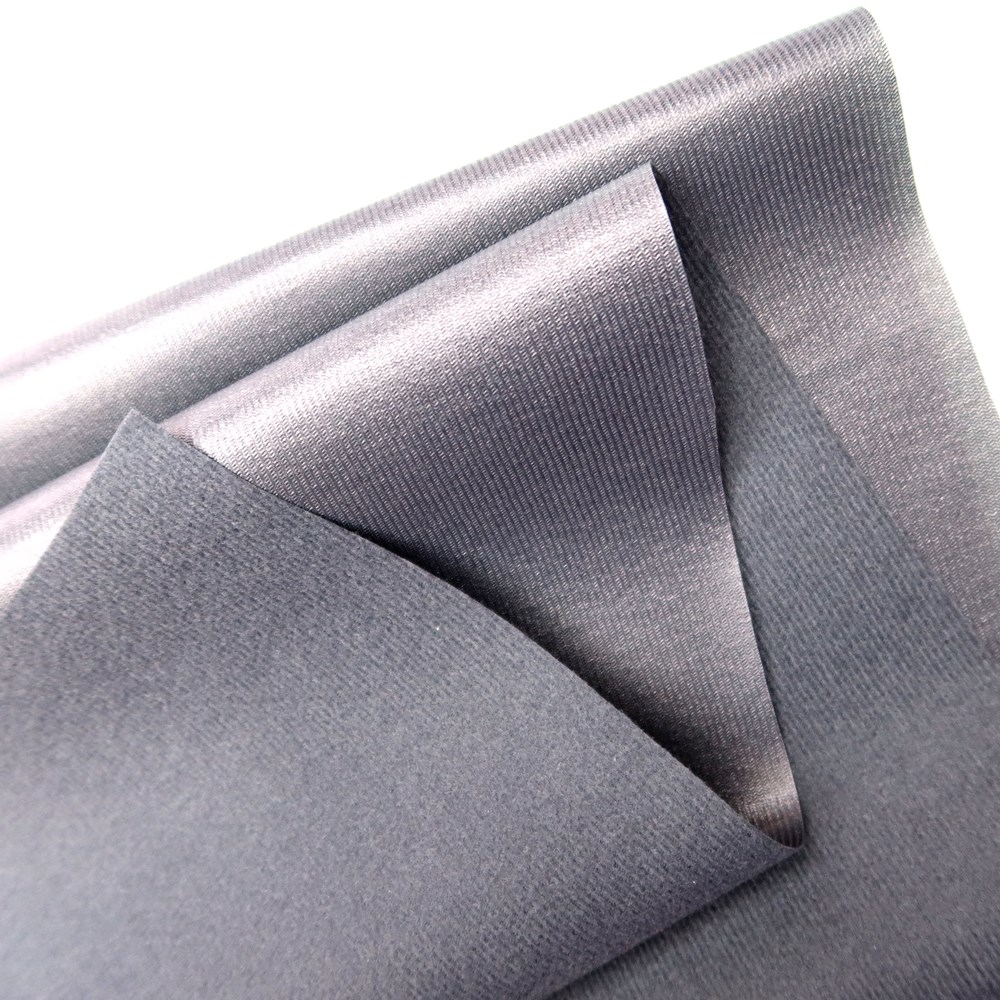
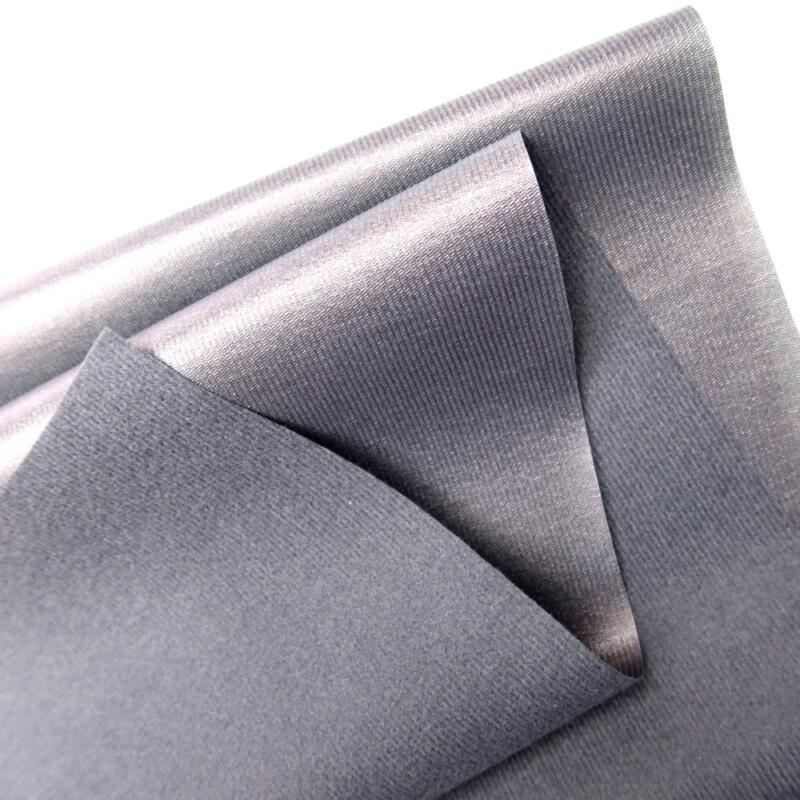
Tecido de laço de nylon revestido com TPU cinza é projetado para esse tipo de construção. Ele combina um tecido de malha em náilon com uma membrana de poliuretano termoplástico (TPU). O lado da malha proporciona uma superfície têxtil macia, enquanto a camada de TPU forma a barreira usada para reter o ar e resistir à penetração de água.
Para fabricantes que desenvolvem botas infláveis para marcha, suportes ortopédicos, mangas pneumáticas de compressão e equipamentos de reabilitação, a questão importante é como esse composto se comportará no produto final. O peso do tecido, a espessura da membrana, o design das câmaras e os métodos de união afetam todos o resultado.
O Papel de Cada Camada em um Produto Médico Inflável
A base de malha de náilon e a membrana de TPU têm funções diferentes. Tratar o composto como um material único e indiferenciado pode dificultar a identificação das propriedades que importam durante o desenvolvimento do produto.
Base de malha de náilon
A superfície em malha de náilon dá ao material uma face têxtil texturizada. Isso pode ser útil em produtos onde o tecido faz parte de um forro ou superfície de contato. Comparado com uma superfície lisa de polímero, a construção em malha oferece uma sensação diferente ao toque e pode contribuir para as características de amortecimento do produto montado.
A base também afeta como o composto se dobra, se dobra e é manuseado durante o corte e a montagem. Seu comportamento depende da construção têxtil e da densidade da malha, por isso os fabricantes devem avaliar o material fornecido em vez de assumir que todos os tecidos em malha terão o mesmo comportamento.
Membrana de TPU
A membrana de TPU fornece a barreira contínua necessária para uma câmara inflável. Seu papel é especialmente importante em produtos que precisam manter a pressão por um período especificado ou através de ciclos operacionais repetidos.
A membrana também afeta a flexibilidade e a fabricação. Uma mudança na formulação ou na espessura do TPU pode influenciar como o tecido é manuseado e como suas superfícies revestidas respondem durante a soldagem.
Colagem do composto
A ligação entre o tecido de náilon e a membrana de TPU deve permanecer intacta durante a fabricação e o uso. Se as camadas se separarem, o tecido pode deixar de se comportar conforme o planejado, mesmo que a própria membrana continue impermeável.
A resistência à tração e outros testes relevantes de aderência podem ajudar a avaliar essa interface. Para produtos que sofrem dobraduras repetidas, testes após um condicionamento adequado podem fornecer informações mais úteis do que avaliar apenas uma amostra não utilizada.
Por Que a Estanqueidade Deve Ser Avaliada em Mais de Um Nível
Um material pode ter uma membrana estanque, mas o produto final ainda assim pode vazar. Na prática, o ar pode escapar por costuras soldadas, conexões de válvulas, áreas danificadas ou outras interfaces na montagem da câmara.
Por essa razão, os fabricantes devem distinguir entre desempenho da barreira a nível de tecido and retenção de pressão do produto acabado.
Os testes de tecido podem determinar se a membrana atende aos requisitos acordados. Os testes de montagem examinam então os locais onde peças e componentes individuais se unem.
Por exemplo, numa bota médica inflável, a câmara pode incluir seções curvas e juntas estreitas ao redor do tornozelo ou pé. Esses recursos podem criar condições de fabricação diferentes de uma amostra plana de teste. Uma manga pneumática pode ter várias câmaras, cada uma com suas próprias costuras e pontos de conexão.
Um plano de desenvolvimento deve, portanto, incluir:
- Testar a estanqueidade do material usando um método acordado.
- Produzir costuras soldadas representativas e verificar vazamentos.
- Avaliar as áreas de fixação de válvulas e componentes.
- Testar a câmara montada nas condições operacionais especificadas.
- Repetir verificações relevantes após uso simulado ou ciclagem.
A pressão de teste, a duração e os limites de aceitação devem vir dos requisitos do produto. Eles não devem ser inferidos a partir do nome ou da espessura nominal do tecido.
Escolhendo a Espessura de TPU para o Design Previsto
O produto está disponível com espessura personalizável de TPU, com uma faixa típica de 0,08 mm a 0,25 mm. Essa faixa dá aos fabricantes espaço para considerar diferentes construções, mas a escolha correta depende da aplicação.
Uma membrana mais fina pode ajudar a manter o produto flexível e reduzir o peso do material. No entanto, ela ainda precisa suportar as demandas mecânicas e de barreira do projeto. Uma membrana mais grossa pode ser adequada quando a construção exige uma camada mais robusta, mas também pode alterar o comportamento de dobra, o manuseio e as condições de soldagem.
A decisão deve levar em conta vários fatores:
| Fator de projeto | Por que isso importa |
|---|---|
| Pressão da câmara | Estabelece as condições que o material montado deve suportar |
| Geometria do produto | Curvas, dobras e seções estreitas podem afetar a tensão local |
| Frequência de inflação | Ciclos repetidos podem colocar tensão sobre a membrana e as costuras |
| Flexibilidade exigida | O material deve trabalhar com o movimento e o ajuste do produto |
| Método de soldagem | A espessura e a formulação da membrana podem afetar o processo de união |
| Peso do produto acabado | O peso do tecido contribui para a massa total do dispositivo |
| Condições esperadas de serviço | Temperatura, umidade, abrasão e manuseio podem influenciar as necessidades de durabilidade |
Em vez de selecionar uma espessura a partir de uma regra geral, os fabricantes devem comparar amostras em uma construção representativa. O material escolhido precisa atender ao desempenho exigido sem criar dificuldades evitáveis durante a fabricação ou o uso.
Material Considerations for Different Medical Applications
Grey TPU Coated Nylon Loop Fabric may be considered for several types of inflatable medical products. Each application brings a different combination of pressure, movement, contact and assembly requirements.
Botas infláveis para caminhada e suportes ortopédicos
Inflatable boots and braces use air chambers to provide adjustable support around a body area. Their fabric components may be exposed to bending, pressure changes and contact with neighboring parts of the device.
The loop backing can contribute to the textile interface, while the TPU membrane provides the barrier for the inflatable sections. During development, manufacturers should pay attention to the areas where the chamber curves around joints, where the material meets fastening components and where repeated movement may concentrate stress.
Prototype evaluation should include chamber integrity, seam performance and the behavior of the composite in the intended shape.
Intermittent pneumatic compression sleeves
Intermittent pneumatic compression (IPC) sleeves operate through controlled inflation and deflation. Chamber arrangement and operating cycles influence the mechanical demands placed on the fabric.
For these products, the material should be tested as part of a representative sleeve assembly. Relevant checks may include air leakage, seam strength, dimensional stability and performance after repeated cycles.
The fabric does not determine the pressure sequence or therapeutic effect of the device. Those functions depend on the complete product design and control system.
Lymphedema treatment wraps
Pneumatic wraps may need to accommodate different body contours while maintaining the intended chamber layout. Material flexibility and seam placement can affect how the wrap fits and how the chambers behave when inflated.
Developers should assess the composite with the intended lining, closures and chamber geometry. Testing should reflect the use conditions specified for the product rather than relying on a generic pressure or durability assumption.
Inflatable positioning cushions
Positioning cushions and orthopedic pillows may experience prolonged loading, changes in shape and repeated adjustment. Depending on the design, sustained pressure retention and dimensional behavior may be particularly important.
The fabric should be evaluated with the actual cushion construction. Chamber seams, valves and areas that bear load may require separate attention during prototype testing.
Welding and Assembly: Where Fabric Properties Meet Production
The ability to join TPU-coated areas is an important consideration for inflatable products. The material is specified for welding processes such as high-frequency (HF) welding and hot-air welding. The appropriate method depends on the equipment, fabric construction and product design.
A process that works with one TPU-coated textile may not transfer directly to another. Membrane thickness, formulation, surface condition and joint geometry can all affect the result.
HF welding and hot-air welding
HF welding uses a high-frequency field to generate heat in compatible materials, while hot-air welding applies heated air to the joining area. Both methods may be considered for suitable TPU constructions, but the process window must be established for the specific material.
Manufacturers should avoid relying on settings from a different fabric without conducting trials. A change in membrane thickness or formulation may require adjustments to the welding parameters.
Test the actual joint design
A straight test seam is useful, but it may not represent the full product. Inflatable medical components can include curved seams, overlapping sections, corners and valve attachments.
The trial should reproduce these features wherever practical. The team can then inspect the weld, test its strength and check for leakage under the agreed conditions.
Manage sewn areas carefully
Sewing may be needed for straps, covers or other textile components. However, needle perforations through an airtight chamber can create leakage paths.
The product drawing and assembly instructions should clearly distinguish between areas that may be stitched and areas where the barrier must remain continuous. Where stitching is necessary near an air chamber, the design should specify how the barrier will be maintained.
What to Check During Incoming Material Inspection
A consistent inspection process helps manufacturers confirm that the supplied fabric matches the approved specification. The checks should focus on properties that can affect production or the finished device.
| Inspection item | Purpose |
|---|---|
| Visual condition | Identify visible defects, contamination or damage |
| Width and thickness | Confirm dimensions against the agreed specification |
| Composite structure | Check that the textile and TPU layers match the approved construction |
| Bonding quality | Assess the integrity of the textile-to-membrane interface |
| Estanqueidade | Check barrier performance using the specified method |
| Tensile and tear properties | Evaluate resistance to relevant mechanical loads |
| Welded seam performance | Confirm that the material can form acceptable joints |
| Batch documentation | Connect inspection results to the material supplied |
The product’s quality assurance process includes raw material inspection, in-process monitoring of coating uniformity and bonding strength, and final testing for airtightness, peel strength and durability. For a specific project, buyers should confirm which tests are performed, how results are recorded and what acceptance criteria apply.
A retained reference sample can also help when comparing later deliveries. If the material construction or production process changes, the manufacturer and supplier should determine whether the change requires additional evaluation.
Customization Should Solve a Defined Product Requirement
The fabric can be customized in color, TPU thickness, width and composite structure. Single- or double-sided TPU coating and different terry loop densities may also be considered, depending on the product requirements.
These options are most useful when they address a specific design need.
For example, a product may require a particular loop surface for its lining arrangement. Another design may need a different membrane thickness to meet its flexibility and barrier requirements. A customized width may help match the cutting layout and material utilization.
Before requesting a variation, manufacturers should identify which property needs to change and how the change will be evaluated. That keeps the material specification connected to the product’s function and helps avoid unnecessary revisions late in development.
Medical Application Does Not Replace Device-Level Validation
A fabric intended for medical applications is only one component of the finished device. Its suitability depends on the intended use, contact conditions, manufacturing process and applicable requirements.
The description “medical” does not by itself establish biocompatibility, sterility, suitability for prolonged skin contact or compliance with a particular regulation. Where patient contact is involved, the device manufacturer should determine which biological evaluation and other tests are required for the specific use.
The same principle applies to product performance. The fabric may provide an airtight barrier, but it does not independently establish that a compression sleeve, orthopedic support or rehabilitation device is safe or effective. Those conclusions require evaluation of the complete device, including its design, controls, assembly and intended use.
A Practical Route from Sample to Production
A material trial is more useful when it follows the same steps the product will encounter during manufacturing.
Begin by defining the chamber pressure, geometry, expected cycles, contact conditions and required service life. Confirm the proposed fabric construction, including the nylon loop backing and TPU membrane thickness.
Next, inspect the sample and produce representative welded joints. Record the process settings and evaluate seam integrity, strength and leakage. Assemble a prototype using the intended valves, closures, lining and other components, then test it under conditions that reflect the product requirements.
Once the construction has been approved, document the material specification, critical process parameters and quality checks. Establish how changes to the fabric or manufacturing process will be reviewed before they are introduced into production.
This approach gives engineering, quality and purchasing teams a shared record of what was tested and what the approved material is expected to deliver.
Grey TPU Coated Nylon Loop Fabric combines a nylon terry loop textile with a TPU membrane for inflatable medical product designs that require a textile surface and an air-retaining barrier. It can be considered for walking boots, orthopedic supports, pneumatic compression sleeves, positioning cushions and other rehabilitation equipment.
Its performance in a finished device depends on more than the fabric alone. Membrane thickness, textile construction, bonding, seam geometry and manufacturing conditions all influence the result.
For manufacturers, a representative prototype and a documented qualification process provide the clearest basis for material approval. Testing the actual chamber design, checking the welded seams and confirming the relevant medical-device requirements help establish whether the fabric is suitable for the intended application.
 English
  Spanish
  Italian
  Korean
  French
  Japanese
  Arabic
  Portuguese
  Vietnamese
  German
  Turkish
  Belarusian