


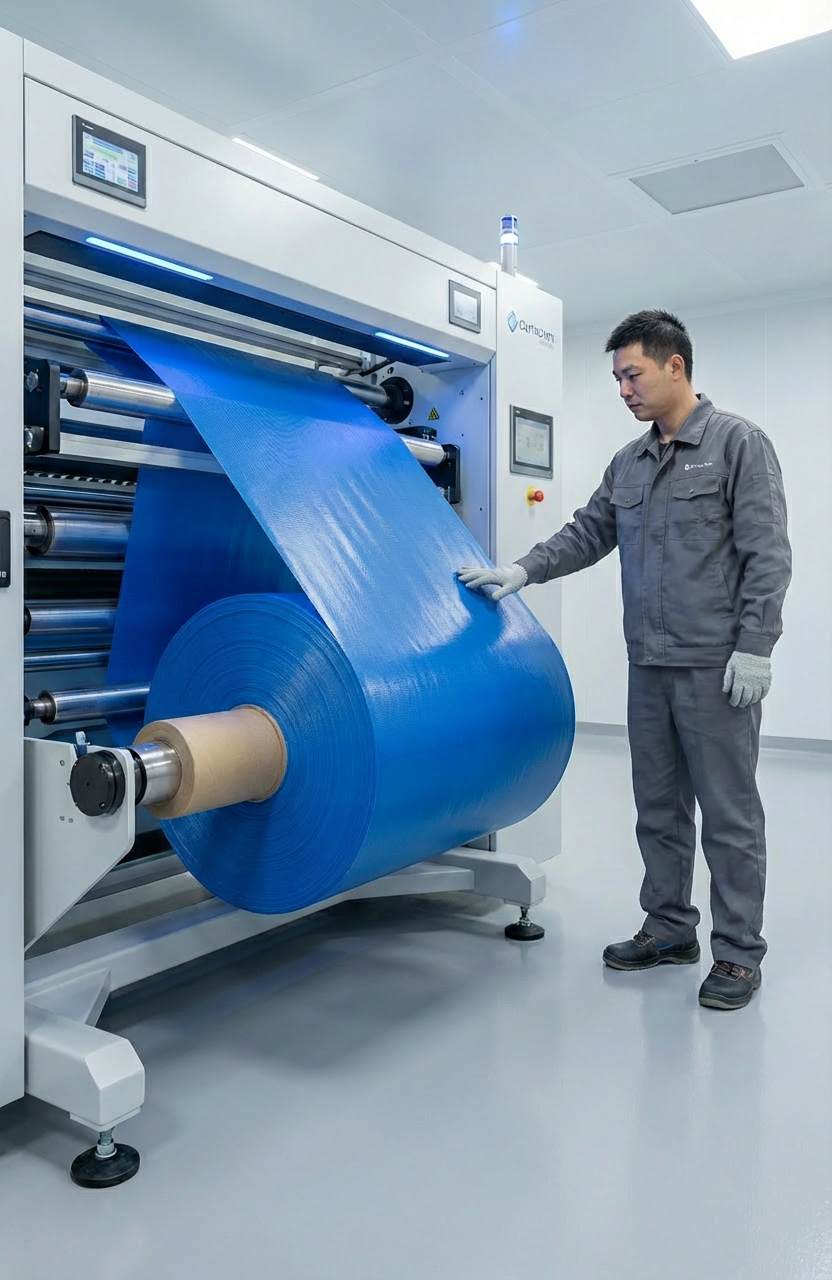
In der Medizintechnikproduktion ist Qualität nicht etwas, das man am Ende überprüft. Sie wird von Anfang an eingebaut. Bei aufblasbaren Produkten – etwa Kompressionsärmeln, Blutdruckmanschetten oder Atemmasken – ist der beschichtete Stoff buchstäblich das Herzstück des Geräts. Wenn dieses Material versagt, versagt auch das Gerät. Und wir alle wissen, was das in einem Krankenhaus bedeutet.
Bei [Ihr Firmenname] betrachten wir Qualität nicht als eine eigene Abteilung. Es ist einfach unser ganz normaler Betriebsablauf – jeden einzelnen Tag. In diesem Blog führen wir Sie durch unseren fünfstufigen Qualitätskontrollprozess – ohne unnötiges Geplänkel, nur mit den konkreten Maßnahmen, die wir tatsächlich ergreifen, um sicherzustellen, dass jede Rolle medizinisch geeigneten TPU-beschichteten Stoffs einwandfrei ausgeliefert wird.
Eingehende Rohstoffinspektion – Es beginnt mit Reinheit
Aus schlechten Zutaten kann man kein gutes Material machen. Das ist keine tiefe Weisheit; es ist einfach eine Tatsache.
Bevor irgendetwas unsere Produktionslinie erreicht, prüfen wir jede angelieferte Charge. Kein stichprobenartiger Test – jede einzelne Charge.
Was wir prüfen:
- TPU-Harz – Wir kaufen nur pharmazeutische Pellets von nachvollziehbaren, seriösen Lieferanten. Jede Partie kommt mit einem Analysezertifikat (CoA). Wir überprüfen Molekulargewichtsverteilung, Schmelzflussindex, Feuchtigkeitsgehalt und Monomerreste. Stimmt etwas nicht mit unserem Spezifikationsblatt überein? Ausschuss. Keine Diskussion.
- Stoffsubstrat – Nylon, Polyester oder was immer der Auftrag erfordert. Wir überprüfen Denier, Garnzahl, Webdichte, Gewicht pro Quadratmeter und Oberflächenbeschaffenheit. Wir verwenden kalibrierte Instrumente – analytische Waagen, Garnzähler – um Abweichungen zu erkennen, bevor sie zum Problem werden.
- Zusatzstoffe – Farbmasterbatches, Stabilisatoren, Verarbeitungshilfsmittel. Jeder einzelne muss über ein MSDS und Daten zur Biokompatibilität verfügen. Keine Phthalate. Keine Schwermetalle. Keine nicht zugelassenen Chemikalien.
Das Fazit: Wenn der Rohstoff nicht bestanden hat, startet die Produktionslinie nicht. So einfach ist das.
Prozessüberwachung – Die Linie in Echtzeit beobachten
Sobald wir mit dem Beschichten beginnen, lassen wir die Maschine nicht einfach laufen und hoffen auf das Beste. Unsere Beschichtungsanlagen sind mit Echtzeit-Sensoren ausgestattet, die ständig Daten an den Kontrollraum zurückmelden.
Wesentliche Dinge, die wir live überwachen:
- Dicke der Beschichtung – Berührungslose Beta-Messgeräte oder IR-Sensoren messen nasse und trockene Filmdicke bis auf den Mikrometer genau. Die Toleranz liegt typischerweise bei ±0,01 mm. Alles, was außerhalb dieses Bereichs liegt, löst automatisch einen Alarm aus, und das System passt sofort die Rakel- oder Walzengeschwindigkeit an.
- Temperaturprofil – Die TPU-Beschichtung erfordert präzises Schmelzen und Aushärten. Wir protokollieren digital Extrudertemperaturen, Beschichtungskopf-Temperaturen und jede Ofenzone. Das ist kein “einmal einstellen und vergessen”. Wir beobachten kontinuierlich, um richtigen Fluss, Vernetzung und Haftung sicherzustellen.
- Oberflächenfehler – Hochauflösende Line-Scan-Kameras laufen über die gesamte Breite des Stoffs. Sie erkennen Nadelstiche, Einschlüsse, Streifen oder Kratzer, die man mit bloßem Auge nicht sehen könnte. Jeder Defekt wird markiert und für die abschließende Prüfung protokolliert.
Ehrliche Worte: Dieser Schritt erkennt Probleme frühzeitig. Bevor sie zu schlechten Rollen werden.
Physikalische Leistungstests – Realistische Belastungen simulieren
Die Online-Überwachung zu bestehen ist eine Sache. Ein Krankenhausumfeld zu überstehen, ist eine andere.
Deshalb entnehmen wir Proben aus jeder Produktionsserie und bringen sie in unser internes Labor. Wir testen bis zum Versagen. Buchstäblich.
Mechanische Tests, die wir durchführen:
- Zugfestigkeit & Dehnung (ASTM D5035) – Wie viel Zug kann es aushalten, bevor es reißt? Wir brauchen Zahlen, keine Vermutungen.
- Reißfestigkeit (ASTM D5587) – Sobald ein Riss beginnt, breitet er sich aus? Für aufblasbare Geräte ist eine geringe Rissausbreitung entscheidend.
- Schälkraft (ASTM D903) – This measures how well the TPU coating bonds to the fabric. Weak bond = delamination = device failure. We don’t accept weak bonds.
Leistungstests:
- Hydrostatischer Druckbeständigkeit (AATCC 127) – Zeigt uns, wie gut der Stoff Wasser abhält. Es ist auch ein guter Indikator für Luftdichtigkeit.
- Luftdurchlässigkeit (ASTM D737) – Bei Blasenanwendungen muss diese nahe null liegen. Wir messen sie präzise.
- Dimensionsstabilität (Kriechen & Entspannung) – Wir setzen unter kontrollierten Temperatur- und Feuchtigkeitsbedingungen Last auf, um zu sehen, ob sich das Material mit der Zeit dehnt oder Spannung verliert. Niedrige Werte bedeuten, dass Ihr Gerät Form und Druckzyklus nach Zyklus beibehält.
Warum das wichtig ist: Diese Tests sagen uns nicht nur, ob das Material einer Spezifikation entspricht. Sie zeigen uns, ob es echter Nutzung standhält – Falten, Reinigen, Aufpumpen, Entlüften, wieder und wieder.
Biokompatibilität & chemische Sicherheit – Der Realitätscheck für “medizinischen Grad”
Hier reden viele Lieferanten groß. Wir zeigen Ihnen lieber die Testberichte.
Unser Anspruch auf “medizinischen Grad” ist keine Marketingmaßnahme. Er wird durch Daten belegt.
Was wir tun:
- Biokompatibilitätsprüfung auf Chargenbasis – Obwohl unsere Formulierung feststeht, schicken wir regelmäßig (jede Charge oder quartalsweise) Proben an ein ISO 17025-zertifiziertes unabhängiges Labor. Zu den Tests gehören:
- USP Zytotoxizität – L929-Mausfibroblastenzellen. Wenn das Material Zellen tötet oder das Wachstum hemmt, gilt es als fehlerhaft.
- ISO 10993‑10 Hautreizung & Sensibilisierung – Wir verwenden validierte In-vitro-Methoden, um das Risiko zu bewerten.
- Programm zur Überwachung von Auslaugstoffen – Einmal jährlich (oder öfter, falls erforderlich) führen wir Extraktionsstudien mit simulierten Körperflüssigkeiten (Salzlösung/Ethanol) durch. Anschließend analysieren wir mittels GC‑MS und LC‑MS, ob und welche Stoffe aus dem Material austreten könnten. Dann vergleichen wir die Ergebnisse mit toxikologischen Grenzwerten. Keine Überraschungen.
- Konformitätszertifikat (CoC) – Jede Rolle wird mit einem CoC geliefert, das auf die relevanten Biokompatibilitätsprüfberichte verweist (USP Klasse VI, ISO 10993‑5, ‑10 usw.). Das ermöglicht eine direkte Rückverfolgbarkeit von unseren Labordaten bis zu Ihrem Empfangsbereich.
Ehrliche Aussage: Wir können keinen nullprozentigen Risikofreiheit behaupten – nichts bei medizinischen Materialien ist absolut sicher. Aber wir können Ihnen genau zeigen, was in unserem Material steckt, worauf wir geprüft haben und was wir gefunden haben.
Endkontrolle, Verpackung und Rückverfolgbarkeit – Das letzte Tor
Dies ist die letzte Kontrolle, bevor das Material ausgeliefert wird. Wir kombinieren menschliches Augenmaß mit maschineller Präzision.
Endkontrolle:
- 100% visuelle erneute Inspektion – Geschulte Prüfer untersuchen jeden Meter Stoff auf speziellen Lichttischen. Sie prüfen auf Farbgleichheit, Texturhomogenität, Randfehler – Dinge, die automatisierte Kameras möglicherweise übersehen.
- Stichproben aus jeder Rolle – Wir schneiden Proben vom Kopf und vom Ende jeder fertigen Rolle. Schnelle Labortests: Dicke, Grammatur, Klebkraft. Damit bestätigen wir, dass die Online-Daten und die Labordaten mit der tatsächlichen fertigen Rolle übereinstimmen.
Verpackung:
- Jeder Rollenkern erhält einen einzigartigen Chargen-/Rollennummer-Barcode. Dieser Code verbindet sich mit Produktionsdatum, Liniennummer, Rohstoffchargen und allen Testergebnissen.
- Wir verpacken in feuchtigkeitsbeständigen und staubdichten Materialien. Denn eine gute Rolle kann durch schlechte Lagerung oder Transport beschädigt werden.
Dokumentation:
Jede Lieferung enthält ein vollständiges Paket:
- Konformitätszertifikat
- Technisches Datenblatt (mit wichtigen Testdaten)
- Sicherheitsdatenblatt
Alle Dokumente enthalten den Rollennummer-Bezug. Wenn Sie also jemals etwas zurückverfolgen müssen – Material, Prozess, Test – können Sie das tun.
Qualität ist ein Faden, kein Häkchen
Unser 5-stufiger QC-Prozess ist keine Checkliste, die wir abhaken, um uns gut zu fühlen. Es ist einfach unsere Arbeitsweise.
Von dem Moment an, in dem rohe Harzpellets an unserem Hafen ankommen, bis zu dem Moment, in dem eine fertige Rolle verpackt und etikettiert wird, achten wir darauf. Nicht weil es vorgeschrieben ist – sondern weil Ihr Gerät davon abhängt.
Wenn Sie unsere TPU-beschichteten Stoffe spezifizieren, kaufen Sie nicht nur ein Material. Sie kaufen eine Kette von Entscheidungen, Tests und Aufzeichnungen, die belegen, was in der Rolle steckt. Das bedeutet weniger Risiko für Sie. Schnellere regulatorische Zulassung. Und letztlich ein Medizinprodukt, das immer tut, was es soll – jedes Mal.
Qualität ist keine Abteilung. Sie ist der Faden, der durch alles, was wir tun, zieht.
Lassen Sie mich wissen, ob Sie eine passende chinesische Version wünschen (mit dem gleichen “natürlichen Ton”-Ansatz) oder eine Version, die auf ein einseitiges Datenblatt reduziert ist.
 English
  Spanish
  Italian
  Korean
  French
  Japanese
  Arabic
  Portuguese
  Vietnamese
  German
  Turkish
  Belarusian