


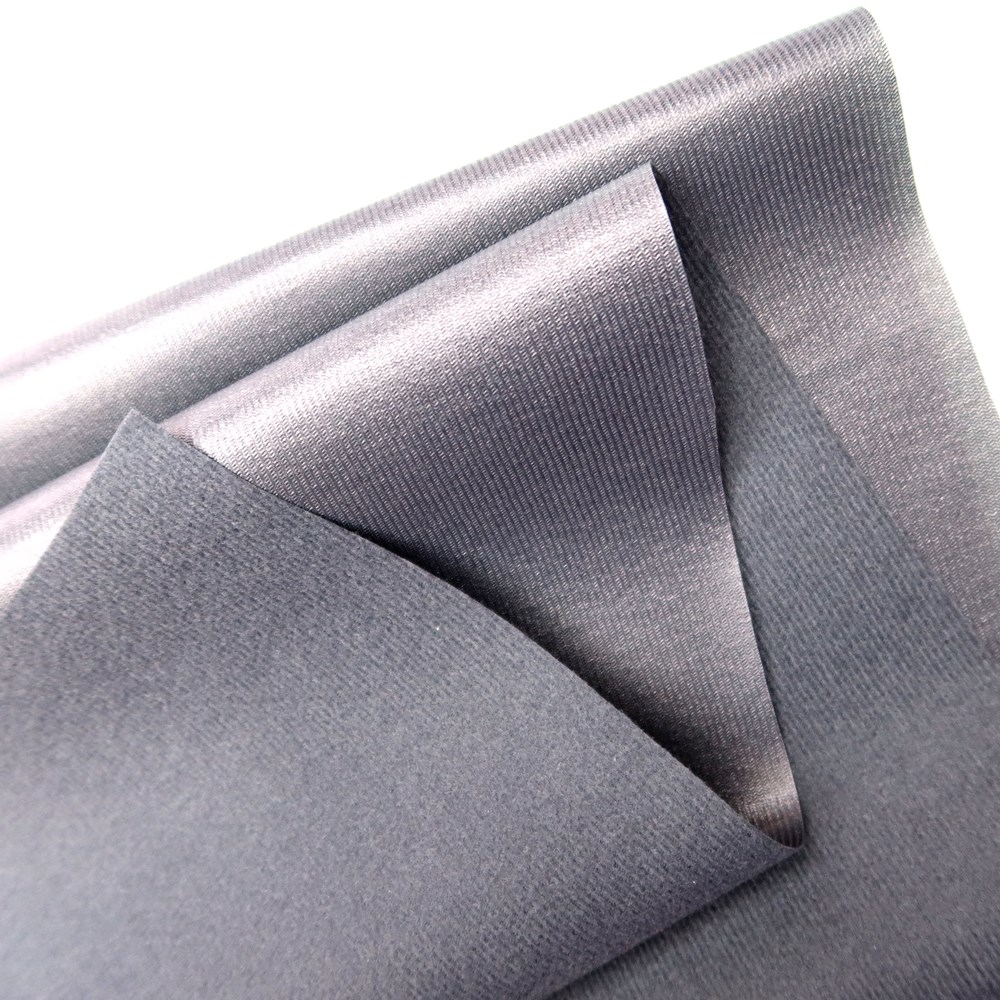
Pnömatik tıbbi destek, aynı anda iki görevi yerine getirmelidir. Hava odaları basınç tutmak zorundadır; bununla birlikte, çevre malzeme vücudun etrafında esnemeli ve kullanım sırasında rahat kalmalıdır. Ürün defalarca şişirilip boşaltıldığında, kumaş, bağlanmış katmanlar ve dikişler hepsi mekanik stres altına girer.
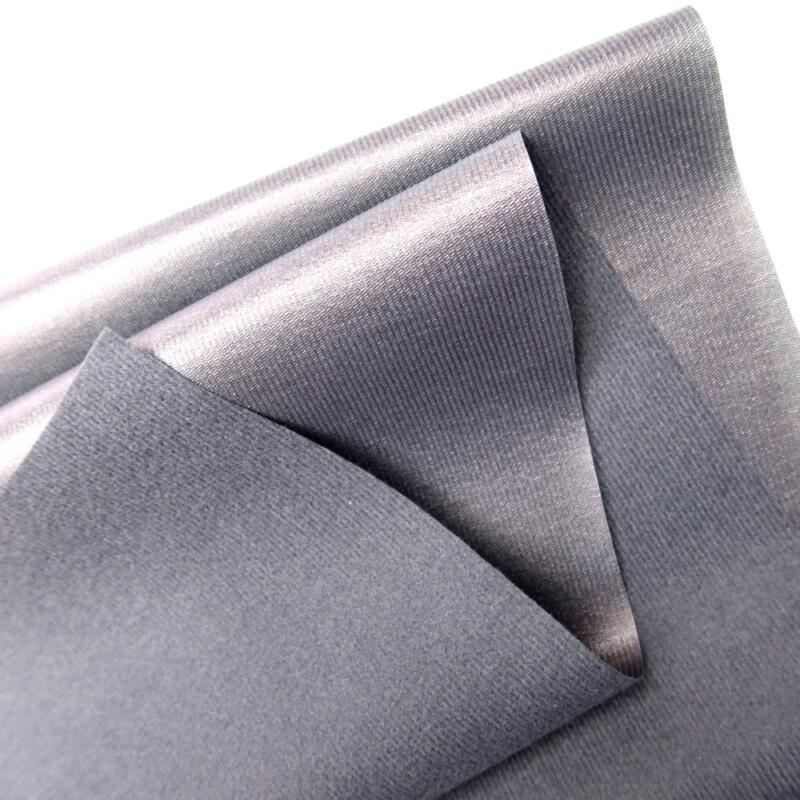
Gri TPU Kaplamalı Naylon Döngü Kumaş bu tür yapı için tasarlanmıştır. Naylon terli döngü dokuyu termoplastik poliüretan (TPU) membran ile birleştirir. Döngü tarafı yumuşak bir dokulu yüzey sağlarken, TPU katmanı havayı tutmak ve su nüfuz etmesine karşı direnç sağlamak için kullanılan bariyeri oluşturur.
Şişirilebilir yürüyüş botları, ortopedik destekler, pnömatik sıkıştırma kolları ve rehabilitasyon ekipmanları geliştiren üreticiler için önemli soru, bu kompozitin bitmiş üründe nasıl performans göstereceği. Kumaş ağırlığı, membran kalınlığı, oda tasarımı ve bağlantı yöntemleri hepsi sonucu etkiler.
Şişirilebilir Tıbbi Bir Üründe Her Katmanın Rolü
Naylon döngü destek ve TPU membranın farklı işlevleri vardır. Kompoziti tek, ayrıştırılmamış bir malzeme olarak ele almak, ürün geliştirme sürecinde önem taşıyan özelliklerin belirlenmesini zorlaştırabilir.
Naylon döngü destek
Naylon terli döngü yüzeyi malzemeye dokulu bir dokulu yüzey kazandırır. Bu, kumaşın astar veya temas yüzeyi olarak kullanıldığı ürünlerde faydalı olabilir. Pürüzsüz bir polimer yüzeye kıyasla, döngü yapısı farklı bir el hissi verir ve monte edilen ürünün yastıklama özelliklerine katkıda bulunabilir.
Destek ayrıca kompozitin kesim ve montaj sırasında nasıl esneyip katlandığını ve elle tutulmasını etkiler. Davranışı dokunun yapısına ve döngü yoğunluğuna bağlıdır; bu nedenle üreticiler sağlanan malzemeyi değerlendirmeli, tüm döngü kumaşlarının aynı şekilde davranacağını varsaymamalıdır.
TPU membran
TPU membran, şişirilebilir bir oda için gerekli sürekli bariyeri sağlar. Özellikle belirli bir süre boyunca veya tekrarlı çalışma döngüleri sırasında basınç koruması gereken ürünlerde rolü çok önemlidir.
Membran ayrıca esnekliği ve imalatı da etkiler. TPU formülasyonunda veya kalınlığında değişiklik, kumaşın nasıl işlenip kaplanmış yüzeylerinin kaynak sırasında nasıl tepki vereceğini etkileyebilir.
Kompozit bağlama
Naylon dokuya ve TPU membrana arasındaki bağ, imalat ve kullanım sırasında sağlam kalmalıdır. Katmanlar ayrılırsa, membran kendisi sızdırmaz kalsa bile kumaş artık beklenen şekilde davranmayabilir.
Çıkarılma gücü ve diğer ilgili bağlama testleri, bu arayüzü değerlendirmeye yardımcı olabilir. Tekrarlı esnemeye maruz kalan ürünlerde, uygun kondisyonlandırmadan sonra yapılan testler, yalnızca kullanılmamış bir numune değerlendirilmesinden daha faydalı bilgi sağlayabilir.
Neden Hava Geçirmezliğin Birden Fazla Seviyede Değerlendirilmesi Gerekiyor
Bir malzemenin hava geçirmez bir membranı olsa bile, bitmiş ürün hâlâ sızabilir. Uygulamada hava kaynakları kaynak dikişleri, valf bağlantıları, hasarlı alanlar veya oda montajındaki diğer arayüzlerden kaçabilir.
Bu nedenle üreticiler şunu ayırt etmelidir: kumaş seviyesindeki bariyer performansı ve bitmiş ürün basınç tutma kabiliyeti.
Kumaş testleri, membranın anlaşmaya konulan gereksinimleri karşılayıp karşılamadığını belirleyebilir. Montaj testleri ise ayrı parçaların ve bileşenlerin bir araya geldiği yerleri inceler.
Örneğin, şişirilebilir tıbbi bir bot için oda, ayak bileği veya ayak çevresinde eğri bölümler ve dar eklem bölgeleri içerebilir. Bu özellikler düz bir test örneğinden farklı imalat koşulları yaratabilir. Bir pnömatik kolun birkaç odası olabilir, her birinin kendi dikişleri ve bağlantı noktaları.
Bir geliştirme planı dolayısıyla şunları içermelidir:
- Malzemenin hava geçirmezliğini anlaşmaya konulan bir yöntemle test etmek.
- Temsil edici kaynak dikişleri üretmek ve sızıntı kontrolü yapmak.
- Valf ve bileşen bağlantı bölgelerini değerlendirmek.
- Monte edilmiş odanın belirlenen çalışma koşullarında test edilmesi.
- Simüle kullanım veya döngü sonrası ilgili kontrolleri tekrarlamak.
Test basıncı, süresi ve kabul limitleri ürün gereksinimlerinden gelmelidir. Bunlar kumaşın adından veya nominal kalınlığından çıkarılmamalıdır.
Hedeflenen Tasarıma Göre TPU Kalınlığının Seçimi
Ürün, özelleştirilebilir TPU kalınlığına sahip olup tipik aralık 0,08 mm ila 0,25 mm. Daha ince bir membran, ürünü esnek tutmaya ve malzeme ağırlığını azaltmaya yardımcı olabilir. Ancak tasarımın mekanik ve bariyer ihtiyaçlarına hâlâ dayanması gerekir. Daha kalın bir membran, yapı daha ciddi bir tabaka gerektirdiğinde uygun olabilir; ancak esneme davranışını, elle tutulmayı ve kaynak koşullarını da değiştirebilir.
Karar, birkaç faktörü hesaba katmalıdır:.
Tasarım faktörü
| Neden önemli? | Oda basıncı |
|---|---|
| Monte edilen malzemenin dayanması gereken koşulları belirler | Ürün geometrisi |
| Eğriler, katlanmalar ve dar bölgeler yerel gerilmeyi etkileyebilir | Şişirme sıklığı |
| Tekrarlı döngüler membran ve dikişlere stres yükleyebilir | Gerekli esneklik |
| Malzeme, ürünün hareketi ve uyumuna uygun çalışmalı | Kaynak yöntemi |
| Membran kalınlığı ve formülasyonu bağlantı sürecini etkileyebilir | Bitmiş ürün ağırlığı |
| Kumaş ağırlığı cihazın toplam kütlesine katkıda bulunur | Beklenen kullanım koşulları |
| Sıcaklık, nem, aşınma ve elle tutulma dayanıklılık gereksinimlerini etkileyebilir | Üreticiler genel bir kuraldan kalınlık seçmek yerine, temsili bir yapıda numuneleri karşılaştırmalıdır. Seçilen malzeme, imalat veya kullanım sırasında önlenmekte olan zorluklar yaratmadan gerekli performansı karşılamalıdır. |
Rather than selecting a thickness from a general rule, manufacturers should compare samples in a representative construction. The chosen material needs to meet the required performance without creating avoidable difficulties during fabrication or use.
Material Considerations for Different Medical Applications
Grey TPU Coated Nylon Loop Fabric may be considered for several types of inflatable medical products. Each application brings a different combination of pressure, movement, contact and assembly requirements.
Şişirilebilir yürüyüş botları ve ortopedik destekler
Inflatable boots and braces use air chambers to provide adjustable support around a body area. Their fabric components may be exposed to bending, pressure changes and contact with neighboring parts of the device.
The loop backing can contribute to the textile interface, while the TPU membrane provides the barrier for the inflatable sections. During development, manufacturers should pay attention to the areas where the chamber curves around joints, where the material meets fastening components and where repeated movement may concentrate stress.
Prototype evaluation should include chamber integrity, seam performance and the behavior of the composite in the intended shape.
Intermittent pneumatic compression sleeves
Intermittent pneumatic compression (IPC) sleeves operate through controlled inflation and deflation. Chamber arrangement and operating cycles influence the mechanical demands placed on the fabric.
For these products, the material should be tested as part of a representative sleeve assembly. Relevant checks may include air leakage, seam strength, dimensional stability and performance after repeated cycles.
The fabric does not determine the pressure sequence or therapeutic effect of the device. Those functions depend on the complete product design and control system.
Lymphedema treatment wraps
Pneumatic wraps may need to accommodate different body contours while maintaining the intended chamber layout. Material flexibility and seam placement can affect how the wrap fits and how the chambers behave when inflated.
Developers should assess the composite with the intended lining, closures and chamber geometry. Testing should reflect the use conditions specified for the product rather than relying on a generic pressure or durability assumption.
Inflatable positioning cushions
Positioning cushions and orthopedic pillows may experience prolonged loading, changes in shape and repeated adjustment. Depending on the design, sustained pressure retention and dimensional behavior may be particularly important.
The fabric should be evaluated with the actual cushion construction. Chamber seams, valves and areas that bear load may require separate attention during prototype testing.
Welding and Assembly: Where Fabric Properties Meet Production
The ability to join TPU-coated areas is an important consideration for inflatable products. The material is specified for welding processes such as high-frequency (HF) welding and hot-air welding. The appropriate method depends on the equipment, fabric construction and product design.
A process that works with one TPU-coated textile may not transfer directly to another. Membrane thickness, formulation, surface condition and joint geometry can all affect the result.
HF welding and hot-air welding
HF welding uses a high-frequency field to generate heat in compatible materials, while hot-air welding applies heated air to the joining area. Both methods may be considered for suitable TPU constructions, but the process window must be established for the specific material.
Manufacturers should avoid relying on settings from a different fabric without conducting trials. A change in membrane thickness or formulation may require adjustments to the welding parameters.
Test the actual joint design
A straight test seam is useful, but it may not represent the full product. Inflatable medical components can include curved seams, overlapping sections, corners and valve attachments.
The trial should reproduce these features wherever practical. The team can then inspect the weld, test its strength and check for leakage under the agreed conditions.
Manage sewn areas carefully
Sewing may be needed for straps, covers or other textile components. However, needle perforations through an airtight chamber can create leakage paths.
The product drawing and assembly instructions should clearly distinguish between areas that may be stitched and areas where the barrier must remain continuous. Where stitching is necessary near an air chamber, the design should specify how the barrier will be maintained.
What to Check During Incoming Material Inspection
A consistent inspection process helps manufacturers confirm that the supplied fabric matches the approved specification. The checks should focus on properties that can affect production or the finished device.
| Inspection item | Purpose |
|---|---|
| Visual condition | Identify visible defects, contamination or damage |
| Width and thickness | Confirm dimensions against the agreed specification |
| Composite structure | Check that the textile and TPU layers match the approved construction |
| Bonding quality | Assess the integrity of the textile-to-membrane interface |
| Hava geçirmezlik | Check barrier performance using the specified method |
| Tensile and tear properties | Evaluate resistance to relevant mechanical loads |
| Welded seam performance | Confirm that the material can form acceptable joints |
| Batch documentation | Connect inspection results to the material supplied |
The product’s quality assurance process includes raw material inspection, in-process monitoring of coating uniformity and bonding strength, and final testing for airtightness, peel strength and durability. For a specific project, buyers should confirm which tests are performed, how results are recorded and what acceptance criteria apply.
A retained reference sample can also help when comparing later deliveries. If the material construction or production process changes, the manufacturer and supplier should determine whether the change requires additional evaluation.
Customization Should Solve a Defined Product Requirement
The fabric can be customized in color, TPU thickness, width and composite structure. Single- or double-sided TPU coating and different terry loop densities may also be considered, depending on the product requirements.
These options are most useful when they address a specific design need.
For example, a product may require a particular loop surface for its lining arrangement. Another design may need a different membrane thickness to meet its flexibility and barrier requirements. A customized width may help match the cutting layout and material utilization.
Before requesting a variation, manufacturers should identify which property needs to change and how the change will be evaluated. That keeps the material specification connected to the product’s function and helps avoid unnecessary revisions late in development.
Medical Application Does Not Replace Device-Level Validation
A fabric intended for medical applications is only one component of the finished device. Its suitability depends on the intended use, contact conditions, manufacturing process and applicable requirements.
The description “medical” does not by itself establish biocompatibility, sterility, suitability for prolonged skin contact or compliance with a particular regulation. Where patient contact is involved, the device manufacturer should determine which biological evaluation and other tests are required for the specific use.
The same principle applies to product performance. The fabric may provide an airtight barrier, but it does not independently establish that a compression sleeve, orthopedic support or rehabilitation device is safe or effective. Those conclusions require evaluation of the complete device, including its design, controls, assembly and intended use.
A Practical Route from Sample to Production
A material trial is more useful when it follows the same steps the product will encounter during manufacturing.
Begin by defining the chamber pressure, geometry, expected cycles, contact conditions and required service life. Confirm the proposed fabric construction, including the nylon loop backing and TPU membrane thickness.
Next, inspect the sample and produce representative welded joints. Record the process settings and evaluate seam integrity, strength and leakage. Assemble a prototype using the intended valves, closures, lining and other components, then test it under conditions that reflect the product requirements.
Once the construction has been approved, document the material specification, critical process parameters and quality checks. Establish how changes to the fabric or manufacturing process will be reviewed before they are introduced into production.
This approach gives engineering, quality and purchasing teams a shared record of what was tested and what the approved material is expected to deliver.
Grey TPU Coated Nylon Loop Fabric combines a nylon terry loop textile with a TPU membrane for inflatable medical product designs that require a textile surface and an air-retaining barrier. It can be considered for walking boots, orthopedic supports, pneumatic compression sleeves, positioning cushions and other rehabilitation equipment.
Its performance in a finished device depends on more than the fabric alone. Membrane thickness, textile construction, bonding, seam geometry and manufacturing conditions all influence the result.
For manufacturers, a representative prototype and a documented qualification process provide the clearest basis for material approval. Testing the actual chamber design, checking the welded seams and confirming the relevant medical-device requirements help establish whether the fabric is suitable for the intended application.
 English
  Spanish
  Italian
  Korean
  French
  Japanese
  Arabic
  Portuguese
  Vietnamese
  German
  Turkish
  Belarusian