


욕창 방지 공기 매트리스에 사용되는 원단은 단순히 공기를 가두는 것 이상의 기능을 수행해야 합니다. 각 공기 셀은 수많은 번 반복적으로 팽창과 배기 과정을 거치며, 보관 중에는 접히고, 사용 후에는 세척되며, 매트리스가 사용 중일 때는 지속적인 하중에 노출됩니다. 이 소재는 형태를 유지하고, 찢어짐을 견뎌야 하며, 셀 내부의 공기를 밀봉하고, 매트리스가 제대로 작동할 만큼 충분히 유연해야 합니다.
경량 공기 제품의 경우, TPU 코팅이 된 70D 나일론은 유연성과 무게 사이의 좋은 균형을 제공할 수 있습니다. 하지만 더 무거운 사용자나 장기간 사용, 빈번한 팽창 및 배기 주기가 예상되는 매트리스라면 요구사항이 달라집니다.
여기에서 TPU 코팅 210D 나일론 원단, 욕창 방지 공기 매트리스용 실용적인 소재 옵션이 됩니다.
210D 나일론 기질은 더 가벼운 70D 구조보다 강한 직물 구조를 제공하며, TPU 코팅은 공기 셀을 팽창시키는 데 필요한 차단 성능을 제공합니다. 두 층은 서로 다른 역할을 수행하며, 완성된 매트리스의 성능은 이 두 가지 역할이 얼마나 잘 조화를 이루는지에 따라 달라집니다.
공기 매트리스 원단이 공기밀도 이상의 기능을 갖춰야 하는 이유
공기밀도는 공기 매트리스용 원단 선택 시 가장 먼저 고려되는 특성 중 하나이지만, 이는 소재 요구사항의 일부에 불과합니다.
공기 셀은 유연한 구조입니다. 팽창하면 원단은 긴장 상태가 되고, 비축되면 소재는 스스로 접힙니다. 사용 중 환자의 체중 변화로 인해 셀의 형태와 하중 조건이 변합니다. 반복적인 팽창과 배기는 또 다른 기계적 스트레스 주기를 추가합니다.
따라서 원단은 동시에 여러 조건을 견뎌야 합니다:
- 내부 공기 압력
- 반복적인 굽힘
- 인장 하중
- 용접 이음새 주변의 국소 스트레스
- 접고 펴기
- 세척 및 습기 노출
- 장기 압축 및 변형
짧은 공기밀도 테스트에서 우수한 성능을 보이는 소재가 반드시 집중적이고 장기간 사용을 목적으로 한 매트리스에 최선의 선택은 아닐 수 있습니다.
이런 이유로 직물 기질은 코팅만큼이나 주목받아야 합니다.
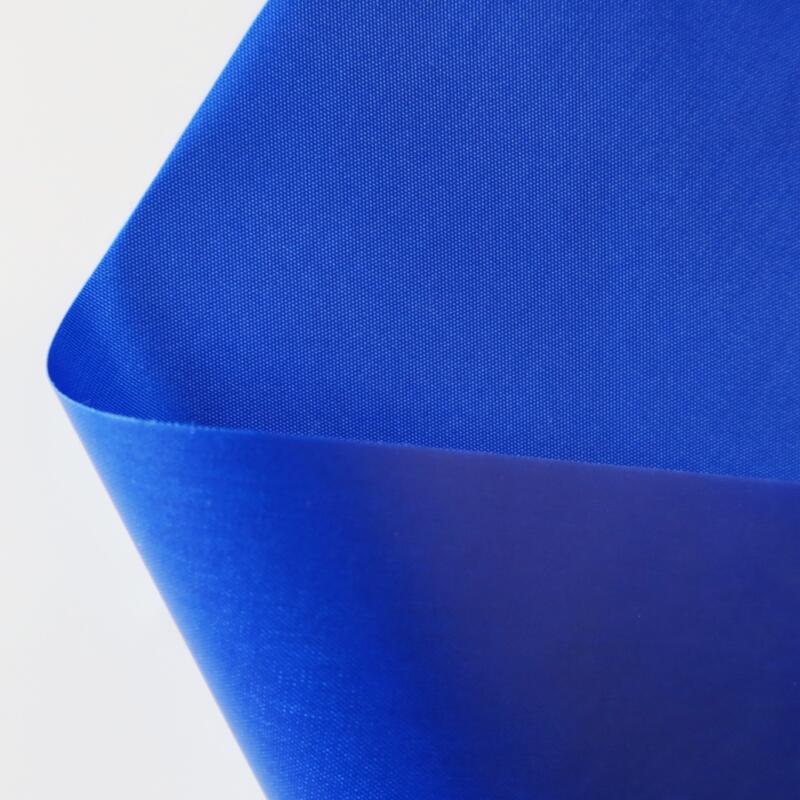
210D 나일론은 구조에 어떤 장점을 가져다줄까요?
“210D”라는 표시는 직물 구조에 사용된 나일론 실의 데니어를 나타냅니다. 이는 단순히 원단이 70D 원단보다 두 배 좋다는 의미는 아니며, 데니어만으로 완제품의 강도를 결정하지 않습니다.
그러나 경량 70D 구조에서 더 무거운 210D 나일론 기질로 바꾸면 일반적으로 더 높은 기계적 요구사항에 노출되는 제품에 더 강력한 기반이 제공됩니다.
주요 이점은 다음과 같습니다:
더 높은 인장 강도
나일론 기질은 코팅된 원단 내에서 상당한 부분의 기계적 하중을 부담합니다.
공기 셀이 팽창하면 원단은 내부 압력으로 인해 발생하는 힘에 저항해야 합니다. 사용자가 매트리스 위에 누우면 셀의 형상이 바뀌고 하중이 원단과 용접 구조를 통해 재분배됩니다.
더 강한 직물 기질은 이러한 기계적 요구사항을 처리할 때 디자이너에게 더 많은 여유를 줍니다.
더 나은 내피 찢김 저항성
찢어짐은 종종 작은 절단, 구멍, 손상된 가장자리 또는 스트레스가 가해진 부위에서 시작됩니다.
일단 찢어짐이 시작되면 직물 구조가 그 전파 속도를 좌우합니다.
더 강한 210D 나일론 구조는 가벼운 직물보다 찢어짐 전파에 더 큰 저항력을 제공할 수 있으며, 설치, 세척, 운송 또는 보관 중 자주 다뤄지는 제품에 유용합니다.
더 높은 치수 안정성
공기 셀의 치수는 중요합니다. 셀의 형태는 팽창 방식과 매트리스 구조를 지지하는 방식에 영향을 미치기 때문입니다.
과도한 변형은 개별 셀의 형태와 작동 위치에 영향을 줄 수 있습니다. 안정적인 직물 기질은 반복 사용에도 완성된 구조가 더욱 일정한 치수를 유지하도록 돕습니다.
매트리스 크기, 셀 크기, 사용자 체중 및 작동 주기가 증가함에 따라 이는 더욱 중요해집니다.
TPU 층은 다른 역할을 합니다
나일론 원단은 구조적 보강을 제공합니다. TPU 층은 지속적인 폴리머 차단막을 제공합니다.
코팅된 원단을 평가할 때 이 구분은 중요합니다.
TPU 코팅은 다음과 같은 특성을 담당합니다:
- 기밀성
- 방수성
- 유연성
- 표면 보호
- 용접 가능성
- 차단 성능
코팅은 원단이 구부러지고 늘어나는 동안 나일론 기질에 단단히 붙어 있어야 합니다.
접착성이 부족하면 반복적인 굽힘으로 인해 코팅이 직물에서 분리될 수 있습니다. 코팅이 적용에 너무 얇으면 일정한 차단 성능을 유지하기 어려워질 수 있고, 너무 두꺼우면 완성된 원단이 더 무거워지고 유연성이 떨어질 수 있습니다.
따라서 목표는 최대 코팅 두께가 아닙니다. 코팅 구조가 불필요한 무게나 가공 문제를 일으키지 않으면서 필요한 성능을 제공하는 것입니다.
TPU가 유연한 공기 셀에 적합한 이유
TPU는 유연성과 차단 및 용접 성능을 결합하기 때문에 팽창 가능한 구조에 적합합니다.
공기 매트리스는 팽창과 배기 과정에서 움직여야 하며, 단단한 용기처럼 행동해서는 안 됩니다. 따라서 코팅은 공기를 가두는 능력을 유지하면서도 유연성을 유지해야 합니다.
TPU는 특정 TPU 조성과 생산 설비에 따라 열봉합 및 고주파 용접을 포함한 팽창 가능한 제품에 사용되는 여러 접합 공정을 지원합니다.
다중 셀 매트리스의 경우, 이는 이음새가 각 공기 챔버의 실제 경계를 형성하기 때문에 중요합니다.
코팅은 평평한 소재로서는 우수한 성능을 발휘할 수 있지만, 완성된 공기 셀은 여전히 이음새의 품질에 의존합니다.
공기밀도는 완성된 구조에 달려 있습니다
코팅된 원단을 “공기밀도가 뛰어나다”고 설명하는 것은 쉽지만, 제품 엔지니어들은 원단 자체를 넘어서 살펴봐야 합니다.
공기 매트리스에는 여러 잠재적 누출 지점이 있습니다:
- 용접 이음새
- 모서리
- Valve connections
- Tubing interfaces
- Reinforcement areas
- Material transitions
A small defect in one of these areas can affect the performance of an entire mattress system.
For this reason, material qualification should include finished-product testing rather than relying only on a coating permeability or laboratory material test.
The fabric, welding conditions, seam width, pressure, cell dimensions, and valve construction all need to work together.
Why 210D Can Be Useful for Heavy-Duty Mattress Designs
The main reason to consider 210D is not simply that the fabric is heavier.
The stronger textile construction becomes valuable when the finished mattress has greater mechanical demands.
A heavy-duty mattress may need to support higher user loads while maintaining its cell structure through repeated inflation and deflation.
In these conditions, the fabric may experience greater tension and more demanding stress around seams and connection points.
A 210D nylon substrate provides a stronger structural base for the TPU coating.
This makes the construction particularly relevant to products such as:
Bariatric Support Surfaces
Bariatric mattresses require a material construction capable of handling higher loads.
The exact fabric specification still needs to be matched with mattress dimensions, internal pressure, cell design, reinforcement, and load requirements.
However, a stronger 210D substrate can provide a useful starting point when the product needs more mechanical strength than a lightweight construction can comfortably provide.
Heavy-Duty Alternating Pressure Mattresses
Alternating pressure systems repeatedly inflate and deflate different air cells.
This creates a cyclic mechanical load on the fabric and seams.
The material therefore needs to tolerate repeated flexing without losing the properties required for the air cell.
A stronger textile base combined with a flexible TPU coating can provide a suitable construction for this type of product.
Long-Term Care Products
Mattresses used in hospitals, nursing facilities, rehabilitation environments, or homecare settings may be handled frequently.
They can be folded, moved, cleaned, stored, and returned to service many times.
Material durability becomes important because the product is not only exposed to pressure during use. It also experiences mechanical handling throughout its service life.
70D or 210D? The Answer Depends on the Mattress
There is no reason to replace every 70D construction with 210D.
For products where low weight and flexibility are the primary requirements, 70D nylon can still be a sensible choice.
The difference becomes more important when mechanical demands increase.
| 요구사항 | 70D TPU 코팅 나일론 | 210D TPU 코팅 나일론 |
|---|---|---|
| Low weight | 우수함 | 좋음 |
| 유연성 | 우수함 | 매우 우수 |
| 인장 강도 | 좋음 | 우수함 |
| 내 찢김성 | 좋음 | 우수함 |
| 치수 안정성 | 좋음 | 매우 우수 |
| Repeated inflation cycles | 좋음 | 우수함 |
| Higher load requirements | 응용분야에 따라 다름 | 더 적합 |
| Bariatric mattress designs | 응용분야에 따라 다름 | 강력한 후보 |
| Heavy-duty construction | 응용분야에 따라 다름 | 강력한 후보 |
This comparison is a starting point rather than a fixed performance ranking. The actual result depends on yarn construction, fabric density, TPU formulation, coating thickness, bonding quality, and production conditions.
TPU Film Thickness Should Be Selected With the Product
TPU film thickness is another specification that needs to be considered together with the finished mattress design.
A thicker coating can provide a more substantial polymer barrier, but it also adds weight and changes the flexibility and hand feel of the fabric.
It can also change welding behavior.
For an air mattress manufacturer, the right thickness should be determined by the required airtightness, mechanical performance, welding method, pressure conditions, and product construction.
For example, a large air cell operating under higher stress may have different requirements from a small cushion bladder.
The same applies to welded seams. A material that works well with one film thickness may require different welding parameters after the coating construction is changed.
This is why TPU film thickness should be treated as a product-development parameter rather than an isolated purchasing specification.
Welding Is Part of the Material Selection
A coated fabric only becomes useful after it can be converted into a reliable air cell.
For anti-decubitus mattresses, welding quality is particularly important because the mattress usually contains many individual chambers and connections.
High-frequency welding and heat sealing can be used with suitable TPU constructions, but the actual processing window depends on the material and equipment.
Parameters such as:
- Welding temperature
- 압력
- Welding time
- Electrode design
- Film thickness
- TPU hardness
- Fabric construction
can affect the final seam.
A good production trial should therefore test both the material and the welding process.
Peel strength, seam integrity, airtightness, dimensional stability, and repeated flexing are more useful indicators than a material datasheet alone.
The Strongest Fabric Cannot Compensate for Poor Product Design
Material strength is only one part of the air-cell structure.
Consider a mattress with a large air chamber and relatively high internal pressure. The fabric may have excellent tensile strength, but if the seam geometry concentrates stress in a small area, the seam can still become the weak point.
The same issue can occur around valves and connectors.
Product designers should therefore evaluate:
Fabric strength + coating performance + seam design + air pressure + cell geometry + reinforcement
as one system.
A 210D fabric can provide a stronger material foundation, but it does not eliminate the need for proper product engineering.
What Should Medical Mattress Manufacturers Test?
When evaluating TPU coated 210D nylon for a new mattress, the test program should represent actual use.
The material itself can be tested for tensile strength, tear resistance, abrasion, flexibility, coating adhesion, and other relevant properties.
The finished air cell should then be evaluated separately.
Depending on the product, useful tests may include:
Air Retention
Inflate the finished air cell to the intended operating pressure and monitor pressure loss over a defined period.
This gives a more realistic picture of the complete air-retention system.
Repeated Inflation and Deflation
Cycle the air cell repeatedly to simulate actual operation.
After cycling, inspect the coating, seams, welds, valve areas, and fabric for changes.
Load Testing
Apply a representative load to the mattress and evaluate deformation, pressure retention, seam integrity, and structural stability.
The test conditions should reflect the intended user and product design.
Flexing and Folding
Repeated folding can place stress on the coating and the fabric-to-TPU interface.
This is particularly relevant to products that are frequently transported or stored.
Cleaning and Fluid Exposure
Medical mattresses may be exposed to cleaning agents, moisture, and bodily fluids.
The material system should be evaluated against the actual cleaning chemicals and procedures used by the customer.
The suitability of a TPU grade for a medical product should be confirmed through the applicable testing and compliance process. TPU chemistry alone does not establish medical certification.
Color and Customization Matter More Than They First Appear
For OEM and ODM mattress manufacturers, fabric color is not only an aesthetic choice.
Different product lines may require different colors for brand identification, product differentiation, or production management.
The TPU coating can also be produced with different visual characteristics depending on the application.
At the same time, customization needs to remain compatible with the required mechanical and processing properties.
This is where close communication between the fabric manufacturer and mattress producer becomes useful.
The customer should provide the target application, fabric construction, expected load, operating pressure, welding process, film thickness, color requirements, and testing criteria as early as possible.
That gives the material supplier enough information to develop a construction around the actual product rather than simply supplying a standard roll of fabric.
A Stronger Fabric Does Not Always Mean a Better Product
There is a tendency in industrial purchasing to associate higher denier or greater thickness with better quality.
That approach can create unnecessary material cost.
If a lightweight mattress only needs moderate mechanical strength, moving to 210D may add weight without providing a meaningful product advantage.
On the other hand, if the mattress is intended for high loads and long-term intensive use, choosing a lightweight construction only to reduce fabric cost may create greater risks later.
The right question is:
What level of material performance does the finished product actually require?
A well-designed material specification should meet the application requirements without excessive construction.
Where TPU Coated 210D Nylon Fits Best
TPU Coated 210D Nylon Fabric is particularly suitable when a medical air mattress requires a stronger textile foundation while retaining the flexibility and airtight properties of TPU.
일반적인 응용 분야는 다음과 같습니다:
- Heavy-duty alternating pressure mattresses
- Bariatric air mattresses
- Static air flotation mattresses
- Medical bed replacement systems
- Long-term care mattresses
- Rehabilitation support surfaces
- Inflatable medical cushions
For lighter products where weight is a major concern, 70D TPU coated nylon may remain the better option.
For higher-load products where tensile strength, tear resistance, dimensional stability, and repeated mechanical stress are more important, 210D provides a stronger starting point.
Material Selection Should Start With the Finished Product
The choice between 70D and 210D is not simply a choice between two fabric weights.
It is a decision about how the material will behave inside a finished air-cell structure.
For a medical mattress manufacturer, the selection process should begin with the intended use:
user load → air pressure → cell design → operating cycles → cleaning conditions → welding process → expected service life
From there, the fabric construction can be defined.
The 210D nylon substrate provides the mechanical foundation. The TPU coating provides the flexible air and moisture barrier. The welding process creates the sealed air chambers. The final mattress design determines how all these components are loaded during use.
When these factors are considered together, TPU Coated 210D Nylon Fabric becomes more than a heavier alternative to 70D fabric. It becomes a material option for medical air-cell products where strength, airtightness, flexibility, and long-term durability need to work together.
 English
 Spanish
 Italian
 Korean
 French
 Japanese
 Arabic
 Portuguese
 Vietnamese
 German
 Turkish
 Belarusian