


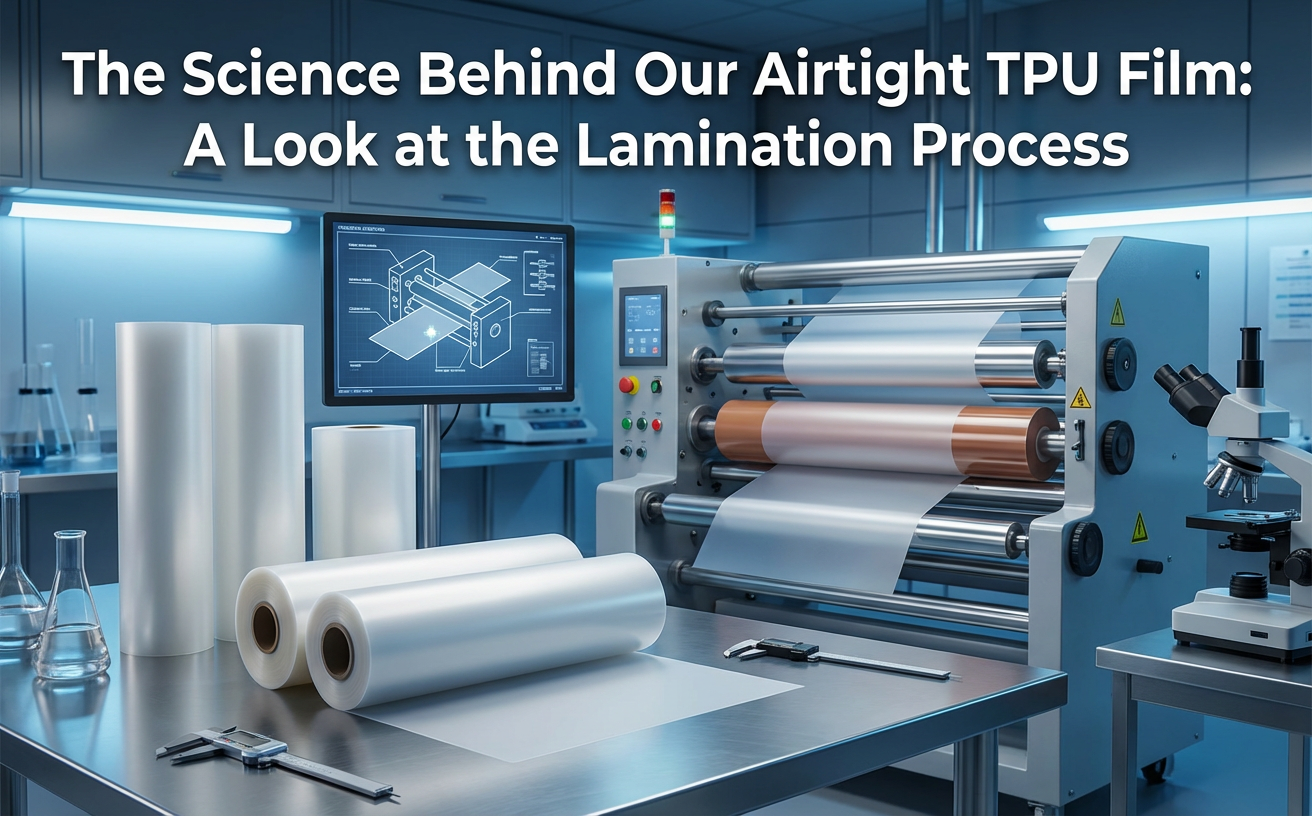
Nei prodotti medici gonfiabili, l'ermeticità non è facoltativa.
Le sacche per l'ossigeno, i sistemi di terapia a pressione e i materassi antidecubito dipendono tutti da una pressione interna stabile per funzionare correttamente. Quando si verifica una perdita, le prestazioni calano immediatamente. In alcuni casi, il prodotto diventa inutilizzabile.
Molti ritengono che la tenuta stagna derivi dal materiale stesso. In realtà, ciò dipende tanto dal modo in cui quel materiale viene lavorato.
A Pellicola TPU Da sola non basta. Se il metodo di incollaggio è instabile, l'aria finirà per trovare un varco attraverso giunzioni deboli o micro difetti.
È qui che la laminazione diventa fondamentale.
Alla SL Engineering, la tenuta stagna viene garantita attraverso un processo di laminazione termica controllato —non aggiungendo strati, ma trasformandoli in una struttura unica.La laminazione non è solo incollaggio.
La laminazione viene spesso descritta come l'unione di una pellicola e un tessuto. Questa descrizione manca il punto.
Nelle costruzioni di basso livello, gli strati vengono semplicemente uniti. L'interfaccia resta una barriera. Col tempo, questa barriera diventa la fonte di guasti—specialmente sotto pressione, flessione o uso ripetuto.
Per applicazioni a tenuta stagna, l'obiettivo è diverso. L'interfaccia deve scomparire.
Un tipico tessuto rivestito in TPU combina:.
Una pellicola TPU
- Un tessuto base come nylon 70D o 210D
- La domanda non è se questi due strati siano collegati. La domanda è se si comportano come un unico materiale dopo la lavorazione.
Come funziona la laminazione termica nella pratica.
Il processo di laminazione è definito da calore, pressione e tempistica. Ogni variabile influisce su come il TPU interagisce con il tessuto.
Passo 1: Preparazione della superficie.
Entrambi i materiali vengono preparati prima di entrare nella linea di produzione. Questo passaggio rimuove particelle e contaminazioni superficiali.
Senza una preparazione adeguata, possono rimanere spazi microscopici tra gli strati. Questi spazi non sono visibili, ma sotto pressione diventano vie di perdita.
Passo 2: Calandratura in condizioni controllate.
La pellicola TPU e il tessuto vengono inseriti in un sistema di calandratura. Questo sistema è composto da rulli riscaldati che applicano sia temperatura che pressione.
Lo scopo qui non è semplicemente premere insieme i materiali. È controllare come il TPU si comporta a uno specifico stato termico.
La stabilità della temperatura è fondamentale. Se fluttua, il TPU potrebbe ammorbidirsi in modo irregolare, causando un legame inconsistente.
Passo 3: Transizione allo stato fluido.
Alla temperatura corretta, la superficie del TPU raggiunge uno stato ammorbidito e fluido.
A questo punto, il materiale non è più una pellicola solida. Si comporta più come uno strato viscoso che può muoversi sotto pressione.
Questa transizione determina se il TPU:.
Resta sulla superficie
- O penetra nella struttura del tessuto
- Passo 4: Integrazione e raffreddamento rapido
Sotto pressione, il TPU ammorbidito si sposta negli spazi tra le fibre. Circonda singoli filamenti e riempie piccoli vuoti all'interno del tessuto.
Quando il materiale esce dalla zona riscaldata, passa attraverso rulli di raffreddamento. La struttura si fissa quasi immediatamente.
Ciò che rimane non è una pellicola posata su un tessuto. È uno.
strato composito continuo Cosa rende effettivamente la tenuta stagna.
Medical-Grade-0.15mm-TPU-Film-800x800.jpg)
La tenuta stagna non dipende dallo spessore. Dipende dalla continuità.
Se le molecole d'aria riescono a trovare un percorso—anche molto piccolo—nel tempo si verificherà una perdita.
In un tessuto TPU laminato correttamente:.
Il TPU riempie gli spazi tra le fibre
- La struttura delle fibre è parzialmente incorporata
- Non ci sono canali continui per il passaggio dell'aria
- Ecco perché la struttura si comporta diversamente rispetto ai materiali rivestiti o incollati.
I rivestimenti superficiali possono lasciare percorsi microscopici. L'integrazione molecolare li elimina.
Perché non si usano adesivi.
In alcuni metodi di laminazione, si usano adesivi per unire gli strati. Questo approccio è più semplice, ma introduce ulteriori variabili.
Gli adesivi possono:.
Invecchiare e perdere resistenza
- Separarsi sotto stress
- Separate under stress
- Creare zone di adesione irregolari
Possono inoltre introdurre componenti volatili, che non sono ideali in ambienti medici.
La laminazione termica evita questi problemi. L'adesione è creata dallo stesso TPU. Non sono necessarie sostanze aggiuntive.
Ciò porta a una struttura più stabile, sia dal punto di vista meccanico che chimico.
Stabilità del processo e impatto
Anche con le stesse materie prime, i risultati possono variare a seconda del controllo del processo.
Piccoli cambiamenti in:
- Temperatura
- Pressione
- Velocità della linea
possono influenzare quanto profondamente il TPU penetra nel tessuto e quanto uniformemente si distribuisce.
Se la penetrazione è incompleta, possono rimanere microvuoti. Questi vuoti rappresentano potenziali punti di perdita.
Ecco perché la laminazione viene trattata come un sistema controllato piuttosto che come una semplice fase produttiva. La coerenza su tutto il rotolo è importante tanto quanto le prestazioni di picco.
Confronto delle prestazioni: laminazione termica vs. adesione convenzionale
| Aspetto | Laminazione termica (TPU) | Metodo adesivo o di rivestimento |
|---|---|---|
| Struttura | Composito integrato | Struttura stratificata |
| Integrità ermetica | Stabile, non porosa | Dipende dalla qualità del rivestimento |
| Affidabilità a lungo termine | Consistente | Può degradarsi nel tempo |
| Rischio di delaminazione | Basso | Più alto sotto stress |
| Sensibilità del processo | Richiede un controllo elevato | Minore complessità iniziale |
Cosa significa nelle applicazioni reali
Negli inflatables medicali, i materiali sono sottoposti a carichi ripetuti. Vengono piegati, gonfiati, conservati e riutilizzati.
In queste condizioni, le interfacce deboli cedono per prime.
Una struttura laminata in TPU si comporta diversamente perché non esiste un confine netto tra gli strati. Lo stress viene distribuito attraverso il materiale invece di concentrarsi a un'interfaccia.
Ciò porta a:
- Maggiore tenuta della pressione stabile
- Tassi di guasto più bassi
- Vita utile più lunga
Questi non sono vantaggi teorici. Si manifestano nelle prestazioni effettive dei prodotti nel tempo.
Ambiente di produzione e coerenza
Le prestazioni ermetiche dipendono non solo dal processo, ma anche dall'ambiente in cui vengono eseguite.
Polvere, umidità e variazione della temperatura possono influire sulla qualità della laminazione.
Un impianto produttivo controllato include tipicamente:
- Manipolazione pulita dei materiali
- Sistemi termici stabili
- Pressione costante dei rulli
Quando queste condizioni sono mantenute, la produzione diventa prevedibile. Senza di esse, la variabilità aumenta – anche se il materiale stesso resta lo stesso.
I tessuti TPU ermetici non sono definiti solo dal TPU stesso. Sono definiti da come il TPU viene lavorato.
La laminazione termica determina se il materiale finale:
- Mantiene la pressione o perde gas
- Rimane stabile o si degrada
- Funziona in modo costante o varia tra le diverse produzioni
In SL Engineering, la laminazione è considerata una capacità fondamentale. Ogni parametro del processo viene controllato per garantire che il materiale finale si comporti come una struttura unica e continua.
È questo che consente al materiale di soddisfare le esigenze delle applicazioni mediche gonfiabili – dove le prestazioni non vengono testate una sola volta, ma ripetutamente nel tempo.
Chiamata finale all'azione
Se la vostra applicazione dipende da prestazioni affidabili e a tenuta d'aria, la scelta del materiale rappresenta soltanto una parte dell'equazione.
È il controllo del processo che definisce il risultato.
Contattate il nostro team di ingegneria per richiedere le schede tecniche (TDS) o per discutere dei requisiti del vostro progetto.
 English
  Spanish
  Italian
  Korean
  French
  Japanese
  Arabic
  Portuguese
  Vietnamese
  German
  Turkish
  Belarusian