


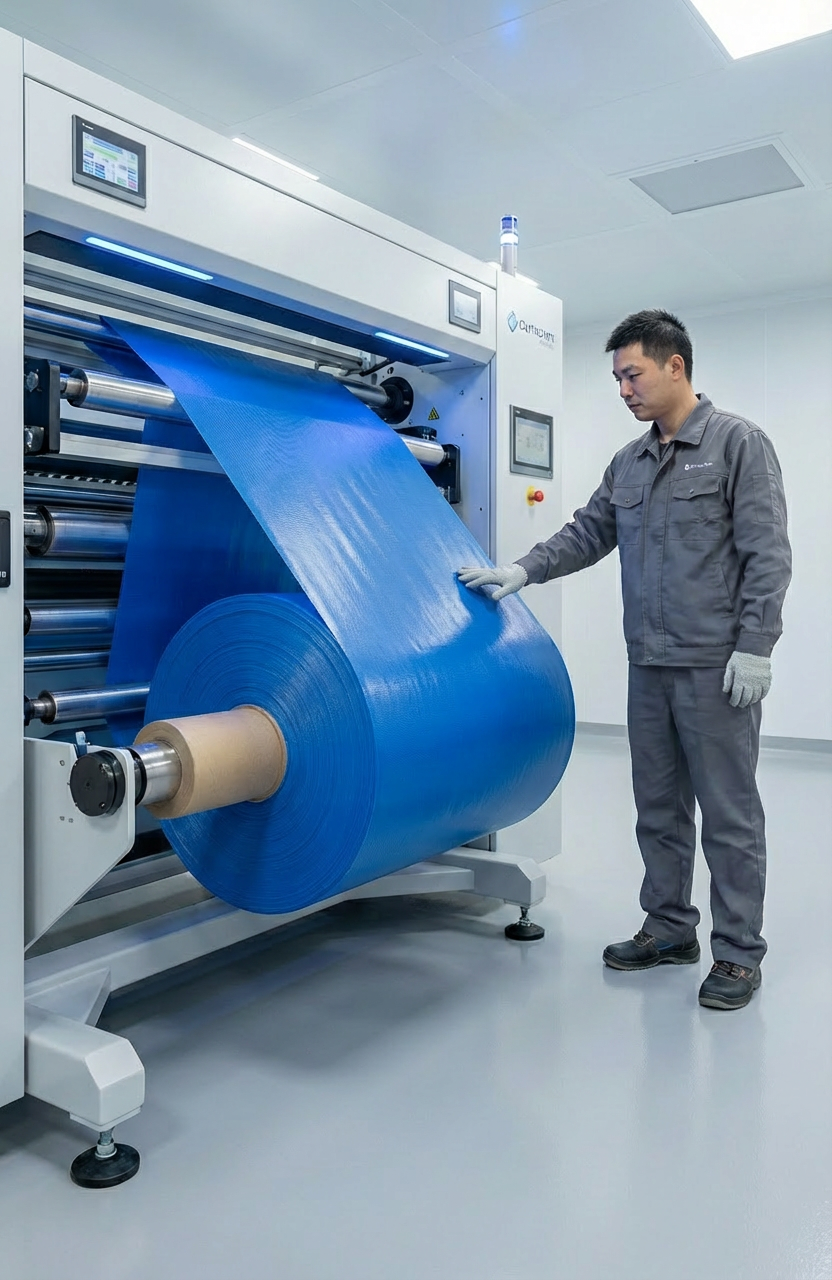
During product validation, oxygen bags rarely fail because the fabric itself is not strong enough.
More often, failures begin somewhere far less noticeable.
A small air leak develops along a welded edge. Internal pressure gradually decreases after repeated use. Corners that experience continuous folding begin to separate. In some cases, the fabric remains completely intact while the oxygen bag can no longer perform its intended function because the airtight seal has been compromised.
This is a reality that many new product developers overlook.
When discussing oxygen bags, attention is often directed toward the coated fabric—its thickness, tensile strength, coating type or abrasion resistance. These characteristics are certainly important, but they tell only part of the story. An oxygen bag is not simply a piece of coated fabric. It is an airtight system assembled through precision welding, where every seam becomes part of the pressure vessel itself.
From a product manager’s perspective, this changes how product reliability is evaluated.
The question is no longer, “How strong is the fabric?”
Instead, it becomes:
“Can the welded structure remain airtight throughout the product’s entire service life?”
That distinction influences every stage of development, from material selection and structural design to welding parameters, prototype validation and production quality control.
Manufacturers producing emergency oxygen bags, medical inflatable devices, portable oxygen carriers and rescue equipment understand that customer confidence depends on consistent performance rather than isolated laboratory data. A fabric with excellent mechanical properties cannot compensate for unstable welding quality, just as an excellent welding process cannot fully overcome poor material consistency.
The highest-performing products result from treating fabric and welding as a single engineering system rather than two independent manufacturing steps.
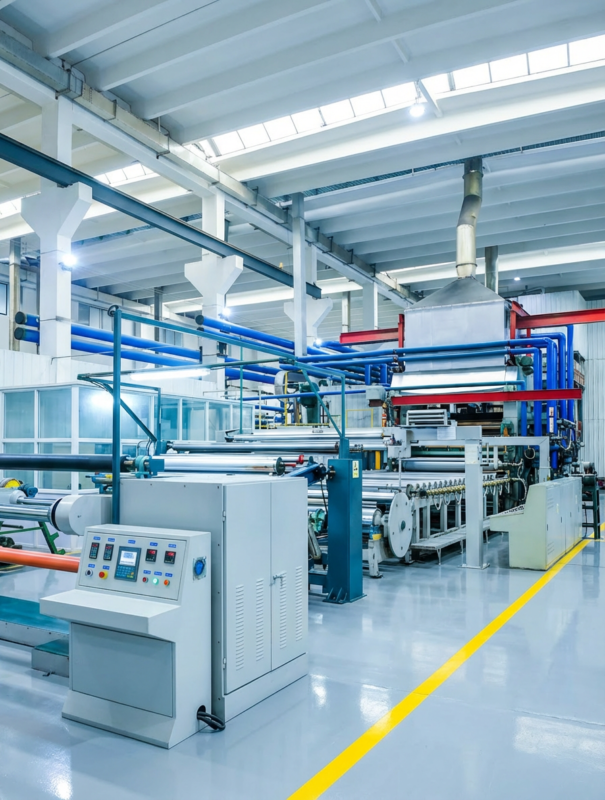
Oxygen Bags Are Engineered Systems Rather Than Simple Fabric Products
Many people imagine an oxygen bag as a flexible container designed to hold compressed oxygen.
From an engineering standpoint, the product is considerably more complex.
Every oxygen bag combines multiple elements into one functional system:
- Airtight coated fabric
- Reinforcement textile
- Precision welded seams
- Inflation and deflation valves
- Pressure-bearing geometry
- Repeated folding capability
Each component contributes to overall reliability.
Removing weakness from only one area does not guarantee a longer service life if another component becomes the limiting factor.
Airtight Performance Depends on the Entire Structure
Customers generally evaluate an oxygen bag in very simple terms.
Does it maintain pressure?
Can it be deployed immediately?
Does it continue working after repeated transportation and storage?
They rarely ask which polymer was selected or what welding process was used.
Instead, they judge the finished product by its reliability.
For manufacturers, however, achieving that reliability requires balancing several engineering variables simultaneously.
The coated fabric must resist mechanical stress.
The reinforcement fabric must stabilize the overall structure.
The coating must provide consistent airtightness.
The welded seams must withstand repeated loading without gradual separation.
Every element depends on the others.
Improving only one characteristic rarely transforms the finished product.
Pressure Is Shared Throughout the Entire Bag
One misconception appears frequently during product discussions.
Many assume that internal pressure acts primarily on the fabric surface.
In reality, pressure is distributed throughout the complete oxygen bag.
Every welded joint becomes part of the pressure-retaining structure.
Corners, curved transitions and valve connections often experience stress concentrations that are significantly higher than those observed across flat panel sections.
This explains why products often fail first around welded areas instead of across the fabric itself.
The material may still possess excellent tensile strength while the weakest welded section gradually loses sealing performance after thousands of pressure cycles.
From a product manager’s viewpoint, evaluating only fabric specifications provides an incomplete picture of long-term durability.
Welded Seams Usually Reach Their Limits Before the Fabric
Laboratory testing often demonstrates impressive mechanical properties for coated fabrics.
High tensile strength.
Excellent tear resistance.
Stable elongation.
Outstanding abrasion resistance.
These characteristics are valuable, but they do not necessarily predict how an assembled oxygen bag will perform after years of practical use.
The finished product behaves differently from the raw material.
Once panels are welded together, every seam becomes a transition zone where heat, pressure and material flow have permanently altered the original structure.
This is why experienced manufacturers pay as much attention to welding validation as they do to incoming material inspection.
Why Small Defects Become Large Problems
A welded seam rarely fails suddenly.
Failure usually develops gradually.
An extremely small imperfection introduced during manufacturing may remain undetectable during routine inspection.
After repeated inflation cycles, continuous folding and transportation, that microscopic defect begins expanding.
Eventually, pressure loss becomes noticeable.
The customer experiences reduced performance even though the surrounding fabric still appears undamaged.
Preventing this type of failure requires stable process control rather than relying solely on stronger materials.
Common Reasons Welded Seams Lose Performance
During production, several variables directly influence long-term seam reliability.
These include:
- Excessive welding temperature
- Insufficient welding pressure
- Incorrect dwell time
- Uneven coating thickness
- Surface contamination before welding
- Fabric wrinkles entering the welding zone
- Inconsistent cooling after welding
Each factor may appear relatively minor on its own.
Together, they determine whether a welded joint remains airtight for thousands of operating cycles or begins deteriorating after only limited use.
Product Manager’s Note
Customers rarely notice excellent welding.
They immediately notice poor welding.
Every warranty claim caused by air leakage represents a failure of the complete manufacturing system rather than the coated fabric alone.
Fabric Selection Directly Influences Welding Quality
Discussions about welding often focus exclusively on welding equipment.
In reality, welding quality begins long before the operator activates the machine.
It starts with material selection.
Different coated fabrics respond differently to identical welding conditions.
Changing only the coating formulation or reinforcement textile may require adjustments to temperature, pressure and production speed.
Ignoring these relationships frequently leads to unstable manufacturing results.
TPU Creates Continuous Material Bonding
High-performance medical oxygen bags increasingly utilize TPU-coated fabrics because thermoplastic polyurethane softens in a controlled manner during heat or high-frequency welding.
Instead of relying on adhesives or stitched construction, adjacent TPU layers fuse together to form a continuous polymer structure.
When welding parameters are properly optimized, the joint behaves much like the surrounding material instead of acting as a separate connection.
This continuous bonding mechanism contributes to excellent airtight performance and reliable seam integrity.
For applications requiring repeated inflation, folding and transportation, consistent TPU-to-TPU welding provides manufacturers with greater process stability.
PVC Remains an Effective Solution for Many Products
The growing popularity of TPU does not mean PVC has become obsolete.
PVC-coated fabrics continue to offer reliable welding performance across numerous medical and industrial applications.
For products designed around cost-sensitive markets, established manufacturing systems or moderate service requirements, PVC often remains an efficient and commercially practical material.
Experienced product managers do not begin by asking whether TPU is superior.
They begin by asking which material best supports the intended product positioning, manufacturing capability and customer expectations.
Selecting the appropriate material has always been about achieving balance rather than pursuing the highest specification.
The Reinforcement Fabric Quietly Supports Every Weld
When discussions focus on coating materials, the reinforcement textile is often overlooked.
That is unfortunate because the base fabric plays a significant role in welding consistency.
Whether the product uses nylon or polyester, the textile influences dimensional stability during heating, resistance to distortion and stress distribution around welded areas.
These characteristics become increasingly important as oxygen bags grow larger or experience higher internal loading.
For products requiring excellent flexibility and repeated folding, nylon reinforcement is frequently selected because of its balanced combination of strength, toughness and fatigue resistance.
However, choosing between 210D, 420D or higher denier constructions should never depend solely on strength.
The correct reinforcement fabric must also support the desired weight, flexibility, manufacturing efficiency and long-term performance objectives.
In product development, the strongest textile is not automatically the best choice.
The most suitable textile is the one that allows the complete oxygen bag—including every welded seam—to achieve consistent reliability throughout its intended service life.
Choosing the Right Welding Process for Oxygen Bag Manufacturing
Once the coated fabric and reinforcement textile have been selected, attention shifts to the manufacturing process. At this stage, welding is no longer a simple joining operation—it becomes one of the most important factors influencing product consistency.
Different oxygen bags may look similar from the outside, but the welding process behind them can vary significantly depending on the material, product size, production volume and performance requirements.
For product managers, selecting a welding process is not about choosing the newest technology. It is about selecting the method that delivers stable quality, repeatable production and long-term reliability.
High-Frequency (HF) Welding
HF welding is one of the most widely used processes for manufacturing airtight medical products.
Electromagnetic energy heats the thermoplastic coating internally, allowing adjacent material layers to fuse under controlled pressure.
Because the heat is generated within the material rather than transferred from an external surface, the process offers excellent consistency for large production runs.
Typical advantages include:
- Uniform seam quality
- High production efficiency
- Excellent airtight performance
- Suitable for complex weld patterns
- Strong process repeatability
Many oxygen bags intended for continuous production rely on HF welding because it combines productivity with stable sealing performance.
Heat Welding
Heat welding transfers thermal energy directly through heated tooling.
Compared with HF welding, equipment investment may be lower, making this process suitable for smaller production volumes or products with relatively simple structures.
The challenge lies in process control.
Temperature, pressure and cooling time must remain carefully balanced to prevent overheating or insufficient fusion.
When properly controlled, heat welding can produce durable airtight seams suitable for many oxygen bag applications.
RF Welding
RF welding shares many similarities with HF welding and is commonly used when manufacturing flexible medical products requiring clean, continuous seals.
Products incorporating valves, curved chambers or multiple internal compartments often benefit from the precise energy distribution offered by RF equipment.
For manufacturers supplying medical customers, RF welding also supports consistent production validation because process parameters can be accurately monitored and repeated.
Selecting the Right Process
No single welding method is ideal for every oxygen bag.
The decision depends on several practical considerations.
| Welding Method | Typical Advantages | Suitable Applications |
|---|---|---|
| HF Welding | Fast production, consistent airtight seams | High-volume oxygen bags |
| RF Welding | Precise energy control, complex structures | Medical inflatable systems |
| Heat Welding | Flexible equipment investment, simple operation | Small and medium production batches |
The objective is not to adopt the most advanced equipment available.
It is to establish a manufacturing process capable of producing identical weld quality every day.
Why Two Oxygen Bags Made from the Same Fabric Can Perform Completely Differently
One situation frequently surprises purchasing engineers.
Two manufacturers purchase the same coated fabric.
The same coating thickness.
The same reinforcement textile.
The same valves.
The finished products even look almost identical.
Yet after several months of practical use, one oxygen bag continues operating reliably while the other begins losing pressure.
The explanation usually has little to do with the raw material itself.
Instead, it lies in manufacturing consistency.
Process Control Creates Product Consistency
During production, every welding cycle should remain within a carefully controlled operating window.
If temperature fluctuates excessively or welding pressure changes between operators, seam quality becomes inconsistent.
Some products leave the production line with excellent airtight performance.
Others contain hidden weaknesses that only appear after repeated inflation and deflation cycles.
From the customer’s perspective, these products appear identical.
From the manufacturer’s perspective, they are fundamentally different.
Stable manufacturing processes create stable products.
Tooling Quality Also Matters
The welding die is often overlooked during discussions about oxygen bag reliability.
However, worn tooling can produce uneven pressure distribution across the weld area.
Corners may receive insufficient compression.
Certain sections may overheat while others fail to achieve complete fusion.
Regular inspection and maintenance of welding tooling is therefore just as important as selecting high-quality coated fabric.
How Product Managers Validate Welding Reliability Before Mass Production
Approving a new oxygen bag for production involves far more than verifying dimensions and appearance.
Before a project moves into large-scale manufacturing, experienced product managers work alongside engineering and quality teams to confirm that the welded structure performs reliably under realistic operating conditions.
Rather than relying on a single pressure test, manufacturers typically combine several validation procedures to understand how the product behaves throughout its expected service life.
Typical validation activities include:
- Initial airtight leakage testing
- Continuous pressure retention testing
- Repeated inflation and deflation cycle testing
- Peel strength evaluation of welded seams
- Burst pressure testing
- Fold durability assessment
- Elevated-temperature aging tests
- Low-temperature flexibility evaluation
- Visual inspection of welded transitions
- Valve-to-fabric sealing verification
Each test examines a different aspect of product reliability.
Passing only one test provides limited confidence.
Long-term durability is achieved when every element performs consistently together.A Practical Manufacturing Checklist Before Approving Oxygen Bag Production
Before authorizing mass production, experienced development teams typically review several practical questions.
These questions extend beyond fabric specifications and help ensure that manufacturing capability matches product expectations.
Is the Coating Thickness Consistent Across Every Production Roll?
Variations in coating thickness directly affect welding consistency and airtight performance.
Incoming material inspection should verify that every production batch meets specification before manufacturing begins.
Has the Welding Window Been Fully Validated?
Production should never depend on a single machine setting.
Instead, manufacturers should identify the acceptable operating range for temperature, pressure and welding time, ensuring that normal process variation does not reduce seam quality.
Have Critical Areas Been Reinforced?
Valve connections, corners, carrying handles and highly folded regions often experience greater mechanical loading than flat panel sections.
Additional reinforcement in these locations can significantly extend product life.
Has Long-Term Pressure Retention Been Confirmed?
A product that passes an immediate leak test may still lose pressure gradually after extended storage.
Long-duration pressure retention testing helps identify slow leakage before products reach customers.
Is Every Production Batch Verified?
Quality control should continue after prototypes have been approved.
Routine inspection, statistical sampling and process monitoring ensure that production consistency matches development expectations.
When customers evaluate an oxygen bag, they rarely think about welding technology.
They notice whether the product maintains pressure, performs reliably during emergency situations and continues functioning after repeated use.
Behind that dependable performance lies a manufacturing process that receives far less attention than it deserves.
The coated fabric provides the foundation, but welding transforms individual material panels into a fully functional airtight system.
Every weld contributes to pressure retention, structural integrity and long-term durability.
From a product manager’s perspective, selecting a high-quality Oxygen Bags Fabric is only the first step.
Equally important are the compatibility between the coating material and the welding process, the stability of the reinforcement fabric, the precision of manufacturing equipment and the discipline of production quality control.
These factors determine whether an oxygen bag performs reliably for years or develops leakage long before the fabric itself reaches its mechanical limits.
As medical equipment manufacturers continue pursuing lighter products, higher quality standards and longer service life, welding consistency will become even more important than simply increasing material specifications.
The strongest oxygen bag is not necessarily the one made from the thickest fabric or the most expensive coating.
It is the one in which material selection, structural design, welding technology and manufacturing control work together as a complete engineering system.
That is where dependable performance begins—and where long-term customer confidence is ultimately earned.
 English
 Spanish
 Italian
 Korean
 French
 Japanese
 Arabic
 Portuguese
 Vietnamese
 German
 Turkish
 Belarusian