


A blood pressure cuff looks simple from the outside: a strip of fabric, an inflatable bladder, a fastening system. In practice, the bladder material is one of the most tightly constrained components in the entire device. It has to inflate and deflate thousands of times without leaking, hold a precise pressure long enough for an accurate reading, survive repeated cleaning between patients, and stay comfortable against skin that may already be compromised. Get the fabric spec wrong and the symptoms show up as inconsistent readings, slow leaks that fail calibration, or a bladder that cracks after a few months of hospital-level use.
This guide walks through what actually matters when specifying fabric for a blood pressure cuff bladder, from base material and coating type through thickness, weldability, and sourcing details that affect how smoothly production runs.
What the Bladder Fabric Actually Has to Do
Before comparing materials, it helps to separate the bladder fabric’s job from the outer cuff sleeve’s job, since they’re often confused during early product development.
- The outer sleeve is the visible fabric wrap, usually a woven textile with a hook-and-loop closure, chosen mostly for comfort, durability, and branding.
- The inner bladder is the airtight component that actually inflates. This is where TPU or PVC coated fabric does the real work, and where a wrong material choice causes device failure.
The bladder has to meet a specific combination of requirements simultaneously: airtight sealing under repeated pressure cycling, dimensional stability so the cuff doesn’t stretch out of calibration, compatibility with RF or heat welding for clean seams, and biocompatibility for skin contact. No single property matters in isolation. A fabric with excellent airtightness but poor weldability is just as unusable as one with great flexibility but a slow pressure leak rate.
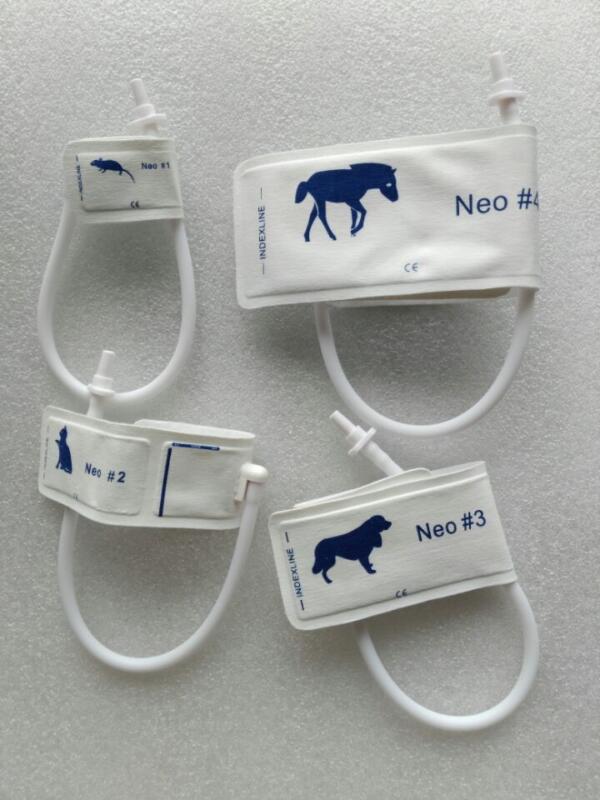
TPU vs PVC Coated Fabric for Cuff Bladders
Both materials show up in blood pressure cuffs across different price points and markets, and the choice affects performance, compliance, and long-term cost.
| Property | TPU Coated Fabric | PVC Coated Fabric |
|---|---|---|
| Airtight performance | Excellent, stable over time | Good, can degrade with plasticizer migration |
| Flexibility at low temperature | Stays flexible | Can stiffen in cold storage |
| Weldability (RF/heat) | Strong, clean seams | Strong, well-established process |
| Biocompatibility | Generally favorable, easier to document | Requires phthalate-free formulation verification |
| Weight | Lighter for equivalent strength | Slightly heavier |
| Cost | Higher | Lower |
| Regulatory trend | Increasingly preferred, especially in EU | Facing tightening restrictions in some regions |
PVC coated fabric remains common in cost-sensitive or older product lines, largely because the welding process is well understood and the material is cheaper per meter. TPU coated fabric has become the preferred choice for newer designs and for markets with stricter phthalate restrictions, since it avoids the plasticizer compliance questions that come with PVC and tends to hold its airtight performance better over years of repeated use.
If your cuff is aimed at hospital-grade reusable devices with a multi-year service life, TPU is generally worth the added cost. If you’re building a lower-cost disposable or single-patient-use cuff where the device has a short service life anyway, PVC can still make sense.
Base Fabric: Nylon vs Polyester for the Bladder
Underneath the coating, the woven base fabric affects tear resistance and how the bladder handles repeated inflation cycles.
- Nylon base fabric offers higher tensile strength and better tear resistance at a given weight, which matters for a component that inflates and deflates constantly over the life of the device. Most reusable, hospital-grade cuffs use a nylon base for this reason.
- Polyester base fabric offers good dimensional stability and lower cost, making it a reasonable choice for disposable or lower-cycle-count cuffs where long-term fatigue resistance matters less than keeping unit cost down.
For a bladder that will see thousands of inflation cycles over its service life, nylon’s fatigue resistance is usually worth the price difference. For single-use or short-term cuffs, polyester is often adequate and reduces material cost across a large production run.
Thickness and Weight: Balancing Durability and Patient Comfort
Cuff bladder fabric typically runs in a narrower range than industrial TPU fabric, because the bladder needs to stay thin and light enough to wrap comfortably around a limb while still holding pressure reliably.
- Lighter, thinner constructions improve patient comfort and make the cuff easier to fold and store, which matters for portable or ambulatory monitoring devices.
- Slightly heavier constructions add durability margin for cuffs that will be reused across many patients in a hospital setting, where the bladder needs to survive repeated cleaning, stretching, and pressure cycles without developing pinhole leaks.
The right balance depends on the device’s intended use. A single-patient home monitoring cuff can prioritize light weight and comfort. A shared hospital cuff reused across dozens of patients per week needs the extra durability margin even if it adds slight bulk.
Weldability: Why Seam Quality Determines Cuff Reliability
The bladder’s seams are almost always the first failure point in a poorly specified cuff, which is why weldability deserves as much attention as the base material itself.
- RF (radio frequency) welding is the standard method for TPU and PVC bladder seams, using high-frequency energy to melt and fuse the coated layers together without stitching or adhesive.
- Seam consistency depends on the coating formulation bonding evenly under the RF process. A fabric that welds inconsistently creates weak points that show up as slow leaks well after the product has shipped, often only surfacing during in-field use rather than initial QC.
- Double-sided coating is common for cuff bladders specifically, since the fold-over seam construction typically used in cuffs needs both faces of the fabric to weld reliably, not just one.
Ask any supplier directly whether their fabric is validated for RF welding at the seam geometry your bladder design actually uses, rather than assuming general weldability claims apply to your specific fold and seal pattern.
Biocompatibility and Regulatory Requirements
Since the cuff bladder sits against skin, sometimes for extended monitoring periods, biocompatibility documentation isn’t optional.
- ISO 10993 compliance is the standard reference for skin contact biocompatibility, covering cytotoxicity and sensitization testing. Request this documentation directly from your fabric supplier rather than assuming it based on the material type alone.
- Phthalate-free formulation matters specifically for PVC coated options, since older PVC formulations relied on plasticizers now restricted under REACH and similar regulations in many markets.
- Latex-free construction should be confirmed explicitly, since some patients have latex sensitivities and this needs to be documented in the device’s regulatory file regardless of which base fabric is used.
- Cleaning and disinfection compatibility matters for reusable cuffs specifically. Confirm the fabric holds up to the specific disinfectant your target market uses, since alcohol-based and chlorine-based cleaning agents can affect coated fabrics differently over repeated cycles.
Color and Print Considerations
Cuff bladders and sleeves often need specific colors or markings for calibration reference lines, size indicators, or brand identification.
- Standard color options usually add minimal cost, while custom Pantone matching typically requires a dedicated production run
- Printed calibration markings need to stay legible and accurately positioned through repeated stretching, so confirm the print method is validated for the fabric’s flex characteristics rather than assuming any standard printing process will hold up
- Size-coded color systems, common for pediatric versus adult versus large adult cuffs, should be confirmed as consistent across production batches to avoid mismatched inventory
A Quick Comparison by Cuff Type
| Cuff Type | Recommended Approach |
|---|---|
| Hospital reusable, multi-patient | TPU coated nylon, RF-weldable, ISO 10993 documented, heavier construction for durability |
| Home monitoring, single patient | TPU or PVC coated polyester, lighter weight, cost-optimized |
| Disposable, single-use | PVC coated polyester, lower cost priority, shorter validated service life |
| Ambulatory/portable monitoring | Lightweight TPU coated fabric, prioritizing low bulk and flexibility |
| Pediatric | Lighter gauge material with reinforced seam construction for smaller cuff sizes |
Testing That Actually Predicts Field Performance
A fabric spec sheet only tells part of the story. The tests below are what separate a bladder material that looks good on paper from one that holds up in daily hospital use.
- Pressure decay testing inflates the bladder to a set pressure and measures how much it drops over a fixed time period, typically several minutes. This is the most direct predictor of whether a cuff will hold a stable reading long enough for an accurate measurement, and it should be run on the actual welded seam construction, not just the raw fabric.
- Cycle testing repeatedly inflates and deflates a sample bladder to simulate months or years of clinical use, revealing whether the coating or seam will fatigue and develop a slow leak under real-world conditions rather than a single static test.
- Tensile and burst strength testing confirms the fabric and seam can handle the pressure spikes that happen during rapid inflation, particularly relevant for automated oscillometric devices that inflate faster than manual cuffs.
- Peel strength testing at the weld line measures how well the coating bonds to itself after RF welding, which is often a better predictor of long-term seam reliability than the base fabric’s strength alone.
Ask suppliers for actual test data from these categories rather than general durability claims. A fabric that hasn’t been cycle-tested at the seam level is an unknown quantity no matter how strong its raw material specs look.
From Fabric Roll to Finished Bladder: What Affects Consistency
Even with the right fabric spec locked in, production-level details determine whether every bladder coming off the line performs the same way.
- Thickness consistency across the roll. A roll with thickness variation, even within tolerance on paper, can create inconsistent welding results at different points along a production run. Ask whether the supplier monitors thickness continuously during coating or lamination, rather than spot-checking samples.
- Batch-to-batch coating consistency. Color, hardness, and coating weight should stay within a tight range from one production batch to the next, since a shift in any of these can change how the fabric responds to your validated RF welding parameters.
- Roll width matched to your die cut pattern. Confirm the fabric roll width lines up efficiently with your cuff pattern to minimize scrap, particularly important at high production volumes where even small material waste adds up across thousands of units.
None of this shows up on a basic spec sheet, which is why a short qualification run with a new supplier, checking pressure decay and seam consistency across several production batches rather than just one sample, is worth the extra time before committing to a full production order.
Questions to Ask Before Placing an Order
- Is the fabric single-side or double-side coated, and does that match your bladder’s fold-and-seal construction?
- What RF welding parameters has the supplier validated this fabric against, and can they share test data rather than general claims?
- Does the fabric come with ISO 10993 documentation, and is it phthalate-free and latex-free if that applies to your target market?
- What is the minimum order quantity for custom thickness, color, or width, and how does that compare to available stock options?
- What lead time applies for sampling versus full production, particularly if you need a specific Pantone match?
- Has the supplier tested the fabric’s disinfectant compatibility for the cleaning protocols your target hospitals or clinics actually use?
Frequently Asked Questions
What fabric is best for a blood pressure cuff bladder? TPU coated nylon fabric is generally the strongest choice for hospital-grade reusable cuffs, offering reliable airtight performance, good weldability, and easier biocompatibility documentation. PVC coated polyester remains a viable, lower-cost option for disposable or single-patient-use cuffs where long-term durability matters less.
Why do blood pressure cuffs leak air over time? Slow leaks usually trace back to either an inconsistent RF weld at the seam or a coating that has begun to degrade from repeated pressure cycling and cleaning. Choosing a fabric validated specifically for RF welding at your seam design, along with a coating rated for repeated inflation cycles, significantly reduces this failure mode.
Is TPU or PVC better for blood pressure cuffs? Neither is universally better. TPU tends to perform better over a longer service life and simplifies compliance in markets with phthalate restrictions. PVC is more cost-effective and has a long track record in welded medical bladder applications, making it a reasonable choice for lower-cost or shorter-lifespan devices.
Does blood pressure cuff fabric need to be biocompatible? Yes. Since the cuff contacts skin, often for extended monitoring periods, the fabric needs documented biocompatibility testing, typically referenced against ISO 10993, along with confirmation that the material is latex-free and, for PVC options, phthalate-free.
How thick should blood pressure cuff bladder fabric be? It depends on the cuff’s intended use. Lighter, thinner fabric suits home monitoring and ambulatory devices where comfort and low bulk matter most. Slightly heavier fabric suits hospital-grade reusable cuffs that need to withstand repeated cleaning and thousands of inflation cycles across many patients.
Final Thoughts
Specifying fabric for a blood pressure cuff bladder comes down to matching material properties to how the device will actually be used, not just picking whichever option looks cheapest on a quote sheet. A hospital cuff reused across dozens of patients a week has a completely different failure profile than a disposable single-use cuff, and the fabric spec should reflect that difference from the start. Getting the base material, coating type, and weldability right at the sourcing stage is what keeps a cuff reading accurately for its entire service life instead of failing calibration a few months into use.
Working with a supplier who can provide RF welding validation data, biocompatibility documentation, and consistent production quality across batches turns this from a recurring quality issue into a solved problem.
 English
  Spanish
  Italian
  Korean
  French
  Japanese
  Arabic
  Portuguese
  Vietnamese
  German
  Turkish
  Belarusian