


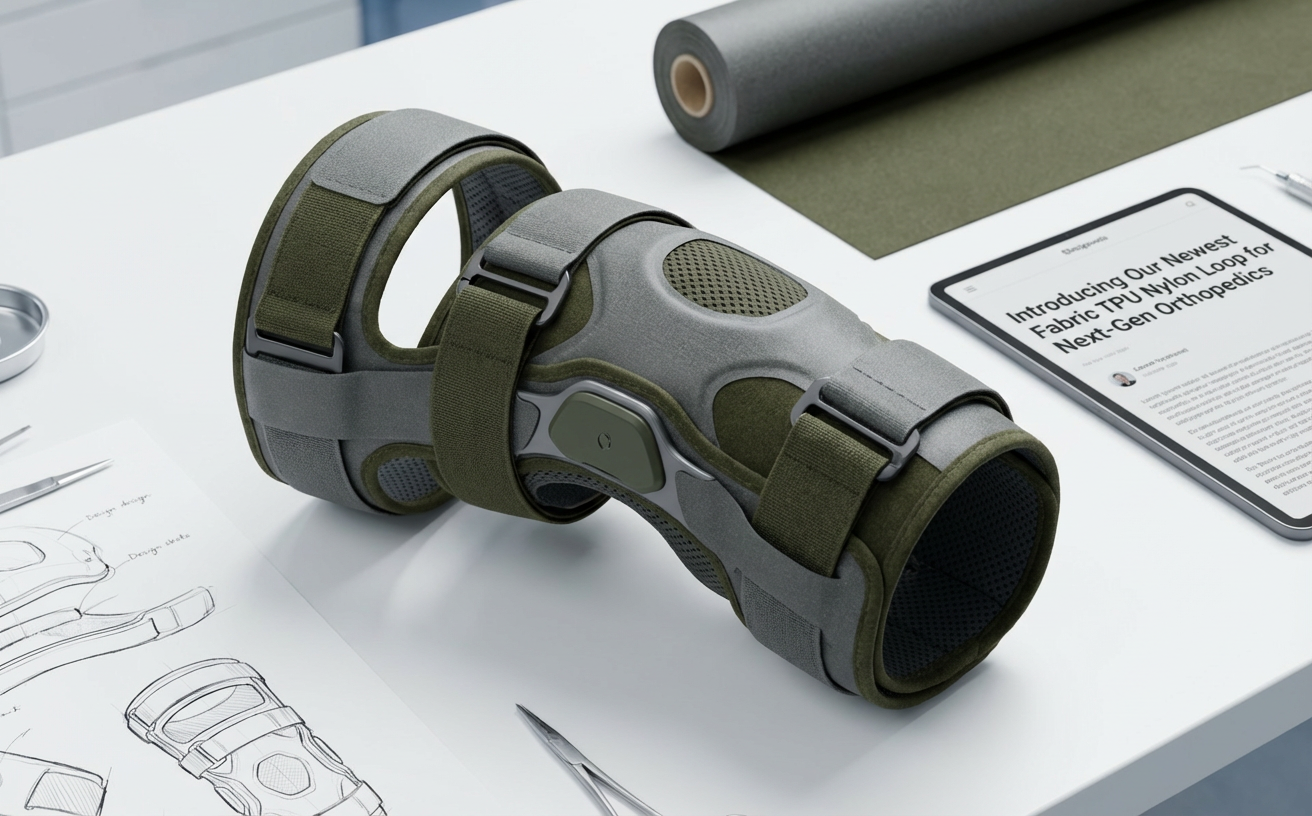
Durante décadas, el diseño de dispositivos ortopédicos como botas de marcha y férulas implicó un complejo ensamblaje de cubiertas, espumas, forros y sistemas separados de correas. Nos preguntamos constantemente: “¿Cómo podemos empoderar a los diseñadores para que construyan dispositivos mejores, más sencillos y más eficaces?”
Hoy, estamos entusiasmados por presentar la respuesta: Tela de bucle de nylon recubierta con TPU.
Esta no es solo otra tela. Es un sistema material todo en uno diseñado para revolucionar la forma en que se diseñan y fabrican los dispositivos ortopédicos y de rehabilitación. Al fusionar múltiples capas funcionales en un solo textil de alto rendimiento, esta innovación abre la puerta a una nueva era de eficiencia, comodidad y flexibilidad en el diseño.
¿Qué es la tela de bucle de nylon con TPU?
Imagina combinar una tela de bucle duradera y de alta resistencia (el lado suave de un cierre de velcro) con un respaldo de TPU de alto rendimiento y soldable. Esa es la esencia de nuestro nuevo material.
Es un único textil compuesto que cumple tres funciones simultáneamente:
Una superficie de sujeción segura:
La robusta pila de bucles de nylon proporciona una superficie confiable y ajustable infinitamente para las correas de gancho. Esto permite microajustes que mejoran el ajuste y la adherencia del paciente, reduciendo puntos de presión y aumentando la eficacia general del dispositivo.
Un forro suave de contacto con el paciente:
La pila de bucles es suave y transpirable, lo que la hace lo suficientemente cómoda para el contacto directo con la piel. A diferencia de los forros tradicionales que pueden requerir acolchado o capas adicionales, este material ofrece comodidad inherente, ayudando a reducir la irritación durante el uso prolongado.
Una estructura soldable e impermeable:
El respaldo de TPU permite que la tela sea soldada por radiofrecuencia, creando costuras sin hilos, impermeables y altamente duraderas. Esta capacidad transforma no solo el material, sino toda la filosofía de fabricación detrás de los dispositivos ortopédicos.
El problema con los diseños tradicionales
La fabricación tradicional de botas y férulas ortopédicas implica múltiples pasos y materiales: coser un forro, colocar lengüetas separadas de gancho y bucle, y lidiar con agujeros de costura que pueden comprometer la higiene y la integridad estructural. Este proceso es intensivo en mano de obra, complejo y genera posibles puntos de falla.
Cada componente adicional introduce variabilidad. Múltiples proveedores, etapas de ensamblaje y puntos de control de calidad aumentan el tiempo y el costo de producción. Además, las costuras cosidas pueden deteriorarse con el tiempo, especialmente en ambientes expuestos a humedad, estrés repetido o ciclos de limpieza.
Desde la perspectiva del paciente, estas limitaciones pueden traducirse en incomodidad, ajuste inconsistente y dispositivos más difíciles de mantener higiénicamente.
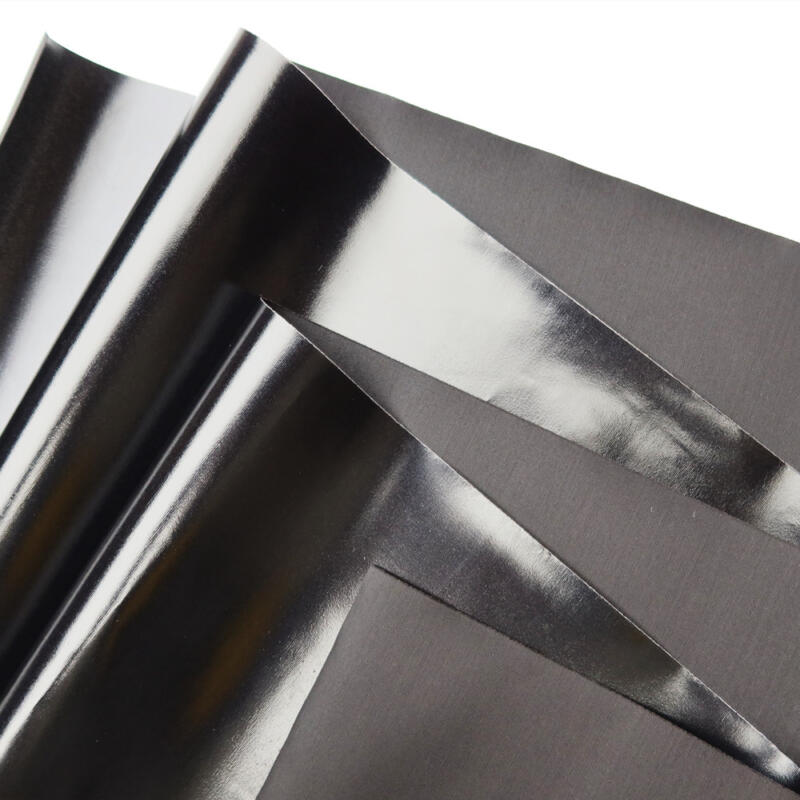
La solución de bucle de nylon con TPU: un cambio de paradigma
Nuestra nueva tela resuelve estos problemas simplificando todo el proceso de diseño y ensamblaje.
Libertad de diseño sin precedentes
Los diseñadores ya no están limitados a ubicaciones predeterminadas para las correas. Con toda la superficie actuando como punto de sujeción, las correas pueden colocarse en cualquier lugar, permitiendo un ajuste verdaderamente personalizado y seguro para cada paciente.
Esta flexibilidad permite diseños más ergonómicos que se adaptan a la anatomía individual en lugar de obligar a los usuarios a adaptarse al dispositivo. También abre oportunidades para sistemas modulares, donde los clínicos pueden ajustar las configuraciones bajo demanda sin necesidad de rediseñar el producto.
Construcción higiénica sin costuras
El respaldo de TPU soldable es un auténtico avance. Ahora puedes crear forros enteros o incluso componentes estructurales sin una sola costura de aguja.
Esto elimina los orificios de aguja, que son vías potenciales para bacterias y fluidos, resultando en un dispositivo más higiénico y fácil de limpiar. Para entornos médicos donde el control de infecciones es crítico, esto representa un avance significativo.
La soldadura también crea una unión más fuerte y duradera que la costura. Las costuras son más consistentes, resistentes al desgaste y menos propensas a fallar bajo estrés repetido. Esto mejora la longevidad y la fiabilidad del producto en uso real.
Fabricación simplificada y reducción de costos
Al utilizar un solo material tanto para el forro como para el sistema de sujeción, puedes reducir tu lista de materiales (BOM), agilizar el proceso de ensamblaje y disminuir los costos laborales.
Menos componentes significan menos desafíos de abastecimiento y menor complejidad en el inventario. El ensamblaje se vuelve más rápido y repetible, lo que mejora la escalabilidad y reduce la probabilidad de defectos.
Además, los procesos de soldadura por radiofrecuencia pueden automatizarse más fácilmente que la costura tradicional, permitiendo un mayor rendimiento de producción y un control de calidad más consistente.
Ventajas de rendimiento más allá de la simplicidad
Aunque la simplificación es un gran beneficio, la tela de bucle de nylon con TPU también ofrece mejoras medibles en el rendimiento.
Durabilidad:
El bucle de nylon de alta resistencia mantiene su integridad incluso después de múltiples sujeciones y liberaciones. Combinado con la resistencia del TPU, el material soporta condiciones de uso exigentes.
Resistencia a la humedad:
El respaldo de TPU proporciona una barrera contra la humedad, protegiendo las estructuras internas y mejorando la comodidad del paciente. Esto es particularmente beneficioso para el uso a largo plazo o en escenarios de rehabilitación que implican sudoración.
Facilidad de limpieza:
Los dispositivos fabricados con este material son más fáciles de limpiar y mantener, apoyando mejores protocolos de higiene tanto en entornos clínicos como domésticos.
Construcción ligera:
Al consolidar capas, se puede reducir el peso total del dispositivo sin sacrificar resistencia ni funcionalidad, mejorando la movilidad y comodidad del paciente.
Aplicaciones para la próxima generación
Ya estamos viendo aplicaciones increíbles para la tela de bucle de nylon con TPU en:
Botas ortopédicas de marcha:
Creando forros internos completamente ajustables y sin costuras que se adaptan a la anatomía del paciente mientras mantienen la integridad estructural.
Férulas para tobillo y rodilla:
Permitiendo una colocación perfecta de las correas y una comodidad mejorada, lo que mejora tanto el soporte como la adherencia del paciente.
Dispositivos terapéuticos de posicionamiento:
Proporcionando superficies suaves, seguras y fácilmente ajustables que pueden adaptarse a las necesidades terapéuticas individuales.
Prótesis:
Para crear forros de encaje cómodos y ajustables que mejoran el ajuste y reducen la incomodidad relacionada con la presión.
Más allá de estos usos principales, el material también muestra promesas en áreas emergentes como la tecnología de rehabilitación portátil, los soportes postquirúrgicos y las soluciones ortopédicas personalizadas habilitadas por flujos de trabajo de diseño digital.
Habilitando la innovación en diseño e ingeniería
La tela de bucle de nailon TPU no es solo una mejora de material—es una plataforma para la innovación.
Los equipos de diseño pueden replantear la arquitectura del producto desde cero. En lugar de diseñar en torno a limitaciones del material, ahora pueden priorizar la experiencia del paciente, la adaptabilidad y la funcionalidad.
Los ingenieros pueden integrar esta tela en construcciones híbridas, combinando soportes rígidos con superficies flexibles y soldables. Esto permite transiciones fluidas entre zonas estructurales y de confort dentro de un mismo dispositivo.
Además, su compatibilidad con técnicas modernas de fabricación—incluyendo soldadura por radiofrecuencia y corte automatizado—se alinea perfectamente con el cambio de la industria hacia sistemas de producción más inteligentes y ágiles.
Un paso hacia una atención centrada en el paciente
En el corazón, esta innovación se trata de mejorar los resultados para los pacientes.
Un mejor ajuste conduce a un mejor soporte.
Mejor comodidad conduce a una mayor adherencia.
Mejor higiene conduce a una recuperación más segura.
Al simplificar los dispositivos y mejorar su funcionalidad, la tela de bucle de nailon TPU ayuda a los clínicos a ofrecer tratamientos más efectivos mientras hacen que la experiencia del paciente sea más intuitiva y cómoda.
El futuro comienza aquí
El futuro del diseño ortopédico es más simple, más funcional y más centrado en el paciente. Nuestra tela de bucle de nailon recubierta con TPU está diseñada para liderar el camino.
A medida que la industria sigue evolucionando, los materiales que combinan rendimiento, eficiencia y versatilidad definirán la próxima generación de dispositivos médicos. La tela de bucle de nailon TPU se encuentra a la vanguardia de esta transformación—empoderando a los diseñadores, mejorando la fabricación y, en última instancia, mejorando vidas.
Lo invitamos a explorar lo que es posible con este material revolucionario—y a unirse a nosotros para dar forma al futuro de la ortopedia.
 English
  Spanish
  Italian
  Korean
  French
  Japanese
  Arabic
  Portuguese
  Vietnamese
  German
  Turkish
  Belarusian