


Sauerstoffspeicherung ist nicht immer nur eine Frage, Gas in einen starren Behälter zu füllen und von einem Ort zum anderen zu transportieren. In vielen medizinischen und Notfallsituationen muss die Ausrüstung selbst tragbar, kompakt und leicht zu handhaben sein.
Hier spielen flexible Sauerstoffbeutel eine praktische Rolle.
Ein Sauerstoffbeutel ist dafür konzipiert, Sauerstoff in einem flexiblen Behälter aus beschichtetem Textil oder polymerbasiertem Material zu speichern. Je nach Ausführung kann er als Teil tragbarer Sauerstoffausrüstung, in medizinischen Notfallsystemen, für häusliche Pflegeprodukte sowie für andere Anwendungen eingesetzt werden, bei denen Gewicht und Stauraum entscheidend sind.
Für Gerätehersteller geht der Wert eines Sauerstoffbeutels jedoch über sein flexibles Erscheinungsbild hinaus. Die Leistung des fertigen Produkts hängt von der Beziehung zwischen Gewebeaufbau, Beschichtung, geschweißten Nähten, Ventilen, Beutelgeometrie und Betriebsbedingungen ab.
Ein gut konstruierter Sauerstoffbeutel kann das Handlinggewicht reduzieren, im leeren Zustand weniger Platz einnehmen und sich leichter an tragbare Geräte anpassen. Gleichzeitig muss das Gewebe eine zuverlässige Gasdichtigkeit aufrechterhalten und wiederholtem Falten, Handhabung und Druckänderungen standhalten.
Aus diesem Grund ist die Auswahl des richtigen Sauerstoffbeutel-Gewebes ein wichtiger Bestandteil der Produktentwicklung.
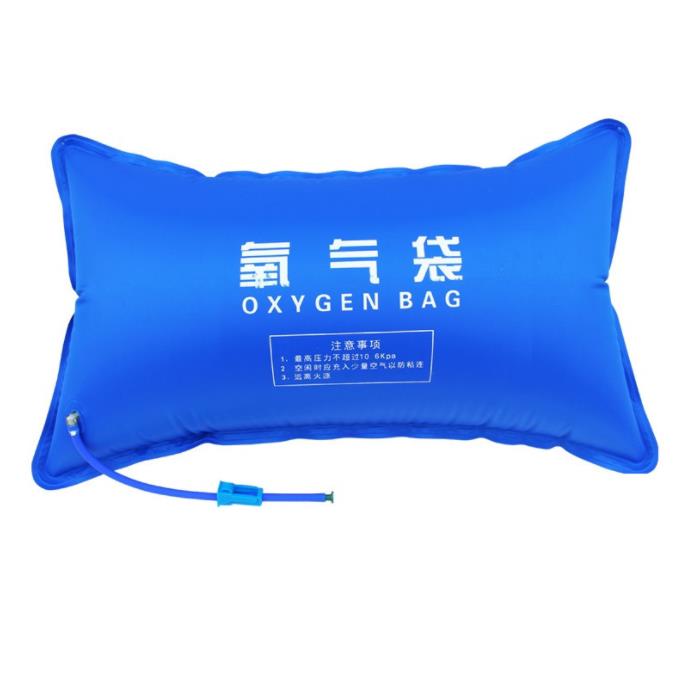
Was ist ein Sauerstoffbeutel?
Ein Sauerstoffbeutel ist ein flexibles Gaslagerteil, das für die Aufnahme von Sauerstoff für bestimmte medizinische oder Notfallanwendungen konzipiert ist.
Sein Aufbau umfasst normalerweise mehrere funktionale Elemente:
- Flexibler beschichteter Gewebekörper
- Ein- und Auslassventil
- Geschweißte Nähte
- Verstärkte Verbindungsbereiche
- Trage- oder Montagekomponenten, je nach Ausführung
Der Gewebekörper bildet das Hauptlagerungs-Volumen. Im Gegensatz zu einem starren Behälter kann er seine Form ändern, je nachdem, wie viel Gas gelagert wird.
Diese Flexibilität kann nützlich sein, wenn das Produkt in begrenzte Räume passen oder von medizinischem Personal transportiert werden muss.
Das für den Beutel verwendete Material muss gleichzeitig mehrere Aufgaben erfüllen. Es benötigt ausreichende mechanische Festigkeit, um die Struktur zu stützen, eine geeignete Beschichtung, um Gasdichtigkeit zu gewährleisten, und eine Oberfläche, die während der Herstellung zuverlässig verbunden werden kann.
Dies macht Sauerstoffsäcke Stoff unterschiedlich zu gewöhnlichen wasserdichten Textilmaterialien.
Ein Gewebe kann hochwasserbeständig sein und trotzdem für eine Gaslagerung ungeeignet sein. Gasdichtigkeit, Beschichtungshaltbarkeit und Schweißverhalten müssen gemeinsam bewertet werden.
Was sind die wichtigsten Vorteile der Verwendung eines Sauerstoffbeutels?
Die Hauptvorteile eines flexiblen Sauerstoffbeutels ergeben sich aus seinem Aufbau.
Anstatt auf eine starre Hülle zu setzen, die eine feste Form beibehält, verwendet der Beutel flexibles Material, um ein leichtes Lagersystem zu schaffen.
Dies kann mehrere praktische Vorteile bringen.
Leichte Konstruktion
Gewicht wird zu einem wichtigen Faktor, wenn Sauerstoffgeräte häufig transportiert werden.
Krankenwagenpersonal, Einsatzkräfte und Heimversorgungsnutzer müssen möglicherweise Geräte zwischen Standorten bewegen. Ein schwerer Lagerbehälter erhöht die Handhabungslast, besonders wenn mehrere Geräte zusammengetragen werden.
Ein flexibler Beutel kann das strukturelle Gewicht reduzieren, das mit starren Behältern verbunden ist.
Das Endgewicht hängt vom Gewebeaufbau, der Beschichtungsdicke, der Kapazität, den Ventilen und der Verstärkung ab, doch das flexible Format gibt Designern mehr Freiheit, das Gesamtprodukt zu optimieren.
Für tragbare medizinische Geräte kann dies einen bedeutenden Unterschied machen.
Kompakte Lagerung
Einer der weniger offensichtlichen Vorteile eines flexiblen Sauerstoffbeutels ist, was passiert, wenn er leer ist.
Ein starrer Behälter behält seine ursprüngliche Form, ob er gefüllt oder leer ist. Ein flexibler Beutel kann innerhalb der Grenzen seines Aufbaus gefaltet oder zusammengedrückt werden.
Dies kann helfen, das Lagervolumen zu reduzieren bei:
- Lagerhaltung
- Transport
- Vorbereitung von Notfallkits
- Geräteverpackung
- Mobile medizinische Einsätze
Für Distributoren und Medizintechnikhersteller kann kompakte Lagerung auch die Logistik vereinfachen.
Der Vorteil ist besonders relevant, wenn Produkte in großen Mengen versendet oder als Backup-Ausrüstung gelagert werden müssen.
Einfacherer Transport
Ein Sauerstoffbeutel kann in tragbare Geräte integriert werden, wo Platz und Gewicht begrenzt sind.
Dies ist nützlich in Umgebungen, in denen medizinisches Personal nicht auf eine feste Installation zurückgreifen kann.
Potenzielle Anwendungen umfassen:
- Krankenwagenausstattung
- Notfallreaktionskits
- Häusliche Pflegeausstattung
- Fernmedizinische Operationen
- Tragbare Erste-Hilfe-Systeme
Die flexible Konstruktion ermöglicht es, das Produkt leichter um andere Geräte herum zu positionieren als einen festen, starren Behälter.
Flexible Form
Die Form eines Sauerstoffbeutels kann an das darum liegende Produkt angepasst werden.
Dies ist besonders nützlich, wenn Designer mit kompakten medizinischen Geräten oder kundenspezifischen Tragesystemen arbeiten.
Der Beutel kann um den verfügbaren Raum herum gestaltet werden, anstatt das gesamte Gerätepaket in einen starren Zylinder oder Tank zu zwängen.
Allerdings bringt Flexibilität auch Designüberlegungen mit sich.
Der Stoff muss wiederholtem Biegen und Falten standhalten, ohne dass die Beschichtung beschädigt wird oder Schwachstellen entstehen. Geschweißte Nähte und Ventilverbindungen müssen zudem Bewegungen während der normalen Handhabung aufnehmen können.
Die Form des Beutels muss daher zusammen mit dem Material berücksichtigt werden.
Schnelle Bereitstellung
Notfallausrüstung wird oft gelagert, bis sie benötigt wird.
Wenn eine Einsatzbereitschaft erforderlich wird, sollten Geräte einfach entfernt, positioniert und angeschlossen werden können.
Ein flexibler Sauerstoffbeutel kann in kompakte Notfallsysteme integriert werden, in denen Portabilität wichtig ist.
Der praktische Nutzen liegt nicht nur darin, dass der Beutel leicht ist. Sein Gesamtformat kann Transport, Positionierung und Geräteorganisation erleichtern.
Warum ist der Stoff eines Sauerstoffbeutels wichtig?
Der Stoff ist der Hauptbaustein eines flexiblen Sauerstoffbeutels.
Er muss ein kontrolliertes Gleichgewicht zwischen mechanischer Festigkeit und Flexibilität bieten.
Ein sehr schwerer Stoff bietet möglicherweise ausgezeichnete mechanische Festigkeit, macht das fertige Produkt aber unnötig schwer zu tragen.
Ein sehr leichter Stoff reduziert zwar das Gewicht, erfordert jedoch zusätzliche Verstärkungen oder strukturelle Unterstützung.
Aus diesem Grund wählen erfahrene Produktentwickler den Stoff nicht einfach nach Denier oder Gesamtdicke aus.
Mehrere Eigenschaften müssen gemeinsam betrachtet werden.
Luftdichte Leistung
Die Gasdichtigkeit ist eine der wichtigsten Eigenschaften eines Sauerstoffbeutels.
Die Beschichtung muss eine durchgehende Barriere mit minimaler Permeabilität und gleichmäßiger Abdeckung über die gesamte Stoffoberfläche bieten.
Die Luftdichtigkeit allein garantiert jedoch nicht, dass der fertige Beutel Sauerstoff hält.
Die geschweißten Nähte, Ventilverbindungen und verstärkten Bereiche können alle potenzielle Leckstellen sein.
Ein vollständiges Produkt muss daher nach der Herstellung getestet werden.
Zugfestigkeit
Der Stoff muss den mechanischen Kräften standhalten, die beim Füllen, Handling und Transport entstehen.
Die Zugfestigkeit ist besonders wichtig rund um:
- Griffe
- Ventilbereiche
- Befestigungspunkte
- Geschweißte Übergänge
- Verstärkte Abschnitte
Die erforderliche Festigkeit hängt von der Größe und Struktur des fertigen Beutels ab.
Reißfestigkeit
Kleine Schnitte oder Punktionen können sich bei wiederholter mechanischer Belastung ausdehnen.
Ein geeigneter Verstärkungsstoff hilft, die Ausbreitung von Schäden zu begrenzen.
Nylon wird häufig für Anwendungen gewählt, bei denen eine hohe Festigkeit im Verhältnis zum Gewicht gefragt ist.
Je nach gewünschtem Produkt können unterschiedliche Deniere ausgewählt werden.
Flexibilitätsbeständigkeit
Ein Sauerstoffbeutel kann während des Transports gefaltet oder während des Gebrauchs wiederholt bewegt werden.
Der beschichtete Stoff muss daher Biegungen aushalten, ohne zu reißen, sich zu delaminieren oder seine Dichtleistung zu verlieren.
Flexibilität ist nicht nur eine Komforteigenschaft.
Sie kann direkt die Lebensdauer beeinflussen.
PVC-beschichteter Stoff und TPU-beschichteter Stoff
PVC-beschichtete Stoffe werden seit vielen Jahren in flexiblen medizinischen und aufblasbaren Produkten weit verbreitet eingesetzt.
Sie bieten ausgereifte Verarbeitungstechnologie, gute Schweißeigenschaften und wettbewerbsfähige Herstellungskosten.
Für Hersteller, die kostensensitive Sauerstoffspeicherprodukte in großen Mengen produzieren, bleiben diese Eigenschaften wichtig.
TPU-beschichtete Stoffe bieten eine weitere Materialoption.
TPU kann hervorragende Flexibilität, Abriebfestigkeit und ein weicheres Materialgefühl bieten, während eine PVC-freie Konstruktion auch Produktentwicklungsstrategien unterstützen kann, bei denen Kunden Alternativen zu konventionellen PVC-Materialien suchen.
Die Wahl sollte nicht auf eine einfache Aussage reduziert werden, dass ein Material universell besser ist.
Ein Produktmanager sollte berücksichtigen:
| Anforderung | PVC-beschichtetes Gewebe | TPU-beschichtetes Gewebe |
|---|---|---|
| Materialkosten | Unter | Höher |
| Flexibilität | Gut | Ausgezeichnet |
| Schweißverträglichkeit | Ausgezeichnet | Ausgezeichnet |
| Abriebfestigkeit | Gut | Sehr gut |
| PVC-freie Produktpositionierung | Nein | Ja |
| Reife Produktionserfahrung | Ausgezeichnet | Wachsend |
| Premium-Produktentwicklung | Gut | Ausgezeichnet |
Die geeignete Option hängt von der vorgesehenen Anwendung, dem Zielpreis, den Fertigungsanlagen und der erforderlichen Produktpositionierung ab.
Warum Schweißen entscheidend für die Zuverlässigkeit von Sauerstofftaschen ist
Das Gewebe mag vor der Produktion luftdicht sein, aber die fertige Sauerstofftasche enthält mehrere Nähte.
Diese Nähte müssen eine durchgehende Barriere um die Lagerkammer herum bilden.
Traditionelles Nähen führt zu Nadelstichen im Material und erfordert daher zusätzliche Dichtmaßnahmen, wenn eine luftdichte Leistung gefordert wird.
Thermoplastisch beschichtete Gewebe können stattdessen durch Schweißverfahren wie zum Beispiel:
- HF-Schweißen
- HF-Schweißen
- Heißschweißen
Der genaue Prozess hängt von der Materialkonstruktion und dem Produktdesign ab.
Durchgehende geschweißte Nähte
Wenn kompatible thermoplastische Beschichtungen richtig geschweißt werden, können sich die beiden Oberflächen miteinander verbinden und eine durchgehende, dichte Verbindung bilden.
Dies ist besonders nützlich für komplexe Geometrien von Sauerstofftaschen.
Der Schweißprozess muss sorgfältig kontrolliert werden.
Temperatur, Druck und Schweißzeit beeinflussen alle die endgültige Naht.
Unzureichende Energie kann zu einer unvollständigen Fusion führen.
Übermäßige Energie kann die Beschichtung beschädigen oder Verformungen verursachen.
Aus diesem Grund sollten Schweißparameter durch Produkttests festgelegt werden, anstatt sie von einer anderen Gewebespezifikation zu übernehmen.
Ventilanschlüsse erfordern besondere Aufmerksamkeit
Der Ventilbereich ist einer der wichtigsten Orte in einer Sauerstofftasche.
Er verbindet das flexible Gewebe mit einem starren Bauteil.
Mechanische Belastungen können sich besonders stark um den Anschluss konzentrieren, insbesondere wenn die Tasche gefüllt bewegt wird.
Hersteller können daher das umliegende Gewebe verstärken und die Ventilanbindung durch wiederholte Druck- und Handhabungstests validieren.
Ein Gewebelieferant sollte dieses Anforderung verstehen, bevor er ein Material empfiehlt.
Form und Größe der Tasche beeinflussen die Materialanforderungen
Die Materialauswahl kann nicht von der Produktgeometrie getrennt werden.
Dies ist besonders wichtig, wenn Hersteller fragen, wie viel Druck ein bestimmtes Sauerstofftaschengewebe aushalten kann.
Es gibt keine aussagekräftige Antwort, die nur auf Gewebestärke oder Beschichtungsspezifikation basiert.
Die tatsächliche Belastung, die das Gewebe erfährt, hängt vom fertigen Produkt ab:
- Größe
- Form
- Innendruck
- Nahtgeometrie
- Schweißbreite
- Verstärkungsstruktur
- Radius gekrümmter Bereiche
- Materialflexibilität
Eine größere Kammer kann eine andere Spannungsverteilung erzeugen als eine kleinere Kammer, selbst wenn beide Produkte das gleiche Gewebe verwenden.
Ebenso können scharfe Ecken stärkere lokale Spannungskonzentrationen erzeugen als abgerundete Übergänge.
Für die Produktentwicklung ist der richtige Ansatz daher, Gewebespezifikation und Produktstruktur gemeinsam zu bewerten.
Das Gewebe ist ein Teil des Druckhaltesystems.
Wo werden Sauerstofftaschen üblicherweise eingesetzt?
Flexible Sauerstoffspeicherprodukte können eine Reihe von Anwendungen bedienen, bei denen Tragbarkeit und kompakte Bauweise wichtig sind.
Krankenwagen-Ausrüstung
Krankenwagen benötigen Ausrüstung, die schnell bewegt und effizient gelagert werden kann.
Flexible Sauerstoffsysteme kommen infrage, wenn der verfügbare Platz begrenzt ist und die Ausrüstung tragbar bleiben muss.
Notfallreaktion
Notfallteams können Sauerstoffausrüstung an Orte mitnehmen, wo keine fest installierte medizinische Infrastruktur vorhanden ist.
Geringeres Gewicht und kompakte Lagerung können wertvoll sein, wenn Ausrüstung von Hand transportiert werden muss.
Häusliche Gesundheitsversorgung
Häusliche Pflegegeräte müssen oft natürlich in häusliche Umgebungen passen.
Kompakte und leichte Designs erleichtern Pflegepersonen das Positionieren und Transportieren von Geräten.
Fernmedizinische Dienste
Medizinische Teams, die in abgelegenen Gebieten arbeiten, haben möglicherweise strenge Begrenzungen für die Menge an Ausrüstung, die sie mitführen können.
Flexible Aufbewahrungsformate können helfen, den Platzbedarf von Backup- oder tragbaren Systemen zu reduzieren.
Veterinäranwendungen
Einige veterinärmedizinische Geräte verwenden ebenfalls flexible Gasbehälter oder aufblasbare Komponenten.
Die Materialanforderungen variieren je nach Produkt, doch Flexibilität, Luftdichtheit und Haltbarkeit bleiben wichtige Überlegungen.
Auswahl des Sauerstoffbeutelgewebes: Was Hersteller prüfen sollten
Die Wahl eines Sauerstoffbeutelgewebes sollte zunächst am fertigen Produkt und nicht am Gewebekatalog erfolgen.
Grundgewebe
Nylon und Polyester können je nach Anwendung als Verstärkungsunterlage verwendet werden.
Nylon wird häufig gewählt, wenn ein hohes Festigkeits-Gewicht-Verhältnis wichtig ist.
Verschiedene Deniers wie 70D, 210D oder 420D bieten unterschiedliche Balance zwischen Gewicht, Festigkeit und Flexibilität.
Die geeignete Option hängt von der Struktur des Beutels ab.
Beschichtungsdicke
Eine dickere Beschichtung kann die Barriereleistung verbessern und zusätzliches Material für das Schweißen bereitstellen, erhöht aber auch Gewicht und Steifigkeit.
Die angestrebte Beschichtungsdicke sollte daher durch die gesamten Produktanforderungen bestimmt werden.
Haftung der Beschichtung
Die Beschichtung muss während des Faltens und wiederholten Handhabens fest mit dem Textilsubstrat verbunden bleiben.
Schlechte Haftung kann schließlich zu Delamination führen und die Integrität des Materials gefährden.
Schweißverträglichkeit
Das ausgewählte Gewebe sollte vor der Massenproduktion mit dem vorgesehenen Schweißverfahren getestet werden.
Dies ist besonders wichtig beim Wechsel von PVC zu TPU.
Die Schweißausrüstung bleibt möglicherweise ähnlich, doch das optimale Verarbeitungsfenster kann sich unterscheiden.
Flexibilität und Tieftemperaturverhalten
Tragbare medizinische Geräte können unter wechselnden Umweltbedingungen transportiert oder gelagert werden.
Das Gewebe sollte ausreichend flexibel bleiben, ohne übermäßig steif zu werden oder Oberflächenschäden zu entwickeln.
Anwendungsspezifische Konformität
Für medizinische Anwendungen sollte das gesamte Materialsystem gemäß den Anforderungen des Zielmarktes und des Produkts bewertet werden.
Ein Lieferant sollte bei Bedarf entsprechende technische Dokumentation und Testdaten bereitstellen.
Das fertige Sauerstoffspeichersystem benötigt zudem eine eigene Validierung, da alleinige Materialkonformität nicht die Sicherheit oder Eignung des fertigen Medizingeräts garantiert.
Sauerstoffbeutel im Vergleich zu starren Sauerstoffbehältern
Flexible Sauerstoffbeutel und starre Sauerstoffbehälter dienen unterschiedlichen Zwecken.
Ein starrer Behälter bietet strukturelle Stabilität und eignet sich für Anwendungen, bei denen feste Geometrie und Hochdruckspeicherung erforderlich sind.
Ein flexibler Beutel ist attraktiver, wenn Tragbarkeit, kompakte Lagerung und flexible Installation wichtig sind.
| Faktor | Flexibler Sauerstoffbeutel | Starrer Sauerstoffbehälter |
|---|---|---|
| Gewicht | Generell niedriger | Generell höher |
| Leere Speicherung | Kompakt | Fixes Volumen |
| Tragbarkeit | Ausgezeichnet | Mäßig |
| Formflexibilität | Hoch | Niedrig |
| Strukturelle Steifigkeit | Niedrig | Hoch |
| Geeignete Anwendungen | Tragbare und flexible Systeme | Starre Lagersysteme |
Es geht nicht darum, jeden starren Sauerstoffbehälter durch einen flexiblen Beutel zu ersetzen.
Das richtige Format hängt von den Druckanforderungen, der Speicherkapazität, der Auslegung der Ausrüstung und der vorgesehenen Einsatzumgebung ab.
Was macht einen zuverlässigen Sauerstoffbeutel aus?
Ein zuverlässiger Sauerstoffbeutel ist das Ergebnis mehrerer Komponenten, die zusammenwirken.
Der Stoff muss die erforderlichen mechanischen und barrierewirksamen Eigenschaften bieten.
Die Beschichtung muss intakt bleiben.
Der Schweißprozess muss konsistente Nähte erzeugen.
Das Ventil muss sicher verbunden bleiben.
Die Geometrie des Beutels muss die Belastung angemessen verteilen.
Schließlich muss das fertige Produkt entsprechende Dichtheits-, Druck- und Haltbarkeitstests bestehen.
Deshalb sollte eine Stoffspezifikation niemals getrennt vom fertigen Produkt betrachtet werden.
Ein hochfestes Gewebe kann eine schwache Ventilverbindung nicht ausgleichen.
Eine gute Beschichtung kann eine schlecht kontrollierte Schweißnaht nicht ausgleichen.
Eine starke Naht kann keine ungeeignete Beutelgeometrie ausgleichen.
Produktzuverlässigkeit ergibt sich aus dem Gesamtdesign.
Die Vorteile der Verwendung eines Sauerstoffbeutels ergeben sich vor allem aus seiner flexiblen Konstruktion.
Im Vergleich zu starren Lagerformaten kann ein richtig konstruierter Sauerstoffbeutel geringeres Gewicht, kompakte Lagerung, leichtere Transportabilität sowie größere Freiheit bei der Integration von Sauerstoffspeichern in tragbare medizinische Geräte bieten.
Für Hersteller hingegen hängen diese Vorteile stark von der Materialauswahl und dem Produktdesign ab.
Die Sauerstoffbeutel-Gewebes muss luftdichte Leistung, mechanische Festigkeit, Reißfestigkeit, Flexibilität und zuverlässige Schweißeigenschaften bieten. Nylonverstärkung, PVC-Beschichtung und TPU-Beschichtung bieten jeweils unterschiedliche Möglichkeiten, diese Anforderungen auszugleichen.
Die endgültige Entscheidung sollte auf der beabsichtigten Anwendung, der Produktgeometrie, dem Herstellungsprozess und der angestrebten Lebensdauer basieren.
Für Hersteller, die tragbare Sauerstoffgeräte, Notfallmedizinprodukte oder andere flexible Gasspeichersysteme entwickeln, ist der sinnvollste Ausgangspunkt nicht einfach zu fragen, welcher Stoff am stärksten ist.
Es gilt vielmehr zu fragen, was das fertige Produkt leisten muss.
Sobald Umgebung, Größe, Druck, Handhabungsbedingungen und Produktionsmethode definiert sind, wird die geeignete Stoffkonstruktion deutlich einfacher zu bestimmen.
Dieser Ansatz führt zu einer praktischeren Materiallösung – und zu einem zuverlässigeren Sauerstoffbeutel.
 English
  Spanish
  Italian
  Korean
  French
  Japanese
  Arabic
  Portuguese
  Vietnamese
  German
  Turkish
  Belarusian