


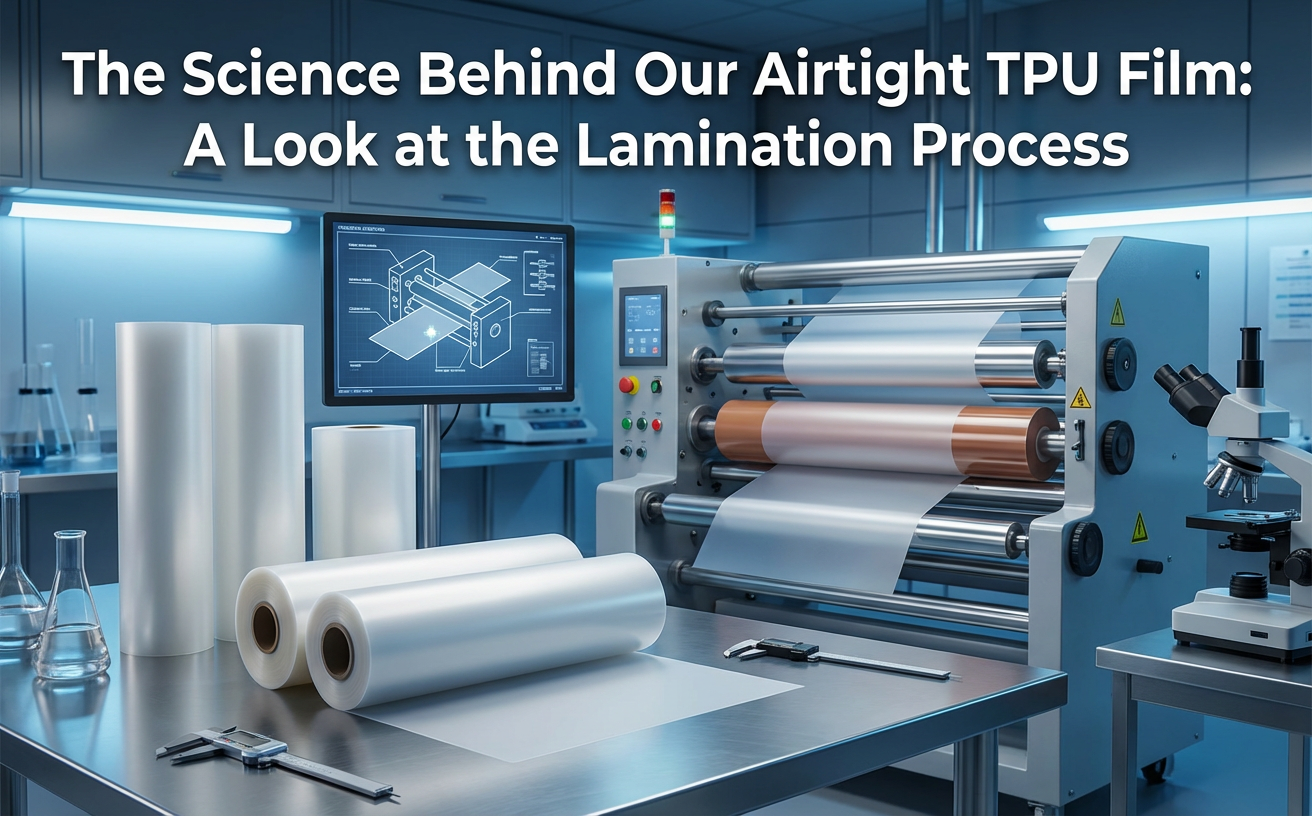
Tıbbi şişirilebilir ürünlerde hava sızdırmazlığı isteğe bağlı değildir.
Oksijen torbaları, basınç terapi sistemleri ve dekubitus önleyici yatakların hepsi düzgün çalışması için sabit iç basınca dayanır. Sızıntı olduğunda performans hemen düşer. Bazı durumlarda ürün kullanılamaz hale gelir.
Pek çok kişi hava geçirmez performansın malzemenin kendisinden geldiğini sanar. Aslında bu, malzemenin nasıl işlendiğine de aynı derecede bağlıdır.
A TPU filmi Tek başına yeterli değildir. Eğer bağlama yöntemi istikrarlı değilse hava zamanla zayıf bağlantı noktalarından veya mikro kusurlardan içeri girebilir.
İşte burada laminasyon kritik hale gelir.
SL Engineering'de hava geçirmez performans kontrollü bir termal laminasyon süreciyle sağlanır—katman eklemek yerine onları tek bir yapıya dönüştürerek.
Laminasyon Sadece Bağlama Değildir
Laminasyon genellikle bir film ile kumaşı birleştirmek olarak tanımlanır. Bu tanımlama esas noktayı kaçırıyor.
Düşük kaliteli yapılar da katmanlar sadece birbirine yapıştırılır. Arayüz hâlâ bir sınır olmaya devam eder. Zamanla bu sınır bozulmanın kaynağı haline gelir—özellikle basınç, bükülme veya tekrarlı kullanım altında.
Hava geçirmez uygulamalar için hedef farklıdır. Arayüz ortadan kalkmalıdır.
Tipik bir TPU kaplamalı kumaş şunları birleştirir:
- Bir TPU filmi
- 70D veya 210D naylon gibi bir temel kumaş
Soru, bu iki katmanın birbirine bağlanıp bağlanmadığı değil; soru, işlem sonrası bunların tek bir malzeme gibi davranıp davranmadığıdır.
Termal Laminasyonun Uygulamada Çalışma Şekli
Laminasyon süreci ısı, basınç ve zamanlamayla belirlenir. Her değişken TPU'nun kumaşla etkileşimini etkiler.
Adım 1: Yüzey Hazırlığı
Her iki malzeme üretim hattına girmeden önce hazırlanır. Bu adım parçacıkları ve yüzey kirlerini temizler.
Yeterince hazırlık yapılmazsa katmanlar arasında mikroskopik boşluklar kalabilir. Bu boşluklar görünmez ama basınç altında sızıntı yolları haline gelir.
Adım 2: Kontrollü Koşullarda Kalenderleme
TPU filmi ve kumaş kalender sisteminin içine beslenir. Bu sistem sıcak rulolarla hem ısı hem de basınç uygular.
Buradaki amaç sadece malzemeleri bir araya bastırmak değil; TPU'nun belirli bir termal durumda nasıl davrandığını kontrol etmek.
Isı istikrarı kritiktir. Dalgalanma olursa TPU eşitsiz yumuşayabilir ve böylece bağlama tutarsızlığı oluşabilir.
Adım 3: Akış Hâline Geçiş
Doğru sıcaklıkta TPU yüzeyi yumuşamış ve akışkan hale gelir.
Bu aşamada malzeme artık katı bir film değildir. Daha çok basınç altında hareket edebilen viskoz bir tabaka gibidir.
Bu geçiş, TPU'nun:
- Yüzeyde kalmasını mı yoksa
- Kumaş yapısına nüfuz etmesini mi belirler
Adım 4: Entegrasyon ve Hızlı Soğutma
Basınç altında yumuşayan TPU fiberler arasındaki boşluklara girer. Tekil filamentleri sarar ve kumaş içindeki küçük boşlukları doldurur.
Malzeme ısıtılmış bölgeden çıktığında soğutma rulolarından geçer. Yapı hemen sabitlenir.
Geride kalan şey, kumaş üzerinde duran bir film değil, sürekli bir kompozit katmanıdır.
Medical-Grade-0.15mm-TPU-Film-800x800.jpg)
Aslında Ne Hava Geçirmez Yapar
Hava geçirmezlik kalınlıkla ilgili değil; süreklilikle ilgilidir.
Hava molekülleri bir yol bulabilirse—hatta çok küçük bir yol bile—zamanla sızıntı olur.
Doğru şekilde laminasyonlanmış bir TPU kumaşında:
- TPU fiberler arasındaki boşlukları doldurur
- Fiber yapısı kısmen gömülür
- Hava geçişine izin verecek sürekli kanallar yoktur
Bu yüzden yapı, kaplamalı veya yapıştırıcıyla birleştirilmiş malzemelerden farklı davranır.
Yüzey kaplamaları mikroskopik yollar bırakabilir. Moleküler entegrasyon bunları ortadan kaldırır.
Neden Yapıştırıcı Kullanılmaz
Bazı laminasyon yöntemlerinde katmanları birleştirmek için yapıştırıcı kullanılır. Bu yaklaşım daha basittir, ancak ekstra değişkenler getirir.
Yapıştırıcılar:
- Yaşlanıp güç kaybedebilir
- Stres altında ayrılabilir
- Dengesiz bağlanma bölgeleri oluşturun
Ayrıca uçucu bileşenler de ekleyebilirler; bu bileşenler tıbbi ortamlar için ideal değildir.
Termal laminasyon, bu sorunları önler. Bağlanma TPU'nun kendisi tarafından oluşturulur. Ek maddelere gerek yoktur.
Bu, hem mekanik hem de kimyasal açıdan daha kararlı bir yapıya yol açar.
Proses Kararlılığı ve Etkisi
Aynı ham maddelerle bile, sonuçlar proses kontrolüne bağlı olarak değişebilir.
Küçük değişiklikler:
- Sıcaklık
- Basınç
- Hat hızı
TPU'nun kumaşa ne kadar derine nüfuz ettiği ve ne kadar eşit şekilde dağıldığı etkilenebilir.
Eğer nüfuzlama tamamlanmazsa mikro boşluklar kalabilir. Bu boşluklar potansiyel sızıntı noktalarıdır.
Bu nedenle laminasyon, basit bir üretim adımı değil, kontrollü bir sistem olarak ele alınır. Tüm rulodaki tutarlılık, en yüksek performans kadar önemlidir.
Performans Karşılaştırması: Termal Laminasyon vs Geleneksel Bağlama
| Aspect | Termal Laminasyon (TPU) | Yapıştırıcı veya Kaplama Yöntemi |
|---|---|---|
| Yapı | Entegre kompozit | Katmanlı yapı |
| Hava geçirmez bütünlük | Kararlı, gözeneksiz | Kaplama kalitesine bağlıdır |
| Uzun Dönem Güvenilirliği | Tutarlı | Zamanla bozulabilir |
| Delaminasyon Riski | Düşük | Stres altında daha yüksek |
| Proses Hassasiyeti | Yüksek kontrol gerektirir | Daha düşük başlangıç karmaşıklığı |
Bunun Gerçek Uygulamalarda Anlamı
Tıbbi şişirilebilirlerde malzemeler tekrarlı yüke maruz kalır. Katlanır, şişirilir, saklanır ve yeniden kullanılır.
Bu koşullar altında zayıf arayüzler önce başarısız olur.
Lamine edilmiş TPU yapısı farklı davranır çünkü katmanlar arasında net bir sınır yoktur. Stres malzeme içinde dağılır, arayüzde yoğunlaşmaz.
Bu da şuna yol açar:
- Daha kararlı basınç koruması
- Daha düşük arıza oranları
- Daha uzun kullanım ömrü
Bunlar teorik avantajlar değil. Zaman içinde gerçek ürün performansında ortaya çıkarlar.
Üretim Ortamı ve Tutarlılık
Hava geçirmez performans yalnızca prosese değil, aynı zamanda yürütüldüğü ortama da bağlıdır.
Toz, nem ve sıcaklık değişimi tümü laminasyon kalitesini etkileyebilir.
Kontrollü üretim düzenlemesi genellikle şunları içerir:
- Temiz malzeme taşıma
- Kararlı termal sistemler
- Tutarlı silindir basıncı
Bu koşullar korunduğunda çıktı tahmin edilebilir hale gelir. Bunlar olmadan varyasyon artar—malzeme aynı olsa bile.
Hava geçirmez TPU kumaşları yalnızca TPU ile tanımlanmaz. TPU'nun nasıl işlendiğiyle tanımlanırlar.
Termal laminasyon, son malzemenin:
- Basınç korur veya sızar
- Sabit kalır veya bozulur
- Tutarlı çalışır veya üretim boyunca değişir
SL Engineering'de lamine işlemi temel bir yetenek olarak değerlendirilir. Süreçteki her parametre kontrol altında tutularak son malzemenin tek, devamlı bir yapı gibi davranmasını sağlanır.
Bu sayede malzeme, tıbbi şişirilebilir uygulamaların ihtiyaçlarını karşılayabilir—burada performans yalnızca bir kez değil, zaman içinde tekrar tekrar test edilir.
Son Eylem Çağrısı
Uygulamanız güvenilir hava geçirmezlik performansına bağlıysa, malzeme seçimi denklemin sadece bir parçasıdır.
Sonucu belirleyen şey süreç kontrolüdür.
Teknik veri sayfalarını (TDS) talep etmek veya proje gereksinimlerinizi görüşmek için mühendislik ekibimizle iletişime geçin.
 English
  Spanish
  Italian
  Korean
  French
  Japanese
  Arabic
  Portuguese
  Vietnamese
  German
  Turkish
  Belarusian