


Material Selection Starts with the Air Cell
Medical inflatable mattresses rely on a coordinated combination of fabric, sealed chambers, air distribution components and pressure control systems. Each component contributes to the mattress’s overall performance, but the fabric used to construct the air cells deserves particular attention. It must contain air, withstand repeated deformation, maintain reliable seams and remain flexible enough for the mattress to adapt to changing loads.
For manufacturers producing alternating pressure mattresses, static air mattresses and other medical inflatable products, selecting a suitable material involves more than comparing fabric weight or film thickness. The relationship between the textile substrate and the laminated polymer layer influences handling, fabrication, mechanical performance and long-term product reliability.
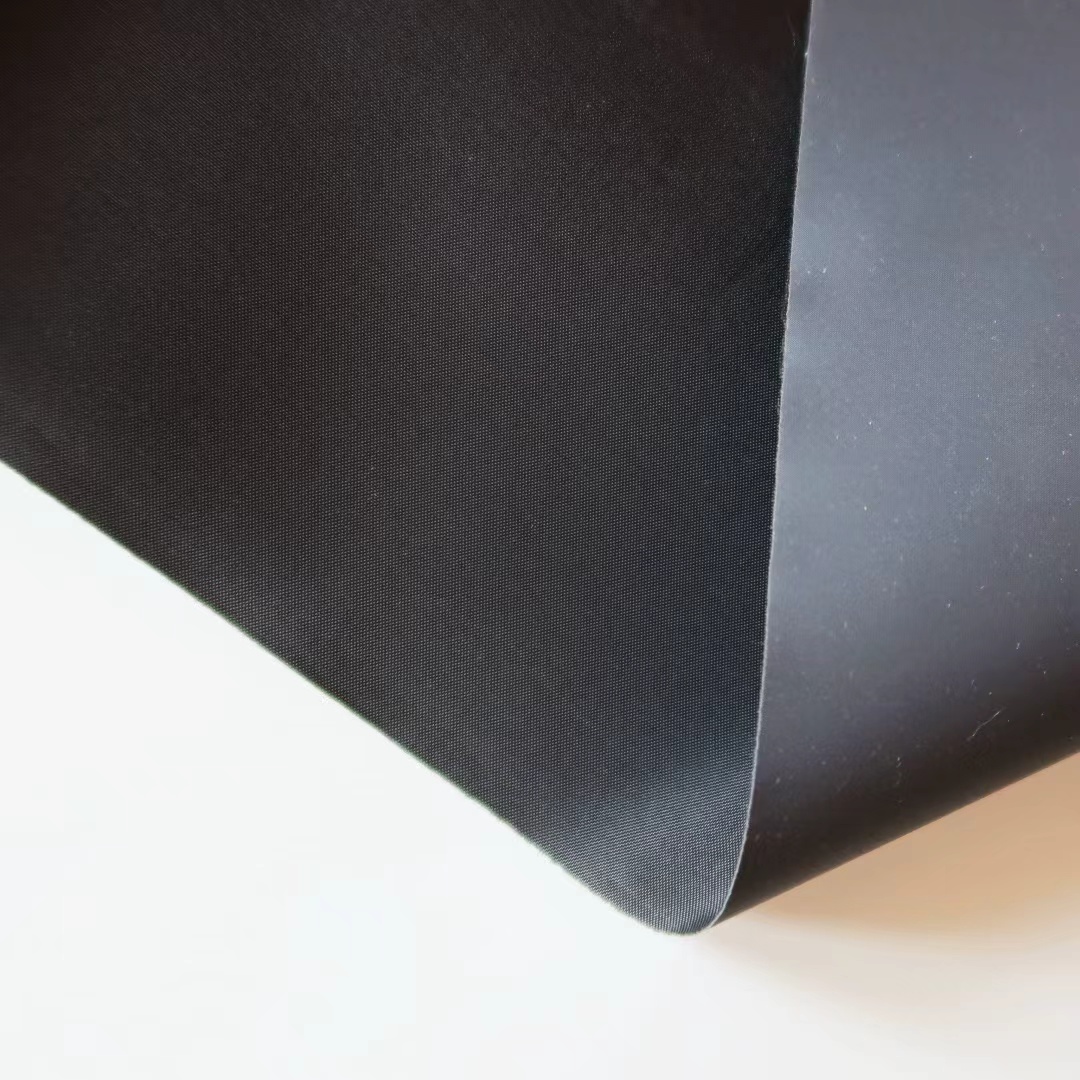
210T Nylon Taffeta Laminated with 0.18MM PVC Film offers a practical material configuration for manufacturers seeking a balance between lightweight construction, flexibility, air retention and production cost. The tightly woven nylon base provides a textile foundation, while the PVC film forms a continuous barrier against air and moisture.
However, material suitability depends on the intended mattress design, operating pressure, chamber geometry, welding process and required service life. Evaluating these factors together helps manufacturers choose a fabric that fits their production requirements and supports consistent finished-product quality.
What Requirements Should Medical Inflatable Mattress Fabric Meet?
Medical inflatable mattresses operate under conditions that differ from those encountered by ordinary textile products. Their air chambers may remain inflated for extended periods, undergo repeated inflation and deflation, or experience localized deformation as a patient’s weight shifts across the support surface.
The selected fabric must accommodate these conditions without creating unnecessary difficulties during manufacturing.
C'est l'exigence incontournable. Si la vessie fuit, le produit est défectueux.
Air retention is a fundamental requirement for inflatable mattress construction. If air escapes through the material or assembled seams, the chamber may fail to maintain its intended pressure. The resulting change in chamber shape can affect how the mattress distributes support across its surface.
A laminated fabric addresses this requirement through its polymer film layer. In a PVC-laminated nylon construction, the film provides the primary air barrier, while the nylon substrate supports the composite structure.
The actual pressure-retention performance depends on more than the presence of PVC. Film continuity, lamination quality, material defects, welded seams, valves and other connection points all influence leakage. Manufacturers should therefore evaluate the fabric and the completed air chamber separately.
For applications involving alternating pressure, testing should also consider repeated changes in chamber pressure rather than relying exclusively on a static leakage test.
Tensile Strength and Tear Resistance
Air cells experience tension as they inflate and deform under load. Stress may concentrate around welded edges, corners, narrow connecting sections and attachment points. A fabric that performs adequately on a flat sample may behave differently when formed into a three-dimensional chamber.
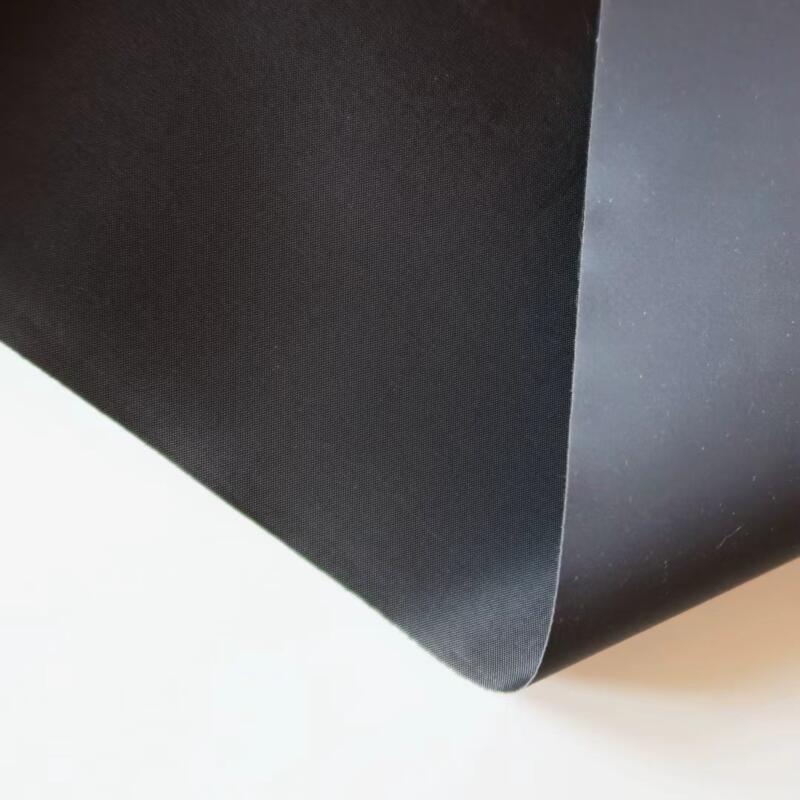
The nylon base provides a woven reinforcement structure that contributes to tensile strength and resistance to tearing. Its contribution depends on yarn characteristics, weave construction, fabric quality and the interaction between the textile and PVC layers.
Manufacturers should assess tensile and tear properties alongside the strength of finished seams. These measurements provide complementary information about how the material may respond to pulling forces and localized damage during assembly and use.
Flexibility and Dimensional Stability
Mattress chambers must change shape as air enters or leaves them. Excessively stiff material can complicate fabrication and may restrict the movement required by the intended design. At the same time, the composite must retain sufficient structural stability to avoid undesirable distortion.
A lightweight nylon substrate combined with a flexible PVC film can support this balance. Nevertheless, flexibility varies with the PVC formulation, film thickness, temperature and lamination construction.
Dimensional stability is also relevant when cutting panels, aligning seams and assembling multiple air cells. Consistent material dimensions help reduce alignment problems and improve manufacturing repeatability.
Resistance to Moisture and Cleaning Agents
Medical mattress surfaces may encounter water, cleaning solutions and bodily fluids. A continuous PVC film can provide a liquid barrier that helps protect the underlying textile and simplifies surface cleaning.
The suitability of the finished material for a particular cleaning routine must still be verified. Chemical compatibility, repeated wiping, disinfectant concentration and exposure time can affect the film surface and the integrity of the laminate.
Manufacturers should establish cleaning requirements early in product development and evaluate the selected material under representative conditions. Claims relating to infection prevention or disinfection should be supported by the performance of the complete product and its validated cleaning procedures.
How Does 210T Nylon Taffeta Support Air Bladder Construction?
The textile substrate plays an important role in the mechanical behavior of laminated fabric. Although the PVC film provides the main air barrier, the woven base contributes reinforcement, handling characteristics and dimensional control during production.
A Tightly Woven Textile Foundation
210T Nylon Taffeta is a lightweight woven fabric construction commonly used where a smooth surface and compact textile structure are desirable. The term 210T identifies the fabric’s construction specification, but it should not be interpreted as a direct measurement of tensile strength, fabric weight or tear resistance.
For inflatable mattress manufacturers, the tightly woven structure provides a consistent foundation for the laminated film. It also supports cutting and handling during the preparation of air bladder panels.
The finished performance depends on the nylon yarn specification, weaving quality, finishing process and lamination method. Two fabrics described using the same construction count may still exhibit different mechanical properties. Buyers should request technical data for the specific material rather than relying on the construction designation alone.
Lightweight Construction for Flexible Designs
Material weight influences the handling characteristics of finished inflatable products. A lightweight textile substrate can help manufacturers produce flexible chambers without introducing unnecessary bulk into the composite.
This characteristic may be useful in portable medical mattresses, replacement air bladder assemblies and homecare pressure-relief products where manageable product weight is a practical consideration.
Weight reduction must not compromise the structural requirements of the chamber. The selected fabric should be evaluated against its expected operating pressure, load distribution, inflation frequency and service conditions. A material suitable for one mattress configuration may not be appropriate for a different design with larger chambers or higher mechanical demands.
Surface Quality and Fabrication Consistency
A smooth textile base can support consistent lamination and provide manageable material handling during cutting and assembly. Surface uniformity is particularly relevant when manufacturers process large fabric rolls or produce multiple panels for a mattress containing several interconnected air chambers.
Inspection should cover visible weaving defects, contamination, uneven coloration and irregularities that could interfere with lamination or subsequent fabrication.
For repeat production, incoming material checks and controlled storage conditions help maintain consistency between batches. These measures are especially useful when fabric is purchased in volume and processed across multiple production runs.
Why Does the 0.18MM PVC Film Layer Matter?
The PVC film is a central functional component of this composite material. It creates the barrier required for air containment while providing a surface that can be joined using an appropriate welding process.
Selecting a film thickness involves balancing barrier performance, flexibility, processing requirements and the mechanical demands of the finished chamber.
Air Barrier and Moisture Protection
A continuous PVC film helps limit air passage through the textile structure and creates a waterproof surface. In an inflatable mattress, this barrier allows air to remain within the intended chamber, provided that the film, seams and connections are properly manufactured.
The nominal thickness of 0.18MM offers a defined starting point for material evaluation. It does not, by itself, establish a specific leakage rate or guarantee a particular operating pressure. Those properties must be confirmed through testing of the supplied laminate and the finished bladder.
Film continuity is equally important. Pinholes, surface damage, poor adhesion and processing defects may undermine the performance expected from the nominal material specification.
Flexibility During Inflation and Deflation
PVC formulations can be engineered to provide different levels of flexibility. In inflatable applications, the film must accommodate changes in chamber shape without becoming difficult to handle during fabrication.
A 0.18MM film layer may provide a practical balance for certain mattress designs, but the appropriate thickness depends on the overall composite construction and intended use. Larger chambers, different pressure requirements and more demanding movement patterns may require a separate evaluation.
Manufacturers should consider the behavior of the laminated fabric at the temperatures expected during storage, production and use. Material flexibility and seam performance should be checked under conditions representative of the target application.
Lamination Adhesion and Surface Integrity
The bond between the nylon substrate and PVC film helps the composite function as a unified material. If the layers separate during bending, handling or repeated inflation, the fabric may no longer perform as intended.
Peel testing can help assess adhesion between the layers. Visual inspection and repeated-flexing tests can provide additional information about surface integrity and the risk of delamination.
Acceptance criteria should be established according to the product’s design requirements. Manufacturers should avoid assuming that all PVC-laminated nylon fabrics offer equivalent adhesion simply because they use a similar nominal film thickness.
What Should Manufacturers Check Before High-Frequency Welding?
High-frequency welding is commonly used to join compatible PVC-based materials. The process uses an electromagnetic field to generate heat within suitable thermoplastic layers, allowing the material surfaces to fuse under controlled pressure.
For inflatable mattress production, the objective is to create continuous seams that retain air under the intended operating conditions. Welding performance depends on material composition, machine configuration, electrode design, pressure, cycle time and cooling conditions.
Confirm Compatibility Before Setting Production Parameters
The first step is to confirm that the supplied PVC film is suitable for the intended welding process. Film formulations and composite constructions vary, so production settings developed for one material should not automatically be transferred to another.
Manufacturers should conduct trial welds using the actual production material. Initial trials can help identify a workable combination of power, pressure, welding time and cooling time.
Insufficient energy may result in weak bonding, while excessive energy can damage the film or distort the composite. The suitable process window should be established through controlled testing rather than visual judgment alone.
Inspect Seams at Corners and Connection Points
Air bladder designs often include narrow channels, curved boundaries and multiple welded intersections. These locations may present different challenges from straight seams because the electrode geometry and local material arrangement can affect the weld.
Trial assemblies should reproduce the most demanding features of the intended design. Inspection should focus on seam continuity, edge alignment, wrinkles, local thinning and visible damage.
Where a mattress contains many individual chambers, consistent seam quality becomes particularly important. A single leaking connection can affect the performance of an individual chamber even when the remaining fabric panels are satisfactory.
Validate Airtightness After Welding
Visual inspection alone cannot confirm that a seam is airtight. Manufacturers should use an appropriate leakage test to evaluate the completed chamber and identify defects that may not be visible.
Depending on the design, validation may include pressure decay testing, immersion testing where appropriate, or another controlled method suited to the product. The method should reflect the chamber geometry, test pressure and intended acceptance criteria.
Repeated inflation and deflation may also be necessary to assess seam durability. A seam that initially passes a leakage test may behave differently after repeated mechanical cycling, so testing should match the expected demands of the finished mattress.
How Do Material Properties Affect Pressure Retention and Service Life?
Pressure retention is a system-level result. The fabric contributes to air containment, but valves, tubing, connectors, welded joints and the control system also influence the behavior of the mattress.
A reliable material evaluation separates these factors while considering how they interact in the assembled product.
Gonflage et dégonflage répétés
Alternating pressure mattresses change the pressure within different air chambers according to their operating cycle. This movement places repeated demands on the material and the seams.
Over time, repeated deformation may expose weaknesses in the film, laminate bond or welded connections. The degree of stress depends on chamber geometry, operating pressure, inflation frequency and the way the mattress distributes loads.
Manufacturers should evaluate the composite under representative cycling conditions. The test plan should reflect the intended product design rather than relying on a generic cycle count that may not represent actual use.
Abrasion, Folding and Localized Stress
Fabric can experience rubbing against surrounding materials during handling, installation and use. Folding and bending may also concentrate stress in specific areas, particularly where chambers connect or where the fabric transitions between flat and inflated sections.
The nylon substrate contributes mechanical reinforcement, while the PVC film protects the textile and provides the air barrier. However, the resistance of the finished composite to abrasion, repeated folding and puncture must be established through suitable tests.
Design details can be as important as the material specification. Rounded transitions, appropriate seam placement and reduced stress concentration may help improve the durability of the finished air bladder.
Pressure Control and Chamber Design
Material selection should reflect the intended operating pressure and the geometry of each chamber. A large air cell may deform differently from a narrow transverse chamber, even when both are manufactured from the same fabric.
Pressure distribution also depends on the mattress layout, pump performance, valve operation and control strategy. The fabric alone cannot determine whether a finished mattress will provide the required clinical support.
For this reason, manufacturers should validate the complete mattress assembly under representative loads and operating conditions. Material tests provide important input, while finished-product testing confirms how the components perform together.
Which Quality Checks Matter Before Mass Production?
A structured inspection plan helps manufacturers identify material problems before they affect large production batches. Testing should cover the incoming laminate, fabrication process and finished air bladder.
The following checks provide a practical starting point for supplier qualification and production control.
| Élément d'inspection | Objectif | Considerations for manufacturers |
|---|---|---|
| Visual inspection | Identify visible material defects | Check for pinholes, contamination, wrinkles and uneven film surfaces |
| Thickness measurement | Confirm material consistency | Verify the specified PVC film thickness using an agreed method |
| Width and dimensional checks | Support cutting and layout planning | Confirm roll width and applicable dimensional tolerances |
| Tensile and tear testing | Assess mechanical properties | Use agreed methods and specifications relevant to the application |
| Lamination adhesion testing | Evaluate the bond between layers | Establish acceptance criteria for peel performance |
| Trial welding | Confirm processing compatibility | Test representative seams using production equipment |
| Le contrôle des fuites d'air | Evaluate chamber sealing | Apply a defined method, pressure and acceptance limit |
| Durability testing | Assess repeated-use performance | Reproduce relevant inflation, deflation and mechanical conditions |
Not every test needs to be performed on every roll. The appropriate inspection frequency depends on supplier qualification, material consistency, production volume and product risk. However, critical characteristics should be defined before mass production begins.
Documentation also matters. Material identification, batch records, test results and changes to the manufacturing process help maintain traceability and support investigations when a defect occurs.
For medical applications, material suitability should be assessed against the requirements of the finished device and its intended market. A fabric specification alone does not establish medical-device compliance, biocompatibility or clinical effectiveness.
How Can Buyers Match Fabric Specifications to Mattress Designs?
Purchasing decisions should connect material specifications with the intended product rather than focusing on a single parameter. The same laminated fabric may perform differently across mattress designs because the operating pressure, chamber dimensions, seam layout and expected service conditions are not identical.
The 210T Nylon Taffeta Laminated with 0.18MM PVC Film described here has several defined specifications that can support an initial evaluation.
| Paramètre | Supplied specification | Purchasing consideration |
|---|---|---|
| Base fabric | 210T Nylon Taffeta | Confirm the construction and obtain relevant mechanical test data |
| PVC film thickness | 0.18MM | Verify thickness and assess barrier performance |
| Color | 425C Dark Grey | Confirm color requirements and batch consistency |
| Fabric width | 130CM, customizable | Check cutting layouts and material utilization |
| Lamination structure | Single-side PVC film lamination | Confirm the required film orientation in the finished product |
| Personnalisation | Color, thickness and width | Specify agreed tolerances and production requirements |
The listed 130CM width may influence cutting efficiency, particularly for mattresses with repeated chamber panels. Buyers should compare the roll width with panel dimensions, seam allowances and cutting layouts before confirming an order.
Customization can be useful when a design requires a different width, color or film thickness. Any change should be reviewed for its effect on processing behavior and finished-product performance. A modified film thickness, for example, may change flexibility and welding conditions, so existing production parameters may need to be revalidated.
Before approving a supplier, manufacturers should request representative samples and conduct testing with their own production methods. Questions about material traceability, batch consistency, available technical data and lead-time arrangements should also be addressed during procurement.
Where Can PVC Laminated Nylon Fabric Be Used?
The material configuration is intended for medical inflatable products in which an airtight, flexible and water-resistant composite is required. Potential applications include static air mattress bladders, alternating pressure mattress chambers, replacement air bladder assemblies and selected rehabilitation or homecare inflatable products.
Suitability varies by application. Products designed for heavier loads, higher operating pressures or particularly demanding service conditions may require additional testing or a different material construction.
The same principle applies to products involving specialized cleaning procedures or direct patient contact. Buyers should verify that the material and finished device meet the relevant requirements rather than assuming that a PVC-laminated textile is suitable for every medical use.
For manufacturers seeking a practical starting point for air bladder development, 210T Nylon Taffeta Laminated with 0.18MM PVC Film provides a defined combination of woven nylon reinforcement and a flexible PVC barrier. Its final suitability should be established through material testing, welding trials and finished-product validation.
Final Considerations for Material Selection
Selecting fabric for medical inflatable mattresses requires a coordinated assessment of air retention, mechanical strength, flexibility, lamination adhesion and manufacturing compatibility. Film thickness and textile construction provide useful starting specifications, but neither parameter can independently guarantee the performance of the finished product.
The 210T nylon base supports the composite structure, while the 0.18MM PVC film provides the principal barrier against air and moisture. Together, these layers offer a material option for manufacturers developing static air mattresses, alternating pressure systems and other compatible inflatable products.
The most reliable purchasing approach combines technical documentation, sample evaluation, controlled welding trials and tests on representative air chambers. Manufacturers should also consider chamber geometry, operating pressure, cleaning conditions and expected service life when establishing acceptance criteria.
By evaluating the complete material and manufacturing system, product developers can make more informed decisions about whether PVC-laminated nylon fabric meets their requirements. This process helps align procurement specifications with production needs and provides a stronger basis for consistent quality across finished medical inflatable products.
 English
  Spanish
  Italian
  Korean
  French
  Japanese
  Arabic
  Portuguese
  Vietnamese
  German
  Turkish
  Belarusian