


Choosing fabric for an anti-decubitus air mattress is rarely a simple decision between a lighter fabric and a stronger one. The finished mattress has to maintain air pressure, support the intended load, tolerate repeated inflation and deflation, remain flexible, and survive handling and cleaning throughout its service life.
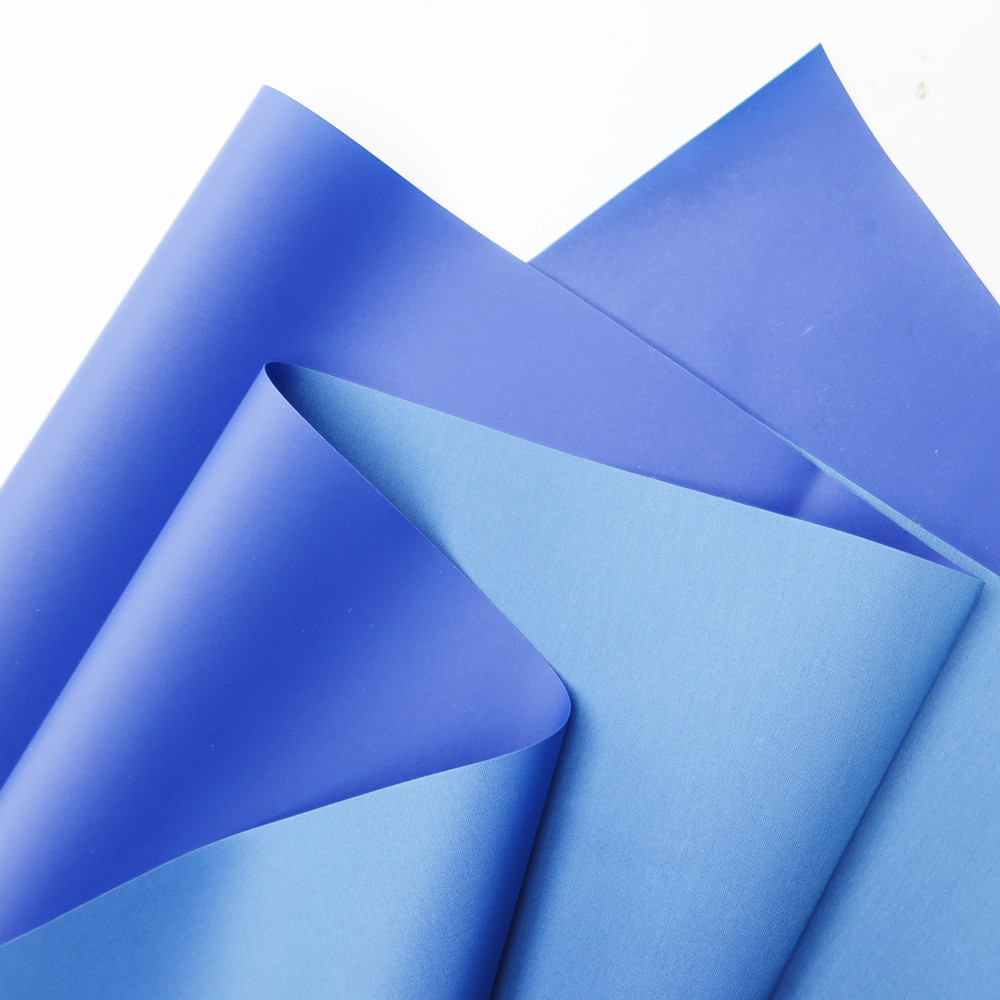
For manufacturers, 70D and 210D nylon are two practical options for different mattress constructions. Both can be combined with a TPU coating to create an airtight and weldable fabric. The difference is in how much textile reinforcement the finished structure needs and how that reinforcement affects weight, flexibility, durability, and production.
A 70D construction can make sense for a lightweight mattress where flexibility and low material weight are important. A 210D construction becomes more attractive when the product needs greater tensile strength, tear resistance, dimensional stability, or a larger safety margin under mechanical loading.
The right choice cannot be made from denier alone. Air-cell dimensions, operating pressure, user weight, seam design, welding method, folding frequency, and expected service life all influence the final decision.
What Does 70D or 210D Actually Tell a Mattress Manufacturer?
Denier describes the linear density of the yarn used in the textile. It gives a useful indication of the relative weight of the yarn, but it does not provide a complete picture of finished fabric performance.
A 210D nylon fabric generally uses a heavier yarn construction than 70D nylon. This can provide a stronger textile foundation, but the final strength of a TPU coated fabric also depends on weave density, yarn quality, fabric construction, coating adhesion, TPU formulation, and coating thickness.
This distinction matters in medical air mattress development.
A buyer may compare two datasheets and see that the 210D fabric has higher tensile or tear values. That information is useful, but it does not automatically mean that every mattress should use 210D.
The fabric has to be matched with the air-cell structure.
The Nylon Layer and TPU Layer Have Different Roles
In a TPU coated nylon fabric, the two materials are not performing the same job.
The nylon substrate provides textile reinforcement. It helps resist tensile loading, tearing, and deformation.
The TPU coating creates the continuous polymer barrier that provides airtightness and waterproofing. It also creates the surface that can be joined during welding.
A useful way to look at the construction is:
Nylon = reinforcement
TPU = airtight and weldable barrier
The finished air cell depends on both.
A stronger nylon cannot compensate for poor TPU adhesion or a defective weld. Likewise, an excellent TPU coating does not turn a lightweight textile into a heavy-duty reinforcement layer.
When Does 70D TPU Coated Nylon Make Sense?
70D TPU coated nylon is often considered when reducing weight and maintaining flexibility are important product targets.
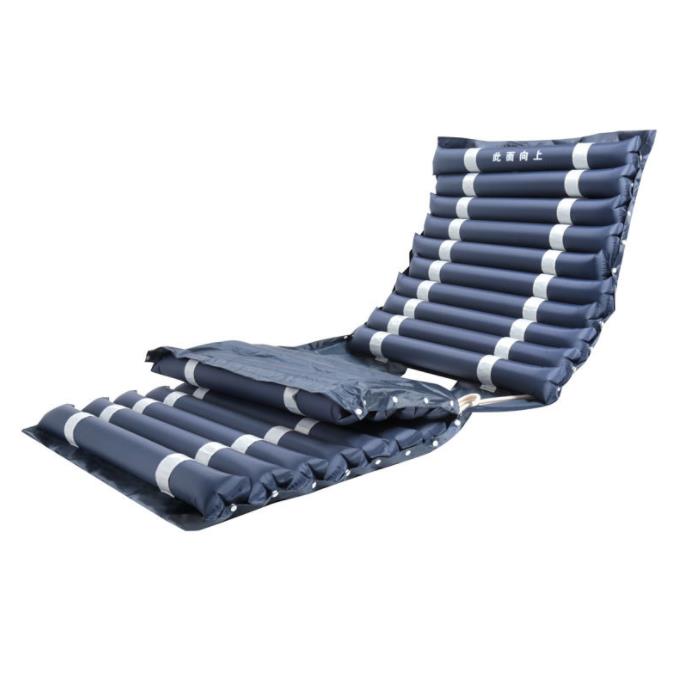
An anti-decubitus mattress may contain numerous air cells, connecting tubes, valves, and welded areas. Material weight can accumulate quickly across the entire mattress.
For portable homecare products or lightweight support surfaces, reducing unnecessary fabric weight can make the finished product easier to move, fold, and store.
Lightweight Construction
A 70D textile uses less material than a heavier denier construction.
That can help manufacturers develop a lighter mattress without increasing the dimensions of the air cells.
For products that are frequently transported by caregivers or users, this can be a meaningful advantage.
Flexible Handling
A lighter textile construction can also provide a softer and more flexible fabric feel.
This can be useful when the mattress needs to fold into a compact package.
The fabric may also be easier to process around curves and smaller air-cell structures, depending on the production equipment and coating construction.
Cost Considerations
Material cost is another practical factor.
A manufacturer producing a large volume of mattresses may need to balance material performance against total product cost.
If the mattress does not require the additional mechanical strength of 210D, a well-qualified 70D construction can provide a more efficient material solution.
The key point is that choosing 70D should be based on the actual load and durability requirements rather than simply choosing the lowest-cost fabric.
Where Does 210D Have an Advantage?
210D TPU coated nylon becomes more interesting when the mattress faces higher mechanical demands.
The heavier nylon substrate provides a stronger reinforcement layer and can increase resistance to tensile loading and tearing.
This is particularly relevant to mattresses designed for:
- Higher user loads
- Long-term use
- Frequent inflation and deflation
- Larger air cells
- More demanding handling
- Heavy-duty support surfaces
Higher Mechanical Strength
When an air cell is inflated, internal pressure creates tension in the fabric.
When a user lies on the mattress, the shape of the cells changes and the load is transferred through the air-cell structure.
The nylon reinforcement needs to tolerate these changes repeatedly.
A 210D construction provides more textile reinforcement than 70D, which can be useful where mechanical strength has a greater influence on product reliability.
Improved Tear Resistance
Medical mattresses can be folded, moved, cleaned, installed, and stored many times.
A small cut or local fabric defect can become more serious if the textile allows a tear to propagate easily.
A stronger textile substrate can provide greater resistance to this type of mechanical damage.
That does not make 210D puncture-proof. Product design and handling still matter.
Better Dimensional Stability
Air-cell geometry affects the way a mattress distributes and maintains support.
A stronger textile construction can help control deformation when the material is repeatedly inflated and loaded.
For larger cells or heavier-duty systems, this can become more important than saving a small amount of fabric weight.
70D vs 210D: The Choice Depends on the Product
A direct comparison is useful, but it should not be treated as a ranking.
| Патрабаванне | 70D TPU Coated Nylon | 210D TPU Coated Nylon |
|---|---|---|
| Low material weight | Excellent | Good |
| Flexibility | Excellent | Very good |
| Packability | Excellent | Very good |
| Tensile reinforcement | Good | Вышэй |
| Tear resistance | Good | Вышэй |
| Dimensional stability | Good | Very good |
| Heavy-load applications | Application dependent | More suitable |
| Bariatric designs | Requires careful validation | Strong candidate |
| Frequent mechanical cycling | Suitable when properly designed | Greater reinforcement margin |
| Lightweight homecare products | Strong option | May be more than required |
The table gives a general direction. Actual performance must be verified using the specific fabric construction and finished mattress.
Air Pressure Changes the Material Decision
One of the easiest mistakes in inflatable product development is to treat fabric strength as a direct pressure rating.
A fabric does not have one universal pressure limit that applies to every anti-decubitus mattress.
The stress created by internal pressure depends heavily on the size and geometry of the air chamber.
Consider two air cells using the same TPU coated nylon fabric.
The first cell is relatively small.
The second cell has a much larger diameter and surface area.
Both may operate at the same internal pressure, but the forces acting across their structures are not identical.
The same principle applies to mattress width, chamber length, baffle spacing, and seam arrangement.
This is why a statement such as “210D can handle X PSI” is not sufficient for product development.
The actual air-cell design needs to be tested.
Chamber Size Matters
As the size of an inflatable chamber changes, the distribution of membrane stress changes with it.
The fabric therefore needs to be evaluated together with:
- Chamber dimensions
- Operating pressure
- Maximum design pressure
- Air-cell shape
- Welded seam structure
- Reinforcement
- Expected user load
This is particularly important when comparing 70D and 210D for larger mattresses.
A 70D construction that works well in a small air cell may not be the best choice when the same material is stretched across a much larger chamber.
User Weight Is Another Important Variable
An anti-decubitus air mattress does not carry only its own internal air pressure.
It also supports the user.
As the user moves or changes position, the load distribution across the mattress changes.
For a standard mattress, the loading pattern may already vary considerably between the head, torso, pelvis, and legs.
For bariatric applications, the mechanical requirements become more demanding.
This does not mean that 210D automatically makes a mattress suitable for higher user weights.
The complete support system still needs to be designed and tested for the intended load.
However, the additional reinforcement of 210D nylon can provide a stronger material foundation when developing a high-load air-cell structure.
Why the TPU Coating Still Matters
Moving from 70D to 210D does not remove the need for a well-designed TPU coating.
The coating determines several important properties of the finished fabric.
A consistent TPU layer helps provide:
- Airtightness
- Waterproofing
- Surface protection
- Flexibility
- Weldability
The coating also separates the internal air from the textile substrate.
This is particularly important for inflatable medical products because exposed textile fibers can absorb moisture and complicate cleaning.
A smooth TPU surface is easier to wipe and maintain than an exposed woven textile.
The actual cleaning performance still depends on the TPU formulation and the cleaning chemicals used by the customer.
TPU Film Thickness Is Not the Same as Nylon Denier
Another common purchasing mistake is to treat denier and TPU film thickness as interchangeable ways of increasing strength.
They are not.
Increasing nylon denier primarily changes the reinforcement layer.
Increasing TPU thickness changes the polymer barrier.
These modifications can influence different parts of the product’s performance.
For example, a heavier nylon substrate can improve the mechanical foundation of the fabric, while a different TPU film thickness can affect airtightness, flexibility, weight, and welding behavior.
The two specifications should therefore be evaluated separately.
Why Thicker TPU Is Not Automatically Better
A thicker TPU layer adds polymer material.
That may provide useful performance in some applications, but it also increases weight and can change the flexibility of the finished fabric.
It can also affect welding parameters.
For a lightweight mattress, excessive TPU thickness may work against the product’s weight target.
For a heavy-duty air-cell system, a different film construction may be appropriate.
The correct film thickness should be determined from the finished product requirements.
Welding Can Change the Final Result
The fabric is not the finished mattress.
After cutting, the material has to be converted into sealed air chambers.
This is where welding quality becomes critical.
TPU coated nylon can be compatible with processes such as high-frequency welding and heat sealing when the fabric construction is designed for the selected process.
The TPU surfaces are joined to create sealed seams.
These seams must withstand:
- Internal pressure
- Repeated inflation and deflation
- Folding
- Load changes
- Handling
A strong 210D substrate does not guarantee a strong welded seam.
The welding parameters still need to be developed for the actual TPU coating.
Seam Design Matters
The seam is often one of the most mechanically stressed areas of an air cell.
A poorly designed seam can concentrate stress even when the fabric itself has excellent tensile properties.
Manufacturers should therefore consider:
- Weld width
- Seam position
- Corner geometry
- Reinforcement
- Valve connections
- Baffle layout
The fabric specification and seam design should be developed together.
Repeated Inflation and Deflation Should Be Part of Qualification
An anti-decubitus mattress may operate through repeated pressure cycles.
Depending on the system, different cells may inflate and deflate continuously while the mattress remains in service.
This creates a form of mechanical fatigue.
The fabric bends, stretches, relaxes, and bends again.
Over time, manufacturers need to consider whether the coating remains attached to the nylon substrate and whether the welded areas maintain their integrity.
This is one area where the stronger reinforcement of 210D can become valuable.
However, the correct test is not simply to measure fabric tensile strength before production.
The finished air cell should be subjected to representative inflation and deflation cycles and then inspected for:
- Seam damage
- Coating separation
- Fabric deformation
- Air leakage
- Permanent changes in shape
Folding and Storage Should Not Be Ignored
Many medical air mattresses spend part of their life deflated.
They may be folded and placed in storage before being used again.
This creates a different type of mechanical exposure from pressure loading.
Repeated folds can place stress on the same areas of the coating and textile.
A lightweight 70D construction may be easier to fold, but the product designer still needs to confirm that the fabric can tolerate the expected storage and handling conditions.
A 210D construction may offer greater mechanical reinforcement, but it may also produce a different folding feel and package volume.
Again, there is no universal winner.
The product’s actual logistics should influence the decision.
When Is 70D the More Rational Choice?
70D TPU coated nylon may be the better choice when the product priorities are:
Low weight + flexibility + compact storage + moderate mechanical demand
Typical product directions may include lightweight homecare mattresses, portable support products, and designs where the air-cell geometry does not impose unusually high loads.
If testing confirms sufficient tensile strength, tear resistance, air retention, and cycle durability, there is little reason to increase fabric weight simply for the sake of using a heavier denier.
When Is 210D the More Rational Choice?
210D becomes more attractive when the priorities shift toward:
Strength + durability + dimensional stability + higher mechanical loading
It can be considered for heavy-duty alternating pressure mattresses, bariatric support surfaces, and products intended for intensive or long-term use.
The stronger textile reinforcement can provide greater resistance to mechanical damage and deformation.
It may also provide a more comfortable engineering margin when the product has larger air cells or more demanding handling conditions.
The final decision should still be supported by product testing.
Why Bariatric Mattresses Deserve Separate Consideration
A bariatric air mattress cannot simply be treated as a larger version of a standard mattress.
The increased user load changes the mechanical requirements of the entire system.
The designer may need to reconsider:
- Air-cell dimensions
- Internal pressure
- Chamber arrangement
- Fabric strength
- Seam construction
- Reinforcement
- Valve design
- Pump capacity
This is where the selection of 210D TPU coated nylon can become particularly relevant.
The heavier textile substrate can provide a stronger foundation for the air-cell structure, but the finished mattress still needs to be validated under its intended load.
A fabric upgrade cannot replace proper engineering.
What About Medical Cleaning Requirements?
An anti-decubitus mattress is repeatedly exposed to moisture and cleaning procedures.
The TPU coating provides a smooth polymer surface that can act as a barrier against water and other liquids.
This can make routine surface cleaning easier than cleaning an exposed textile surface.
However, medical manufacturers should not assume that every TPU formulation is compatible with every disinfectant.
The actual cleaning agents, concentration, contact time, temperature, and cleaning frequency should be considered during material qualification.
A suitable material specification should therefore include cleaning compatibility as part of the development process.
Cost Should Be Considered Across the Product Life
The cheaper fabric is not always the cheaper product.
A lightweight 70D fabric may reduce material cost and finished weight.
But if the application requires high mechanical durability and the product experiences premature fabric or seam damage, the total cost can become higher through warranty claims, replacement, or maintenance.
On the other hand, using 210D where 70D would perform adequately can add unnecessary material cost and weight.
The better approach is to calculate the required performance first.
Then choose the lightest construction that reliably meets those requirements.
This is a more useful purchasing strategy than automatically selecting either the lightest or strongest fabric.
A Product Manager’s Way to Make the Decision
When comparing 70D and 210D TPU coated nylon, I would start with the finished mattress rather than the fabric specification.
First define the intended user and load.
Then define the air-cell dimensions and operating pressure.
After that, consider the welding process, expected inflation cycles, folding requirements, cleaning conditions, and target finished weight.
Only then should the fabric construction be finalized.
The decision can be summarized as:
Product load → Air-cell geometry → Operating pressure → Cycle requirements → Welding → Fabric denier → TPU construction
This sequence prevents the fabric specification from being selected in isolation.
Recommended Selection Direction
For manufacturers developing different types of anti-decubitus air mattresses, the following approach can be used as a starting point:
| Product Requirement | Initial Material Direction |
|---|---|
| Portable, lightweight mattress | 70D TPU coated nylon |
| Lightweight homecare product | 70D, subject to testing |
| General-purpose air mattress | 70D or 210D |
| Frequent inflation and deflation | 210D may provide more reinforcement |
| Larger air cells | Evaluate 210D more closely |
| Higher user loads | 210D is a stronger candidate |
| Bariatric support surface | 210D or heavier construction, subject to design |
| Maximum portability | 70D may be preferable |
| Heavy-duty handling | 210D has an advantage |
This is not a substitute for testing. The final fabric specification should be based on the actual air-cell design and required performance.
The choice between 70D and 210D TPU Coated Nylon Fabric is not a simple question of which fabric is stronger.
70D has a clear role where low weight, flexibility, and compact storage matter. It can be a highly practical option when the finished mattress has moderate mechanical requirements and testing confirms sufficient durability.
210D provides a stronger textile foundation for applications where the air cells face greater mechanical loading, repeated cycling, heavier users, or more demanding handling.
The TPU layer adds another part of the equation by providing the airtight and weldable polymer barrier. Film thickness, TPU formulation, coating adhesion, and welding conditions all influence the finished result.
Most importantly, the pressure capability of an anti-decubitus mattress cannot be determined from denier alone. Air-cell dimensions, shape, operating pressure, seam structure, reinforcement, and user load determine how the fabric is actually stressed.
For that reason, the best material is not necessarily the thickest or strongest one. It is the construction that provides enough mechanical and barrier performance for the intended mattress while keeping weight, flexibility, processing, and cost under control.
For lightweight products, that may mean 70D.
For heavy-duty and higher-load systems, 210D can offer the additional reinforcement needed.
The final answer comes from the finished air cell, not from the fabric label alone.
 English
  Spanish
  Italian
  Korean
  French
  Japanese
  Arabic
  Portuguese
  Vietnamese
  German
  Turkish
  Belarusian