


An inflatable medical support can look straightforward on a drawing: a shaped chamber, a valve, a textile cover and a fastening system. Problems often emerge later, when the product is bent around a limb, inflated repeatedly, handled during fitting or assembled on a production line.
A fabric that feels comfortable in a sample room may be difficult to weld. A chamber that holds air during an initial inspection may develop leaks after repeated flexing. A material with sufficient tensile strength may still be unsuitable if its surface, thickness or construction interferes with the finished device.
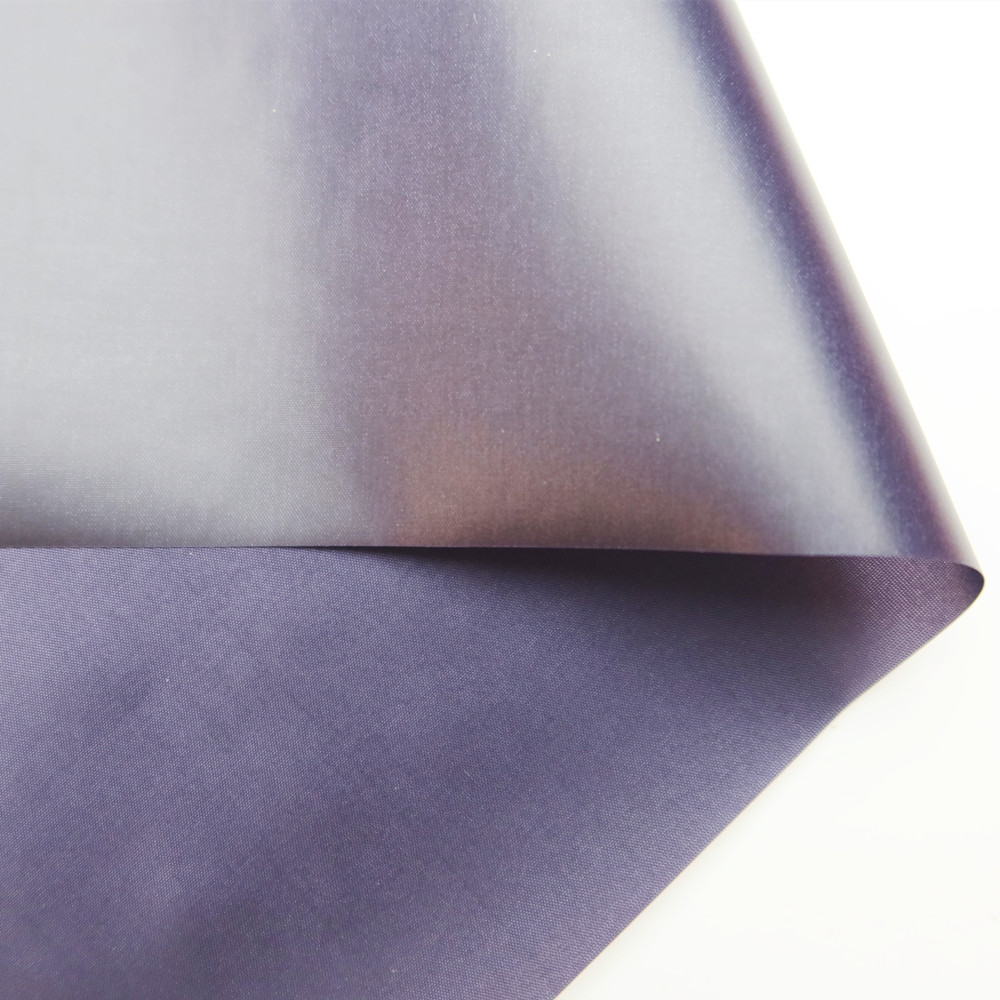
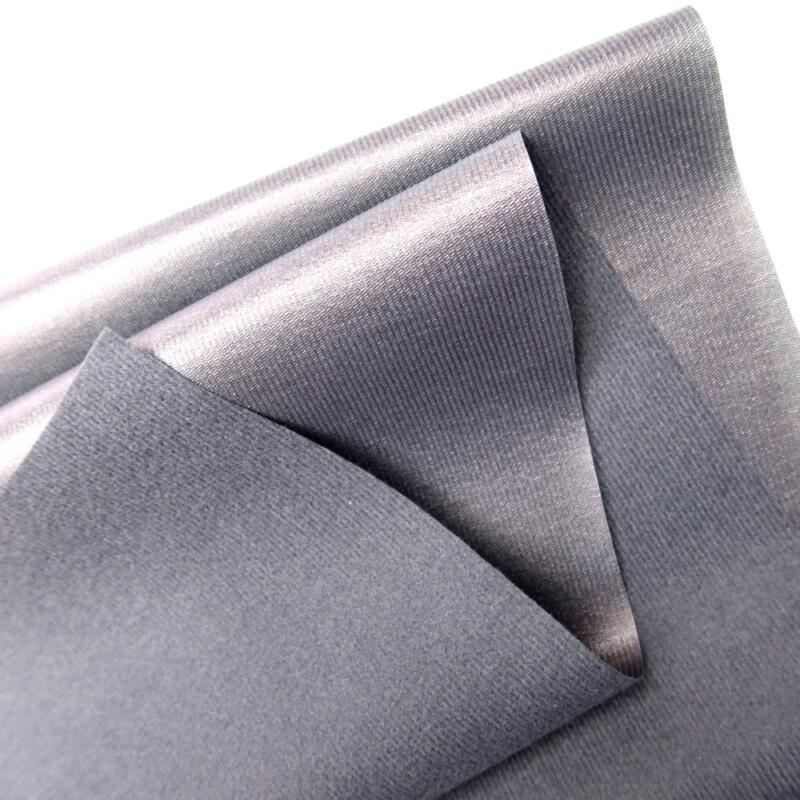
These are the kinds of issues that make Grey TPU Coated Nylon Loop Fabric for Inflatable Medical Devices worth evaluating as a complete composite rather than simply as a coated textile. The material combines a nylon terry loop backing with a TPU membrane, bringing a soft textile surface and an airtight layer into one construction.
For manufacturers developing pneumatic compression sleeves, inflatable walking boots, orthopedic supports and rehabilitation products, the key is to understand how the fabric will behave throughout fabrication and use—not just how it looks or feels when it arrives.
The First Question: Which Side of the Fabric Does the Job?
The two sides of a composite fabric serve different purposes.
The nylon loop backing provides the textile surface. Its raised loops create a softer feel than a smooth polymer surface and can be useful where the product needs a textile interface against the body or another component. The loop structure also affects the material’s thickness, handling and flexibility.
The TPU membrane provides the barrier function. In an inflatable product, it helps contain air within the chamber. The membrane must remain intact, and the composite must retain its integrity around seams, folds and attachment points.
That division of functions matters during product design. If the fabric is positioned with the wrong side facing the user, the intended contact characteristics may be lost. If the TPU side is not correctly oriented during assembly, the joining process may not produce the required seal.
Before cutting begins, the design team should document the fabric orientation on drawings and work instructions. This is a small detail, but it can prevent avoidable mistakes during sampling and production.
Why a Comfortable Surface Is Only Part of the Requirement
Nylon terry loop fabric offers a soft, textured backing that may suit products worn against the body. That can be useful for inflatable walking boots, limb supports and pneumatic sleeves, where the material forms part of the interface between the device and the user.
However, comfort is not a property that can be judged from softness alone.
An inflatable sleeve can feel soft when laid flat and still become uncomfortable when inflated. Chamber layout, fit, pressure distribution, seam placement and the way the product is secured all affect the user’s experience. A raised textile surface cannot compensate for a poorly designed chamber or an unsuitable fit.
The backing should therefore be assessed in a representative assembly. For example, a prototype sleeve should be checked with its actual chamber arrangement, lining and fastening components. A positioning cushion should be evaluated under the loading conditions for which it is designed.
The purpose of the loop backing is to contribute to the material interface. It should not be treated as evidence that the completed device will prevent irritation, pressure injury or other clinical problems.
TPU Thickness: Avoid Choosing by Number Alone
The specified TPU membrane thickness for this fabric can be customized, with a typical range of 0.08 mm to 0.25 mm.
It may be tempting to select the thickest option on the assumption that more material automatically means better durability. That approach can create trade-offs. Increasing membrane thickness changes the composite’s flexibility, weight and handling. It can also affect how the material behaves during welding and around tight bends.
A thinner membrane may produce a more flexible construction, but it still has to withstand the product’s pressure, handling and durability requirements. A thicker membrane may be appropriate for some designs, but its suitability must be demonstrated in the actual assembly.
The selection process should begin with the product’s operating conditions:
- What pressure range will the chamber experience?
- How often will the product be inflated and deflated?
- Will the fabric be folded sharply during storage?
- Does the design require tight curves or narrow welded seams?
- Will the product experience rubbing against clothing, bedding or other components?
- What are the finished product’s weight and flexibility limits?
Once these requirements are clear, the team can compare candidate thicknesses using samples and representative tests. The objective is to select a construction that meets the product specification without adding material that does not serve a defined purpose.
The Seam Is Often Where the Real Test Begins
A fabric sample can pass an airtightness check and still fail to produce a reliable inflatable product. The reason is simple: the finished chamber contains joints, corners, valve connections and other features that are absent from a flat sample.
TPU-coated fabrics may be suitable for welding, but the joining method and settings must match the actual material construction. High-frequency welding or hot-air welding may be considered where compatible with the fabric and manufacturing equipment. The appropriate process cannot be selected from the TPU thickness alone.
During sampling, the team should pay attention to several details.
Seam geometry: A straight seam is not necessarily representative of a corner, curve or overlapping joint. The trial should include the features that appear in the production design.
Weld appearance: Wrinkling, uneven bonding or visible damage may indicate that the process needs adjustment. Appearance is useful for inspection, but it does not replace strength and leakage tests.
Leakage: The chamber should be tested after joining. The test pressure, duration and acceptance limits should be set according to the product specification.
Repeated loading: A seam that holds during an initial test may behave differently after bending or repeated inflation. Where these conditions are part of normal use, they should be included in the evaluation.
Sewing requires particular care. It may be useful for straps, covers or other components, but stitching through an airtight chamber can create leakage paths. The design and assembly sequence should make clear where sewing is permitted and how the air barrier is protected.
A Material That Works in One Device May Not Transfer Directly to Another
The same grey TPU-coated nylon loop construction may be considered for several medical inflatable products. That does not mean one qualification result covers every application.
Pneumatic compression sleeves
An intermittent pneumatic compression sleeve experiences controlled inflation cycles. Chamber shape, pressure sequence and seam layout influence the loads placed on the fabric.
For this type of product, the evaluation should include chamber leakage, seam integrity and behavior over the specified cycle profile. The fabric’s flexibility and textile surface should also be considered within the complete sleeve.
Inflatable walking boots and orthopedic supports
Walking boots and orthopedic supports may experience bending, localized loading and contact with other parts of the device. The material must fit the intended geometry without creating excessive bulk or interfering with fastening components.
Prototype testing should focus on the areas where the chamber bends, where seams meet and where the material contacts adjacent structures. Abrasion and repeated flexing may be relevant, depending on the design.
Positioning cushions and rehabilitation supports
Positioning products may remain under load for extended periods. Their requirements can differ from those of products that undergo frequent inflation cycles.
The design team should consider shape retention, pressure stability, seam loading and the behavior of the composite during prolonged use. The appropriate test conditions depend on the intended product and its performance specification.
These examples illustrate why a material should be qualified against a defined use case. A successful trial in one product provides useful information, but it does not automatically establish suitability for another.
What Should Be Checked Before Approving a Sample?
Sample approval should establish whether the fabric is suitable for the next stage of development. A visual check alone is not enough, particularly when the material will form part of an airtight chamber.
A practical review can include the following:
| Check | What the team should establish |
|---|---|
| Construction and orientation | Confirm the nylon loop backing, TPU membrane and intended fabric orientation |
| Thickness and width | Check the supplied material against the agreed specification |
| Surface condition | Inspect for visible defects, contamination and irregularities |
| Bonding | Review the integrity of the TPU-to-textile composite |
| Mechanical properties | Compare tensile, tear and other relevant results with the project requirements |
| Airtightness | Evaluate the barrier using an agreed test method |
| Welding trial | Confirm that representative joints can be produced using the intended equipment |
| Seam performance | Test strength and leakage on actual joint designs |
| Flex or cycle testing | Assess the material and assembly under representative repeated-use conditions |
| Documentation | Confirm that test reports and material records relate to the specific construction being evaluated |
The supplier identifies raw material inspection, in-process checks for coating uniformity and bonding, and final testing for airtightness, peel strength and durability as part of its quality assurance process. For a development project, the manufacturer should confirm which methods and acceptance limits apply to the proposed material.
It is also useful to retain an approved reference sample. If a later shipment looks or feels different, the reference provides a basis for comparison. Any changes to the textile, TPU formulation, thickness or manufacturing process should be reviewed when they could affect the agreed performance.
Customization Should Follow the Product Design
The fabric is available in standard grey, with custom colors and widths available upon request. TPU thickness can also be specified within the stated typical range, and the composite structure may be customized with single- or double-sided TPU coating or different loop densities.
These options are useful when the design calls for a particular surface, barrier arrangement or cutting layout. But customization should begin with a defined requirement.
For example, changing the loop density may alter the surface feel and thickness of the textile backing. Changing the TPU thickness may affect flexibility and welding behavior. A different width may improve cutting efficiency, but the proposed roll size still needs to suit the manufacturing process.
A sensible development sequence is to settle the product geometry and functional requirements first, then identify which material variables need adjustment. That keeps customization tied to a measurable design need instead of creating unnecessary variations.
Medical Use Requires More Than a Fabric Specification
A material intended for inflatable medical equipment must be considered in the context of the finished device and its intended use.
The description “medical” does not, on its own, establish that a fabric is suitable for every type of patient contact or that a finished device meets regulatory requirements. Biological evaluation, cleaning compatibility, sterilization effects, chemical exposure and other requirements may apply depending on the product and market.
If the fabric will contact the patient, the device manufacturer should determine what evidence is required for the specific contact type and duration. Testing may need to consider the material as processed and incorporated into the finished product, rather than relying solely on the properties of an unused fabric sample.
The same distinction applies to therapeutic claims. A fabric can contribute to the construction of a pneumatic compression sleeve, but it does not establish the safety or effectiveness of the complete therapy device. Those questions depend on the device design, controls, intended use and applicable evaluation.
From Sample Approval to Production
A successful prototype is an important milestone, but it is not the end of material qualification.
Before moving to production, the engineering and quality teams should agree on the approved fabric construction, critical dimensions, relevant performance limits and joining parameters. The production trial should use representative equipment and assembly methods so that the results reflect the intended manufacturing process.
If the product depends on airtight chambers, quality checks should include the assembled structure—not just incoming fabric inspection. The inspection plan should identify which features are critical, how often they are checked and what action is required when a result falls outside the agreed limits.
For repeat orders, the team should also confirm that the supplier can maintain the approved construction and provide the necessary documentation. Traceability and change control become particularly important when the fabric is a functional part of the device rather than a decorative covering.
Grey TPU Coated Nylon Loop Fabric brings together a nylon terry loop backing and a TPU membrane for inflatable medical product designs that need a textile surface and an air-retaining barrier. It may be considered for pneumatic compression sleeves, inflatable orthopedic supports, walking boots and rehabilitation equipment.
The important questions emerge when the material becomes part of the product: Does the backing suit the intended contact surface? Can the membrane maintain the required barrier performance? Can the fabric be welded consistently? Will the seams and composite withstand the product’s expected loading and use cycle?
Answering those questions requires more than choosing a thickness or reviewing a data sheet. A representative prototype, documented fabrication trial and application-specific testing give the development team a sound basis for deciding whether the fabric is ready for production.
 English
  Spanish
  Italian
  Korean
  French
  Japanese
  Arabic
  Portuguese
  Vietnamese
  German
  Turkish
  Belarusian